

A BESS availability guarantee is only useful when the contract defines what “available” means. The buyer must specify the required function, measurement boundary, minimum power and energy capability, treatment of partial derating, planned maintenance, excluded events, data source, event-review process and remedy. A percentage without those rules can make two supplier offers look comparable even when they transfer very different operating risks.
This is a commercial issue as much as an engineering one. A battery energy storage system may be online but unable to deliver the contracted duration. It may provide part of its rated power while one PCS block is unavailable. It may be technically ready while an external dispatch signal is missing. Each condition can produce a different availability result unless the RFQ resolves it before award.
إجابة مباشرة: define availability as the ability of the agreed BESS boundary to deliver a named service at an agreed capability when required. Count full and partial loss consistently, preserve time-synchronised evidence, limit exclusions, and connect the result to a practical service and remedy process.
Research review date: 18 November 2026. This guide is written for asset owners, EPCs, developers and technical procurement teams comparing commercial and industrial storage proposals. It does not state an HMX product availability value, an expected failure rate or a universal contractual threshold. Those values require the selected architecture, service plan, operating duty, location and negotiated contract.
Start with the Required Function, Not the Percentage
The first drafting question is: available to do what? Peak shaving, backup, PV firming, generator support and frequency services place different demands on power, duration, response time, state of charge and communications. A system that can accept an EMS command but cannot sustain the required discharge duration is not fully available for an energy-limited service. The same system may still be available for a lower-power duty.
Use the operating requirement already developed for the قائمة الأدلة التجارية لمشتريات أنظمة تخزين طاقة البطاريات as the starting point. The availability schedule should refer to a defined service and capability instead of a general statement that the equipment is “operational.”
| Contract term | Question the buyer must answer | Evidence needed |
|---|---|---|
| Required service | Which dispatch, backup or grid function must be ready? | Operating narrative and approved use-case schedule |
| Minimum capability | What AC power, usable energy, duration, power factor and response are required? | Guaranteed capability table and test procedure |
| Availability window | Is the system required continuously, during tariff periods, or only after a valid dispatch notice? | Calendar, dispatch records and time-zone rule |
| System boundary | Which batteries, PCS blocks, transformer, switchgear, controls, HVAC and communications are included? | Single-line diagram, network diagram and equipment list |
| Partial availability | How is reduced power or energy converted into an availability result? | Capacity-weighted calculation and event examples |
| Exclusions | Which events are outside supplier control, and what proof is required? | Closed exclusion list and event-review record |
| سبيل الانتصاف | What happens after an event or a missed annual threshold? | Response times, restoration plan and agreed commercial remedy |
The U.S. Department of Energy’s 2024 BESS procurement checklist is designed around early project tasks, questions and reference points. Its practical value here is procedural: settle the project requirement before inserting a percentage into a tender. The DOE’s 2025 lithium-ion BESS technical specification resource likewise provides a customizable procurement starting point rather than a universal clause that can be copied without project review.
Availability and Reliability Are Related but Not Interchangeable
Reliability asks whether the system can perform the required function under stated conditions for a stated period. Availability asks whether it is ready when called upon. The distinction matters because a system may fail rarely but remain down for a long time while a part, technician or approval is obtained. Another system may experience more interruptions but restore service quickly. Their annual availability can differ from the simple count of failures.
The National Renewable Energy Laboratory’s 2023 report on distributed-energy-resource reliability distinguishes inherent availability from operational availability. Inherent availability reflects design reliability and corrective repair. Operational availability also captures preventive maintenance and logistics, including delays when spare parts or personnel are not immediately available. For an international project, operational availability is normally the more commercially useful lens because shipping, customs, site access and local service capability can extend downtime even when the hardware repair is straightforward.
NREL also cautions that stationary BESS availability is not routinely reported and that operating experience is insufficient for a single precise industry estimate. Its report presents 95% to 99% as rough guidance depending on configuration and cites a three-year field study at 95%. Those figures are research context, not a recommended HMX value and not a substitute for a project-specific obligation. A buyer should use them to test assumptions and sensitivity, then require the supplier to support the offered value with architecture, maintenance and logistics evidence.
Draw the Availability Boundary on the Single-Line Diagram

A supplier may quote availability for the battery racks and PCS while the owner assumes that the transformer, medium-voltage switchgear, site controller, protection relays and communications path are included. Both calculations can be internally consistent and still describe different systems. Mark the boundary directly on the approved single-line diagram and network architecture.
Include the equipment necessary to deliver power at the contractual point of connection. If an owner-supplied transformer or utility communication channel sits outside the guarantee, state that exclusion explicitly. Then define the interface test that separates a supplier event from an external event. An unexplained loss of dispatch should not automatically be assigned to the owner merely because the battery racks report no internal fault.
The energy and power boundaries must also agree with the performance guarantees. Our guide to BESS round-trip-efficiency meter boundaries shows why apparently simple percentages change when auxiliaries and meters move across the boundary. The same discipline applies to availability: equipment that is essential to the contracted service should not disappear from the calculation because it has a separate electrical supply or service contract.
Use Event States That Operations Teams Can Actually Apply
An availability calculation needs an event state model. At minimum, distinguish fully available, partially available, unavailable, planned maintenance, external constraint, safety hold and data uncertain. Define who can assign or change a state, which timestamps control, and what evidence closes the event. Otherwise the monthly report can become a negotiation over labels rather than a calculation.
| Observed condition | Default treatment to negotiate | Evidence for final classification |
|---|---|---|
| One PCS block trips; remaining blocks can operate | Count as partial availability, not full availability | Available AC power, energy limit, alarm sequence and dispatch response |
| Battery SOC is below the contracted reserve because of supplier control logic | Count lost service if the required dispatch cannot be delivered | SOC trend, command history, control mode and reserve settings |
| Owner dispatches outside the agreed operating envelope | Potential exclusion only for the affected period and capability | Validated command, contract envelope and controller response |
| Utility curtailment blocks export but the BESS remains technically ready | External constraint if the interface evidence confirms readiness | Utility instruction, breaker status and readiness test |
| Supplier performs agreed preventive maintenance inside an approved window | Planned maintenance treatment defined in the contract | Notice, approved work scope, start/finish time and return-to-service test |
| Remote connection fails but local automatic service remains functional | Classify according to the required service, not the alarm name | Local response test, network logs and control architecture |
| Required logs are missing or clocks disagree | Data-uncertain state with a stated burden of proof | Meter records, time-server status, audit log and event reconstruction |
| Safety system places the plant in a protective hold | Count or exclude according to root cause and contractual boundary | Protection trigger, investigation record and authorized release |
Do not wait until the monthly report to determine the event sequence. The guidance in BESS alarm triage and log preservation is directly relevant: preserve the first trigger, subsequent limits, operator actions and restoration steps before clearing alarms. A final fault code may show the protective outcome rather than the initiating cause.
Count Partial Derating Instead of Hiding It
A binary up/down calculation can overstate service when a modular system remains online at reduced capability. If the project requires a defined power and usable-energy duty, calculate the capability available in each interval. A capacity-weighted approach can credit genuine partial service without treating a severe derating as full availability.
One practical structure is to assign each reporting interval an availability factor equal to the lower of available-power fraction and available-energy fraction for the contracted duty, capped between zero and one. The interval contributes its duration multiplied by that factor. This is a drafting method, not an industry-mandated formula; the parties must agree the interval, duty, meter boundary and validation method.
Power and energy cannot always be collapsed into one factor. A two-hour peak-shaving obligation may fail because usable energy is insufficient even though rated power remains available for a shorter discharge. Conversely, a battery may hold enough energy but be unable to meet the power ramp because one PCS section is offline. The event report should retain both dimensions, even if the contract later combines them for settlement.
Control Exclusions and Planned Maintenance
Exclusions are necessary, but an open-ended exclusion can remove most supplier accountability. Avoid phrases such as “events beyond reasonable control” without a closed schedule, notification process and evidence requirement. Separate utility restrictions, owner-caused outages, force majeure, agreed testing, planned maintenance, emergency safety actions and operation outside the approved envelope.
For each exclusion, define the start and stop trigger. A utility outage should not exclude the entire day if the external condition lasted one hour. An owner-caused communications outage should not excuse a battery fault that began earlier. If simultaneous causes occur, the contract needs a priority or allocation rule.
Planned maintenance deserves its own allowance and governance. Specify notice, allowed windows, annual or rolling limits, blackout periods, extension approval and return-to-service evidence. If the project supports a factory peak period or an islanded microgrid, maintenance timing may have more commercial impact than the same number of hours scheduled during a low-risk window.
Parts and personnel logistics should sit beside the maintenance plan. The NREL distinction between inherent and operational availability shows why a design claim cannot answer questions about regional spare inventory, remote diagnosis, customs, qualified local labour and travel. Buyers should request named critical spares, ownership, storage conditions, replenishment rules and escalation contacts rather than accepting a general statement that support is available.
Make the Evidence Package Part of the Supply
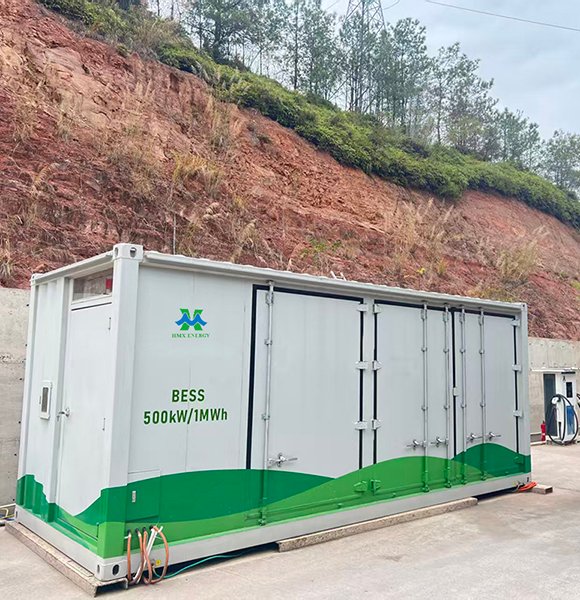
The monthly availability report should be reproducible from owner-accessible records. At a minimum, retain the requested and available power, usable-energy limit where available, state of charge, operating mode, active limits, breaker states, alarms, protection actions, dispatch commands, communications status, auxiliary status, maintenance tickets and configuration changes. Use synchronized timestamps and keep the original data at the agreed resolution.
Sandia National Laboratories’ Electrical Energy Storage Data Submission Guidelines, Version 2 explains why consistent data points and sampling information are necessary for robust analysis. For procurement, the lesson is straightforward: data access, names, units, time bases, quality flags and retention periods belong in the contract deliverables, not in a later request to the service team.
A 2022 Sandia/NREL study on PV-plus-storage operations and maintenance used 14 interviews and questionnaires representing 51.1 MW and 64.1 MWh. The authors reported ongoing challenges including a lack of storage-specific performance metrics, vendor reliability and parts availability. The sample should not be generalized into a universal failure rate, but it supports a concrete buyer response: define the metric, retain the operating evidence and verify the service pathway before commercial operation.
Connect FAT, SAT and the Availability Baseline
The guarantee should not begin with an unverified baseline. Factory acceptance testing can confirm configuration, alarms, failover, communications and selected fault responses. Site acceptance testing should confirm the installed meters, time synchronization, dispatch path, protection interfaces, auxiliary supplies and the ability to demonstrate the contracted duty at the actual point of connection.
تُعد BESS FAT fault-injection and witness plan provides a practical structure for evidence before shipment. Availability drafting should use the same subsystem names, operating states and event codes that will later appear in site records. Changing definitions after commissioning makes trend analysis and responsibility assignment harder.
At handover, capture a controlled configuration record: battery and PCS quantities, firmware, EMS version, enabled control modes, protection settings, meter scaling, time server, communications map and approved limits. When the system changes, retain the date, authorization, reason and verification result. An availability decline cannot be investigated reliably if software, settings and equipment identity are overwritten without a trace.
Link the Guarantee to Restoration and Remedies
A remedy should encourage restoration, root-cause correction and accurate reporting. A single annual payment formula does not replace service obligations. Define alarm acknowledgement, remote diagnosis, site attendance where applicable, temporary operating plans, permanent repair, root-cause report and recurrence prevention. These time commitments should reflect the project location and support model; do not copy urban service times into a remote or cross-border project without evidence.
Commercial remedies may include service credits, warranty extension, corrective work, additional spares or another negotiated mechanism. Legal and tax treatment varies by contract and jurisdiction, so project counsel should review the clause. The engineering team still needs to make the trigger measurable: reporting period, threshold, calculation, exclusions, dispute timeline, maximum liability and interaction with separate power, energy and efficiency guarantees.
Avoid incentives that discourage honest protective operation. If a safety hold is necessary, the contract should not push operators to reset it prematurely merely to protect an availability result. Count or exclude the event according to verified cause, then address repeated supplier-caused safety holds through root-cause and remedy provisions.
Test the Formula with Events Before Contract Award
Ask every shortlisted supplier to classify the same set of written scenarios and show the resulting availability calculation. Include a partial PCS outage, insufficient SOC after an EMS error, utility export curtailment, a planned service window that overruns, a communications failure with local control still active, and an event with missing data. The purpose is not to predict the exact faults that will occur. It is to expose how each formula treats capability, responsibility and evidence.
Require the bidder to identify the start time, end time, excluded interval, capability factor, supporting records and approval path for every scenario. If two departments within the same supplier produce different answers, the contract language is not ready. Resolve the inconsistency while commercial leverage remains with the buyer.
Repeat the exercise after design freeze because the final architecture may differ from the tender assumption. A change from one central PCS to multiple blocks, a revised transformer boundary, a new cloud control dependency or a different local service partner can change both the failure domain and restoration time. Attach the approved worked scenarios to the guarantee schedule. They become interpretation examples for the O&M team without replacing the governing formula.
Use an RFQ Scorecard That Exposes the Operating Model
| RFQ deliverable | Acceptable response should identify | Weak response to challenge |
|---|---|---|
| Availability definition | Required function, capability, time window, boundary and formula | A percentage with no calculation schedule |
| Architecture evidence | Failure domains, redundancy, minimum operating block and derated modes | “Modular” without a service-impact map |
| Maintenance plan | Tasks, frequency basis, allowed windows, skills, tools and return test | Generic annual maintenance statement |
| Spares plan | Critical items, location, ownership, shelf controls and replenishment | Parts available on request with no lead-time basis |
| Data package | Signals, units, resolution, timestamps, export method, retention and owner access | Dashboard access without raw export |
| Event management | State model, notification, evidence, classification and dispute workflow | Supplier has sole discretion to classify events |
| Service response | Remote and site stages, geography, escalation and restoration evidence | One response time that does not distinguish acknowledgement from repair |
| Remedy schedule | Measurable triggers, cure plan and interaction with other guarantees | Best-efforts wording with no consequence |
عند مقارنة نظام تخزين طاقة تجاري وصناعي, keep the product shortlist and availability schedule connected. The electrical architecture, cooling system, number of PCS blocks, control interfaces and service geography can all change the failure domain and restoration path. A higher percentage is not automatically a stronger offer if the boundary is narrower or the exclusions are broader.
The Buyer Decision Rule
Do not award on the availability percentage alone. Award on the combination of required service, defined boundary, treatment of partial capability, controlled exclusions, maintainable architecture, parts and labour plan, owner-accessible evidence, event governance and enforceable restoration process. Ask each bidder to calculate several identical example events using its proposed formula. Differences will become visible before they become disputes.
The final contract should allow an independent engineer to reproduce the result from the same data available to both parties. If that cannot be done, the guarantee is still a marketing statement. If it can, the percentage becomes a useful tool for operations, supplier management and lifecycle planning.