
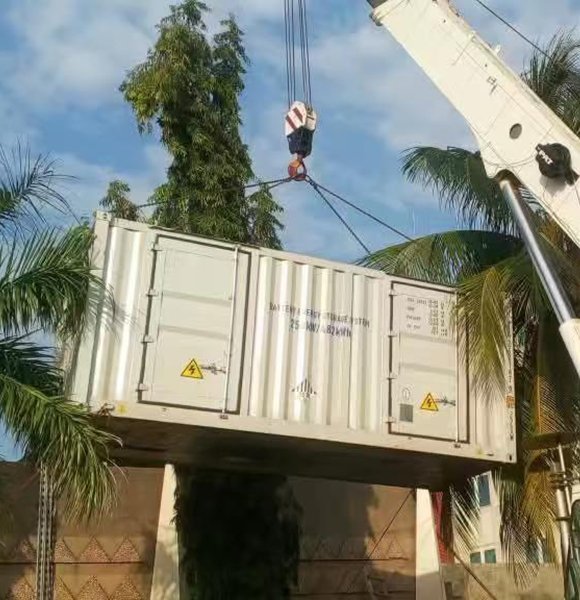
Cooling choice should follow the thermal load, enclosure density, ambient profile and maintenance plan. A simple statement that one method is always better hides the conditions that control field performance.
Air-cooled cabinets can suit moderate power density and straightforward service models. Liquid-cooled systems can provide tighter temperature control at higher density, but they add coolant circuits, pumps, seals and service procedures.
Respuesta directa: Compare complete thermal systems at the same ambient temperature and duty cycle. Ask for measured auxiliary consumption, allowed derating, cell-temperature spread and failure response rather than relying on cooling labels.
Define the boundary
For C&I buyers in Southeast Asia, the Middle East and Africa, the first task is to turn the intended service into measurable inputs and acceptance limits. The following table keeps the decision tied to evidence instead of a broad product label.
| Criterion | Air-cooled BESS | Liquid-cooled BESS |
|---|---|---|
| Heat transfer | Air moved across modules and heat exchangers | Coolant loop removes heat near modules |
| Typical service items | Filters, fans and airflow paths | Pumps, coolant, hoses, seals and heat exchanger |
| Packaging | Often simpler at moderate density | Supports tighter packaging and higher heat flux |
| Leak concern | No liquid loop near modules | Leak detection and coolant compatibility required |
| Buyer test | Airflow, noise, derating and fan redundancy | Pressure test, leak alarm, pump redundancy and coolant plan |
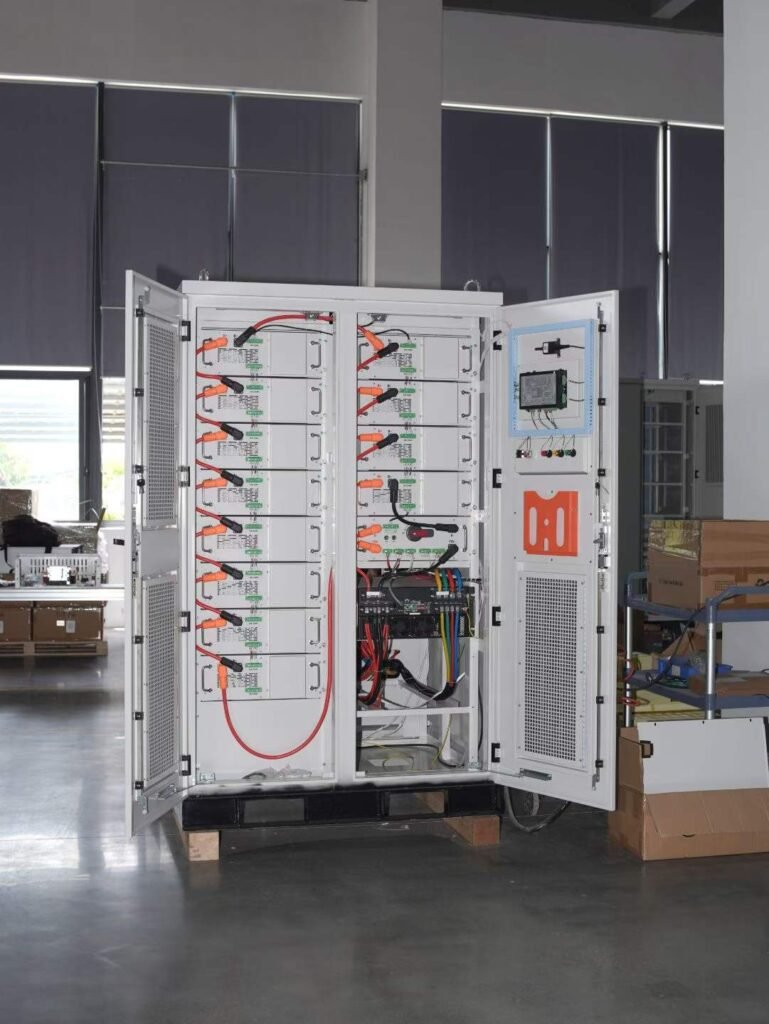
The cooling questions that affect lifecycle cost
These are the practical objections and failure modes most likely to stop approval, delay commissioning or create an avoidable service call for C&I buyers in Southeast Asia, the Middle East and Africa.
- Derating curves are missing for the actual ambient temperature and duty cycle.
- Auxiliary power is omitted from efficiency comparisons.
- Dust, salt, coolant service or local technician capability is considered only after delivery.
Preguntas que el comprador debe formular antes de la aprobación
- What cell-temperature spread was measured during the proposed cycle?
- What happens after a fan, pump, sensor or communication failure?
- Which preventive tasks and critical spares must the owner budget?
Acceptance and failure tests
La oferta comercial debe indicar sus supuestos, exclusiones y límite de medición. Los compradores pueden entonces comparar sistemas sobre la misma base y mantener los cambios de diseño posteriores bajo control documental.
| Site question | Document to request | Decision effect |
|---|---|---|
| Maximum design temperature | Thermal simulation and derating curve | May change power guarantee |
| Dust or salt exposure | Filter and corrosion-control specification | Changes maintenance interval |
| Maintenance skills | Service task list and spare-parts list | Changes lifecycle burden |
| Noise boundary | Sound-pressure data and test condition | May affect siting |
| Expected cycling | Heat-rejection calculation at duty cycle | Sizes cooling capacity |
Puntos de acción para el equipo del proyecto
- Request temperature data at cell, module and cabinet levels during the proposed cycle.
- Confirm whether auxiliary energy is included in round-trip efficiency or quoted separately.
- Check safe behavior after pump, fan, sensor or communication failure.
- Price scheduled maintenance and critical spares, not only the initial equipment.
Compare thermal performance under the same duty cycle
A fair comparison starts with hourly ambient conditions, solar exposure, charge and discharge power, cycle duration and enclosure layout. The supplier should show how these inputs translate into cell temperature, temperature spread, allowed power and auxiliary demand. A cooling label alone does not show whether the system can hold its rated output during a hot afternoon or repeated high-power cycles.
For air cooling, examine filter loading, recirculation, fan redundancy, acoustic limits and the effect of blocked airflow. For liquid cooling, examine coolant specification, pump redundancy, leak detection, hose and seal inspection, refill procedure and low-temperature protection. Both designs need a safe response to sensor failure and loss of cooling; the difference is the maintenance method and failure path.
Lifecycle cost should include energy used by fans, pumps, heaters and chillers, together with scheduled labour and critical spares. Ask whether quoted round-trip efficiency includes these auxiliaries and whether the value changes with ambient temperature. The preferred design is the one that meets the project duty cycle with documented derating and a service plan the local team can execute.
A practical decision sequence
- Provide the same ambient profile and operating cycle to each supplier.
- Request cell-level temperature spread and auxiliary-energy results for that case.
- Review single-fault behaviour for fans, pumps, sensors and communications.
- Price preventive maintenance, consumables and critical spares over the planned operating period.
Verificación comercial adicional
Siting can reverse an apparently obvious selection. Dust, salt mist, restricted airflow, noise boundaries, water quality, maintenance access and technician skills all change the risk. Include these items in the site survey, then make the supplier identify which conditions are covered by the standard product and which require a design option. Ask both bidders to price the same operating period, preventive tasks and response assumptions. A lower auxiliary load can be offset by more specialised service, while a simpler service task can require more frequent visits. Keep energy, labour, consumables, spares and lost-capacity risk as separate lines so the owner can see which assumption drives the lifecycle result.
Registros que deben sobrevivir a la orden de compra
El archivo del proyecto debe permitir que un nuevo ingeniero reconstruya qué se compró, por qué se seleccionó y cómo se demostró el cumplimiento. Mantener juntos los datos de origen y las revisiones aprobadas; una colección de archivos adjuntos de correo electrónico sin fecha no es un control de configuración adecuado.
- Diagrama unifilar aprobado, disposición, calendario de interfaces y hojas de datos de equipos.
- Calendario de garantías que muestre condiciones operativas, puntos de medición y exclusiones.
- Índice de certificados e informes coincidente con el modelo y la configuración pedidos.
- Registros de FAT, embarque, SAT, capacitación, copias de seguridad de ajustes y cierre de partidas abiertas.
Revisar esta línea base cada vez que cambien los equipos, el firmware, el modo de operación o la responsabilidad del sitio. El archivo técnico, las garantías y el método de aceptación deben describir la misma configuración a lo largo de todo el proyecto.
Evidence base
Fecha de revisión de la investigación: 30 de septiembre de 2026. Las declaraciones cuantitativas a continuación están vinculadas a la fuente nombrada y deben verificarse nuevamente si el proyecto se adquiere más tarde.
The IEA identifies batteries as a versatile source of short-term power-system flexibility, but the required duration depends on the service being delivered. See IEA Electricity 2026 flexibility analysis.
La lista de verificación del Departamento de Energía de EE. UU. separa el desarrollo temprano del proyecto, las especificaciones técnicas y el trabajo de interconexión para sistemas comerciales de litio-ion. Véase Lista de verificación de adquisición de BESS del DOE de EE. UU..
IEC 62619:2022 cubre los requisitos de seguridad y los ensayos para celdas y baterías secundarias de litio utilizadas en aplicaciones industriales, incluidos usos estacionarios y de tracción. Véase Alcance de IEC 62619:2022.
IEC 63056 agrega requisitos de seguridad para celdas y baterías secundarias de litio utilizadas en sistemas de almacenamiento de energía eléctrica de hasta 1.500 V CC nominales. Véase Alcance de IEC 63056:2020.
Sungrow documentation for a 100/215kWh-class C&I system identifies PCS, power distribution, batteries, EMS and local control as core equipment, with cooling and fire systems as auxiliaries. This confirms why buyers need one interface and responsibility schedule for the complete system. See Sungrow C&I ESS operation and maintenance manual.
Páginas relacionadas de productos y proyectos de HMX
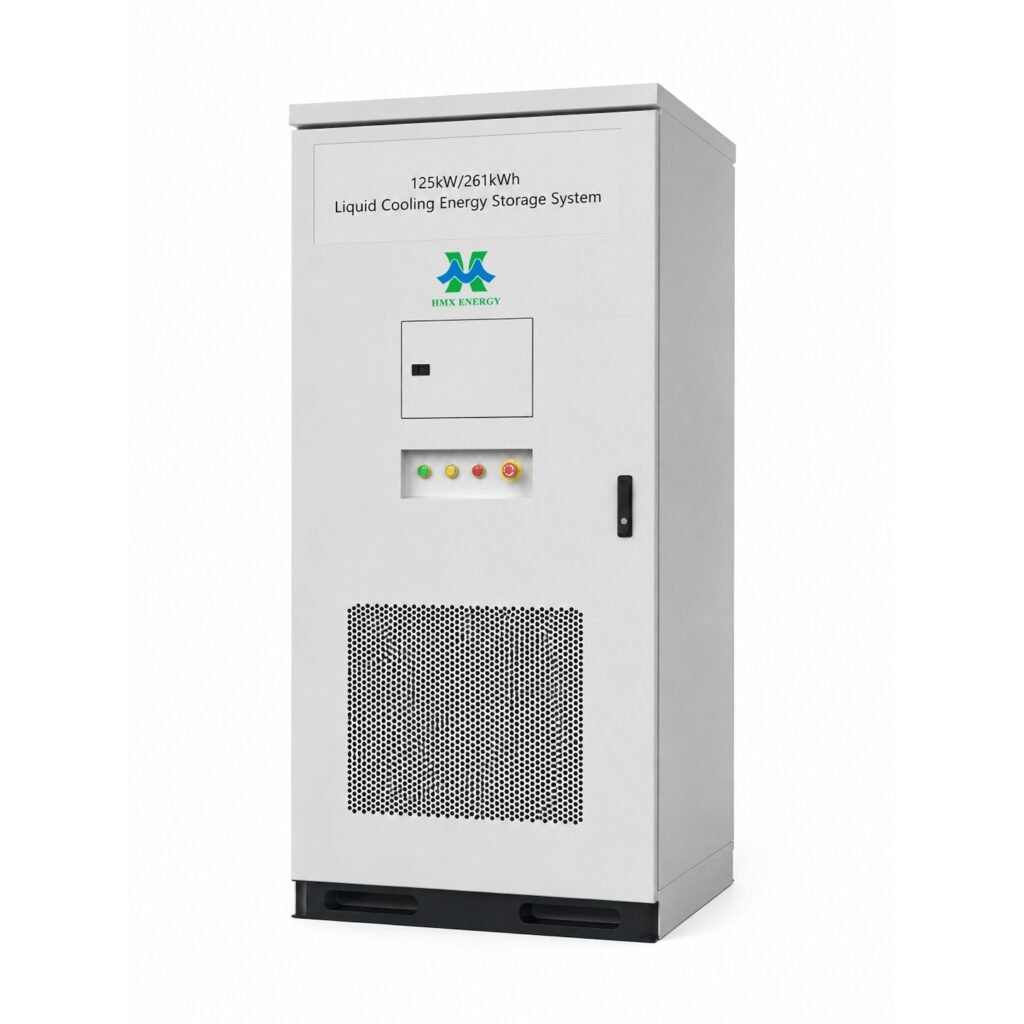
Para una comparación a nivel de producto, revisar la air-cooled BESS range, liquid-cooled energy storage range, 150kW/315kWh air-cooled system, sistema enfriado por líquido de 125kW/261kWh. Estas páginas muestran las categorías o referencias disponibles de HMX; la idoneidad final aún depende de la especificación del proyecto y de la confirmación por escrito.
Decision Rule
Choose the option that satisfies the site conditions, service objective and maintenance model with the clearest test evidence. A larger nameplate or broader marketing claim is not a substitute for fit.