
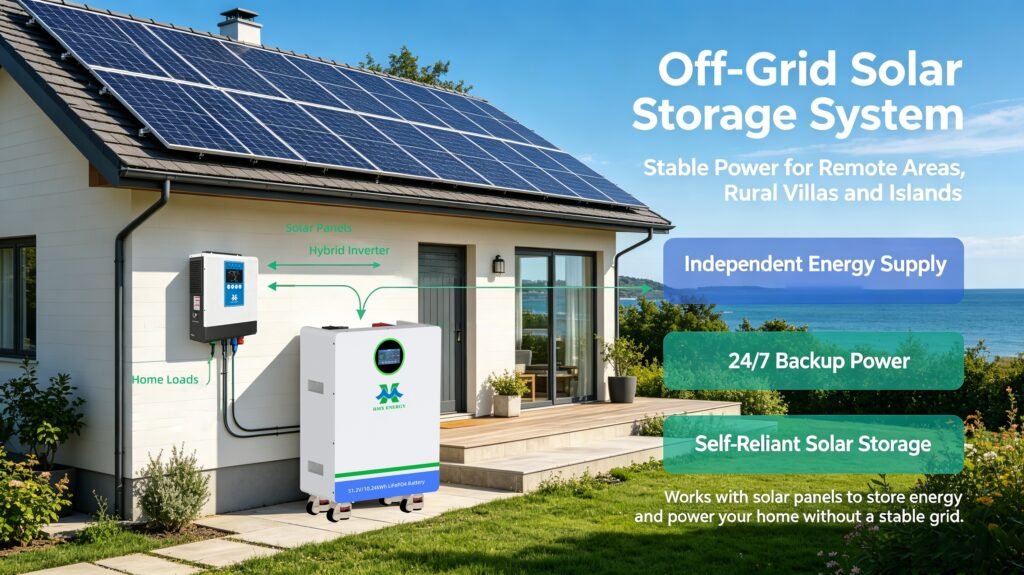
A home battery location should be approved before the installer orders cable, builds a plinth or promises a completion date. The shortest cable route is not necessarily the safest position. Floodwater, access to an exit, nearby openings, vehicle impact and maintenance space can all make an otherwise convenient wall unsuitable.
For distributors and residential EPCs, the useful question is not simply whether a battery can go indoors or outdoors. It is whether this particular enclosure, building and installation arrangement meet the manufacturer’s instructions and the rules adopted in the destination market. A product certificate cannot answer that site-specific question by itself.
Start with a site drawing, not a product photograph
Mark doors, windows, ventilation openings, escape routes, fuel storage, drains, driveway edges and the proposed electrical route on a measured drawing. Add the battery’s service envelope, not just its outer dimensions. A cabinet that fits physically may still prevent a technician from removing a cover or replacing a module safely.
When selecting from HMX residential battery storage options, request the exact model’s mounting instructions, environmental limits and maintenance clearances alongside the quotation. Do not transfer installation allowances from a visually similar battery. The proposed inverter and protective equipment need their own assessment.
Ask who owns the final location decision. A distributor can provide documents, but the qualified local designer or installer must confirm suitability, with the relevant authority involved where required. Keeping that responsibility explicit prevents a sales sketch from becoming an unreviewed construction instruction.
| Site condition | Evidenze da raccogliere | Decision before installation |
|---|---|---|
| Wall near an exit or window | Measured openings, escape route and adopted fire rules | Approve the layout or choose another location |
| Garage or driveway | Vehicle paths, impact exposure and service access | Specify approved protection without blocking maintenance |
| Low-lying outdoor area | Flood history, drainage and local flood assessment | Reject or redesign the location through qualified review |
| Hot or poorly ventilated enclosure | Expected conditions and model-specific operating instructions | Confirm the complete thermal arrangement |
| Uncertain wall or floor capacity | Equipment mass and mounting or support design | Obtain structural confirmation where needed |
Use fire guidance within its actual jurisdiction and scope
The UK specification BSI PAS 63100:2024 for batteries in dwellings provides a concrete example of why location matters. It includes restrictions involving escape routes, sleeping accommodation and roof spaces, as well as outdoor separation provisions. It is a 2024 specification, reviewed for this article in October 2026, not a newly issued global regulation.
The selected points below summarize only part of its siting provisions. They do not replace the full specification, product instructions or an assessment of which requirements apply to the project.
| Selected provision | Source value or condition | Scope caution |
|---|---|---|
| Outdoor proximity to doors, windows, ventilation openings and escape routes | Locations within 1 m are prohibited under clause 6.5.5 | Check the full clause and proposed arrangement |
| Outdoor proximity to listed flammable materials and fuel storage | Locations within 2 m are prohibited under clause 6.5.5 | Not a substitute for other applicable separation requirements |
| Roof spaces, including lofts | Prohibited indoor location under clause 6.5.5 | Other indoor conditions also apply |
For an export project, establish the local rules rather than copying those distances into every quotation. Record the applicable document, edition, reviewing person and any authority approval. A requirement that is sensible in one market may have a different legal status, scope or installation pathway elsewhere.
Flood exposure is not resolved by an enclosure label
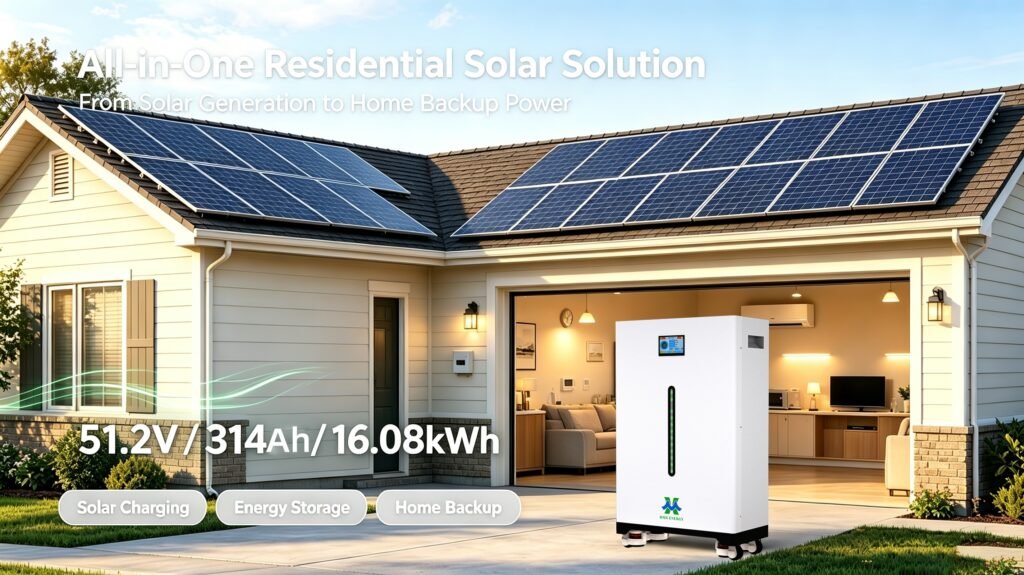
Assess surface runoff, stormwater accumulation and the site’s flood history separately from ordinary weather exposure. A battery may be installed under shelter and still lie in the path of water entering a garage. Raising equipment without reviewing mounting stability, electrical routes and maintenance access can exchange one problem for another.
Il U.S. Fire Administration’s lithium-ion flood safety guidance warns about batteries exposed to flooding and advises contacting the local fire department when exposure is suspected. Its device and vehicle handling advice must not be repurposed as a homeowner procedure for dismantling or relocating a hard-wired stationary system.
For a residential installation, provide a locally approved emergency contact and shutdown procedure before handover. If flooding is suspected, the homeowner should not attempt charging, inspection inside the enclosure or improvised recovery. Qualified personnel must determine the safe response. During planning, use local flood information and the manufacturer’s limits; do not invent a universally safe mounting height.
Enclosure suitability and serviceability are separate checks
Rain, condensation, direct sun, dust, corrosive exposure and ambient temperature do not represent the same hazard. An ingress protection rating does not demonstrate unlimited operation in every combination. This distinction also matters for the inverter; the IP21 versus IP65 inverter selection guide addresses enclosure choice, not approval of a battery’s complete location.
Review how heat leaves the system and whether the proposed shelter interferes with airflow. Check access to the isolating devices, labels and communications equipment without entering a hazardous position. Include the route for eventual replacement: doors, steps and narrow passages often receive attention only after a service problem occurs.
A floor-standing residential battery also needs an approved support arrangement. Floor loading, stability and exposure differ from a wall-mounted design. Neither form factor automatically establishes a better location; match the model to the surveyed site.
Keep product evidence and site approval in different files
UL Solutions’ ESS certification overview describes system-level evaluation under UL 9540 and distinguishes other safety and testing standards. That helps a buyer ask for relevant product evidence. It does not certify a proposed wall, building layout or local installation by association.
The handover package should therefore contain both the exact product evidence and the approved as-built location. Add photographs of clearances, mounting, protection and labels, together with the installer details and any authority documents. Record changes from the original drawing and who accepted them.
A practical approval rule
Do not release the location for construction while its flood exposure, escape-route relationship, equipment limits or service access remain unresolved. Obtain a signed location drawing first. This modest discipline can prevent expensive relocation work and gives the distributor a clear boundary between supplying suitable equipment and approving a safe installation.