
A drop-in label can hide important engineering work. Lead-acid banks and LiFePO4 packs differ in voltage curve, charging behavior, current protection and mass. The cart may run after a simple swap yet still have an unsuitable charger, loose restraint or a BMS that trips on acceleration.
A professional conversion records vehicle demand and proves the new pack under real operating conditions.
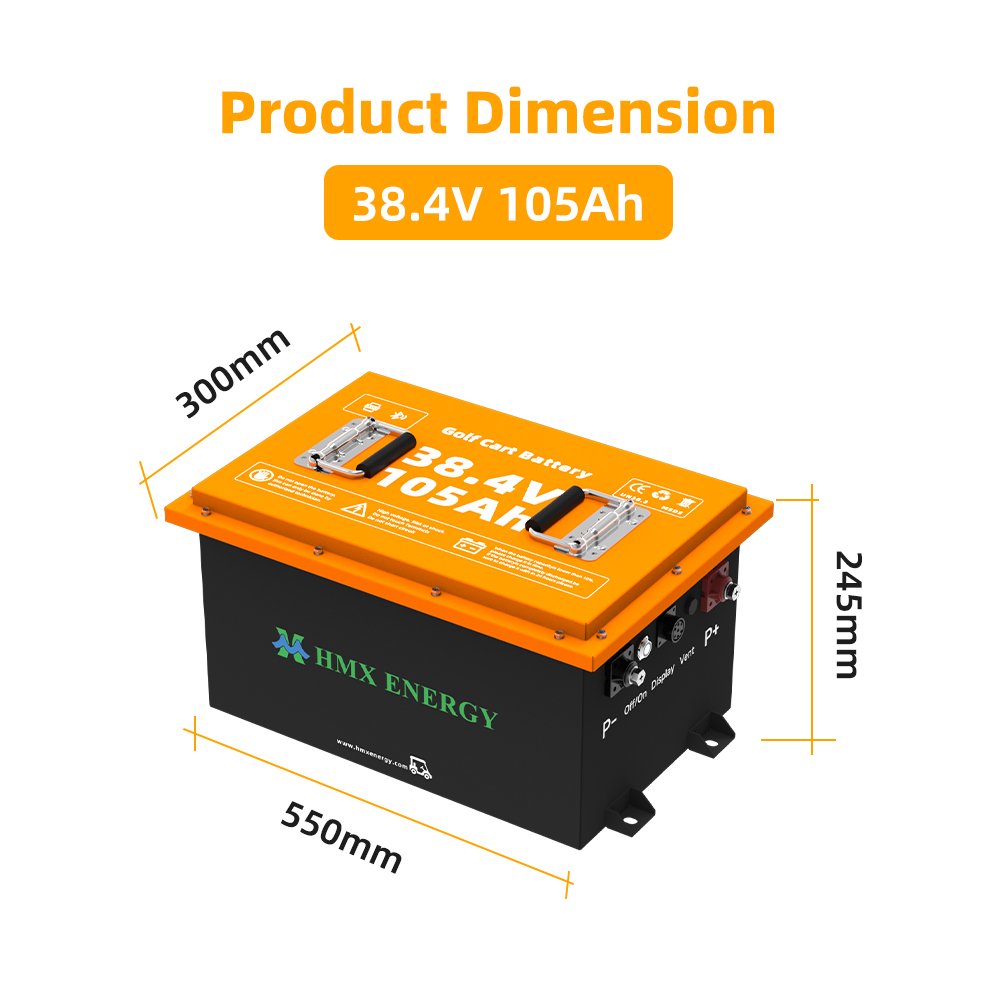
The same evidence and acceptance questions can be used when assessing HMX’s 36V 105Ah golf cart battery; catalogue information should be reconciled with the controlled quotation and drawings.
Direct answer: Treat the charger, cables, restraint and state-of-charge display as part of the conversion kit. Verify peak current on slopes and during acceleration before releasing the cart.
Research review date: 30 September 2026. Quantitative statements are tied to the linked source and should be rechecked if procurement occurs later.
For current market and policy context, review IEC 62619:2022 scope. IEC 62619:2022 covers safety requirements and tests for secondary lithium cells and batteries used in industrial applications, including stationary and motive uses.
Record the original cart before choosing a conversion kit
For Dealers, repair shops and fleet buyers, the first task is to turn the intended service into measurable inputs and acceptance limits. The following table keeps the decision tied to evidence instead of a broad product label.
| Conversion item | Lead-acid baseline | LiFePO4 requirement |
|---|---|---|
| Voltage | Series battery bank | Approved pack nominal and charge voltage |
| Charging | Lead-acid algorithm | Lithium-approved profile |
| Current behavior | Voltage sag may limit current | BMS limit must exceed valid vehicle demand |
| Mass and balance | Heavier distributed bank | Check restraint and handling after lower mass |
| State of charge | Voltage-based gauge may be used | Compatible shunt or communication display |
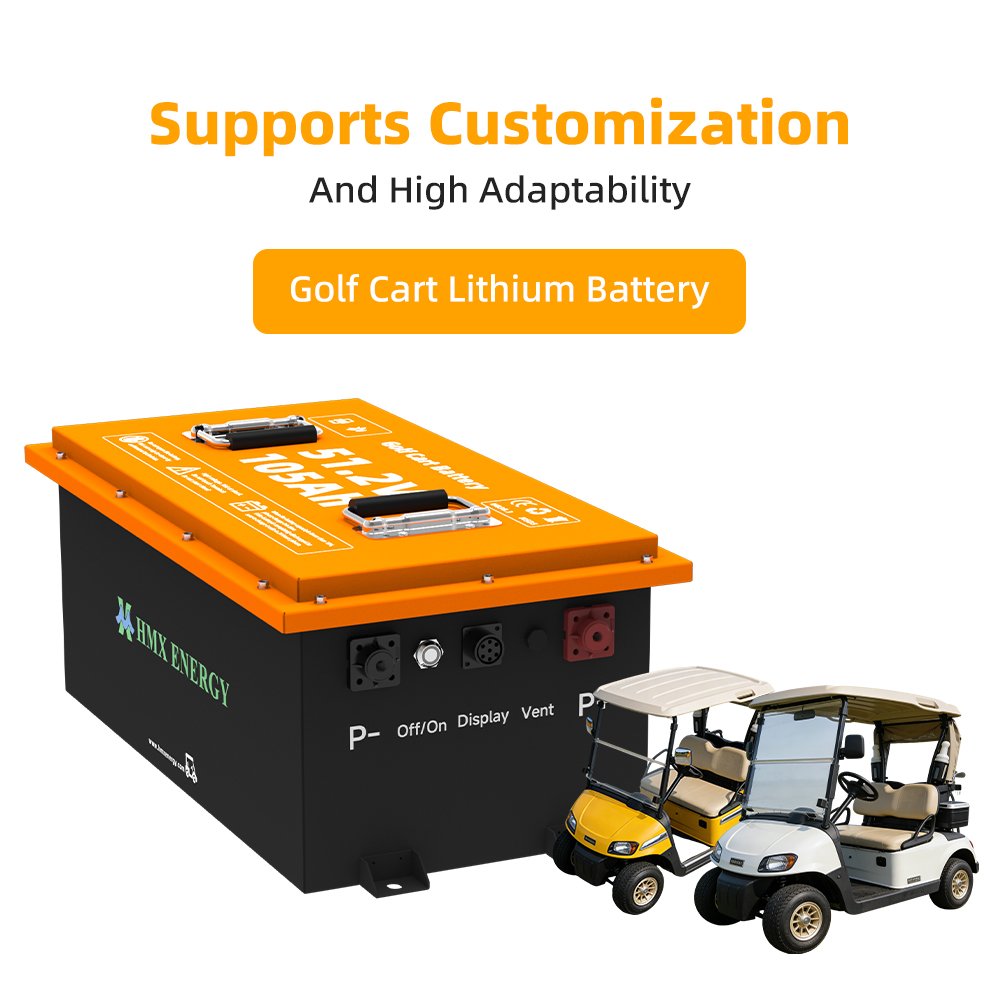
A related HMX reference is the 48V 105Ah golf cart battery. Use it to frame the next supplier discussion, then record project-specific deviations before ordering.
The technical comparison should also be checked against UNECE Manual of Tests and Criteria, Revision 8. UNECE publishes the current Manual of Tests and Criteria and its 2025 amendment, including changes affecting subsection 38.3 for lithium cells and batteries.
Fitment questions distributors must answer
These are the practical objections and failure modes most likely to stop approval, delay commissioning or create an avoidable service call for Dealers, repair shops and fleet buyers.
- A battery fits electrically but not in the tray, hold-down or cable layout.
- The state-of-charge display is inaccurate after chemistry conversion.
- Weight change affects handling and is not discussed with the fleet operator.
Questions the buyer should ask before approval
- Which vehicle model, controller and charger were tested?
- How will the pack be retained and serviced?
- What technician procedure covers first installation and fault diagnosis?
Prove fitment, restraint, charging and loaded-route performance
The commercial offer should state its assumptions, exclusions and measurement boundary. Buyers can then compare systems on the same basis and keep later design changes under document control.
| Road test | Condition | Pass evidence |
|---|---|---|
| Acceleration | Maximum expected payload | No BMS over-current trip |
| Hill climb | Representative grade and duration | Temperature and voltage remain acceptable |
| Regenerative braking | If controller supports it | Charge current stays within limit |
| Low state of charge | Near operating reserve | No unexpected cut-off |
| Charging | Full cycle with approved charger | Correct termination and no alarms |
Action points for the project team
- Measure tray and terminal clearance, not only overall pack size.
- Replace damaged cables and protect them from abrasion.
- Provide the operator with charging and storage instructions.
- Record pack serial number, charger model and warranty conditions.
For specification and acceptance work, IEC 60529 IP Code provides an independent reference. IEC 60529 is the reference for enclosure ingress-protection classifications. An IP rating describes tested enclosure protection; it does not by itself approve an installation site.
Treat conversion as a vehicle integration project
Survey the battery tray, retention, cable path, connector, charger, controller and accessory supply. The replacement must fit securely and remain serviceable without stressed cables or improvised spacers. Changes in mass distribution should be considered where the original battery set formed a significant part of vehicle weight.
Buyers defining the initial scope can compare these requirements with HMX’s golf cart lithium battery range. The page is a product or project reference; final suitability still requires a written project specification.
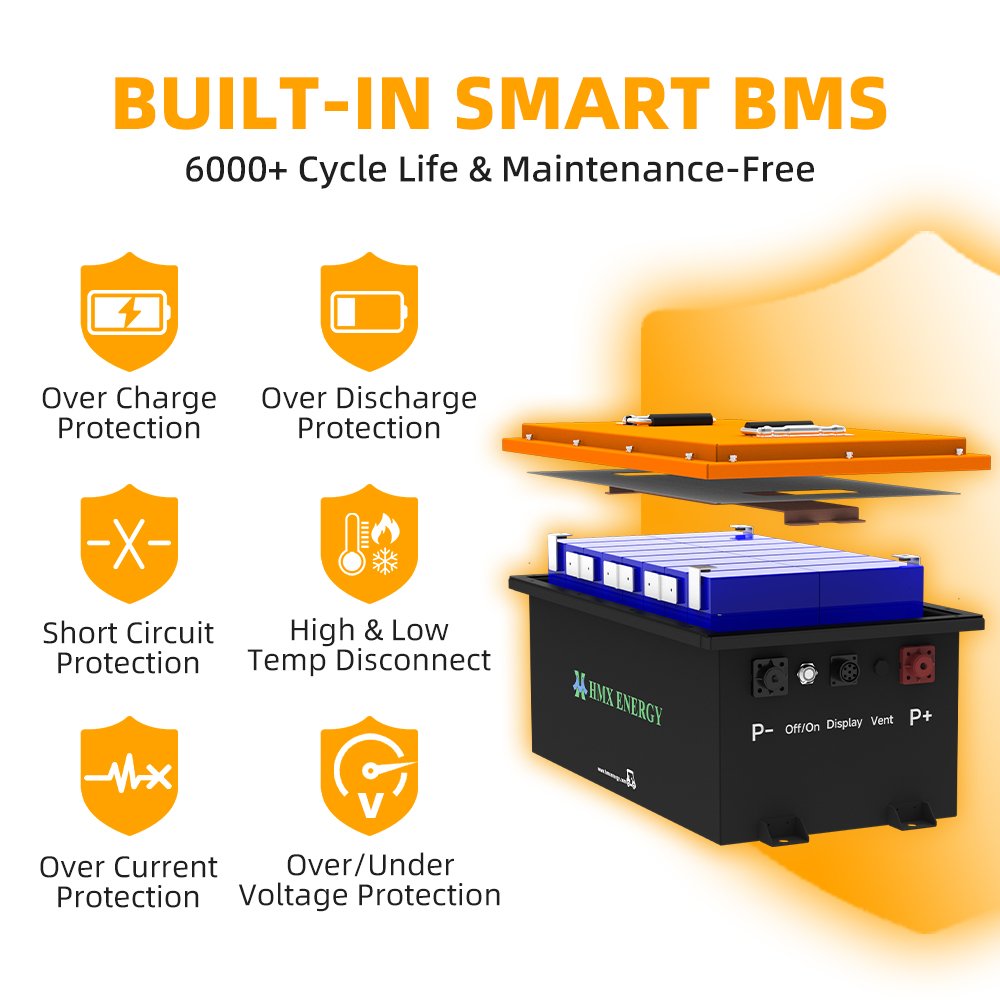
Match the pack and BMS to acceleration, hill climbing and regenerative charging rather than using energy capacity alone. Confirm how state of charge will be displayed and how the vehicle behaves near battery limits. Replace or reconfigure the charger only according to approved instructions for the selected chemistry and pack.
Before design freeze, the project team should review U.S. DOE BESS procurement checklist. The U.S. Department of Energy checklist separates early project development, technical specifications and interconnection work for commercial lithium-ion systems.
A pilot vehicle should complete the fleet route under representative passenger and accessory load. Record voltage, current, temperature, remaining state of charge and any alarms. Use the pilot to finalise the installation kit, technician checklist, user instructions and spare-parts plan before converting the remaining fleet.
A practical decision sequence
- Inspect electrical and mechanical fit on a named vehicle model.
- Verify charger, controller, BMS and display behaviour.
- Run a loaded pilot on the most demanding route.
- Freeze the kit and service procedure before fleet rollout.
Create a fleet fitment and service record
Record the vehicle model, controller, charger, route duty, battery serial number, firmware and installation kit for every approved combination. A fleet record makes repeat orders safer and helps technicians separate vehicle wiring, charger or usage problems from battery protection events.
For a concrete equipment-level review, apply the checks above to the 12V LiFePO4 batteries and request confirmation for the intended site conditions and operating mode.
- Vehicle and component identification with voltage and current limits.
- Tray, retention, connector, cable and charger configuration.
- Loaded route-test data, alarms and remaining state of charge.
- Technician diagnostics, reset procedure, parts list and escalation contact.
Use the record to approve repeat fitment by exact combination, not by vehicle voltage alone. When a component changes, rerun the affected checks before applying the new combination across the fleet.
Release Checklist
Release equipment only after design calculations, settings, drawings and test records agree with the physical build.