
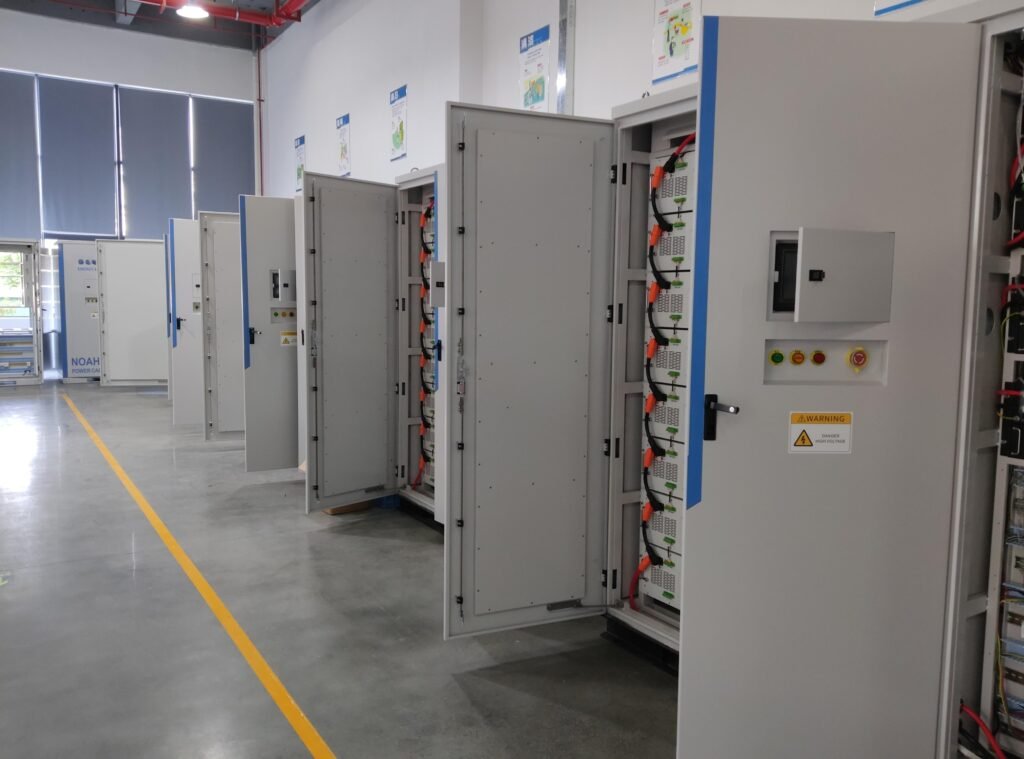
A battery can meet its conversion-efficiency target while the site’s energy bill still disappoints. Cooling, controls and other supporting equipment may draw energy while the battery is waiting for a dispatch command. For an industrial buyer, the practical question is not whether these loads exist. It is whether the quotation, metering boundary and savings model count them consistently.
BESS auxiliary energy consumption is especially important when the system spends long periods available but idle. A peak-shaving installation and a frequently cycled installation do not expose the same relationship between useful discharge and supporting energy. Ask for an operating-state energy budget rather than applying a generic loss percentage to both projects.
Start with the wiring, not the efficiency headline
Mark the battery PCS, HVAC, circulation pumps, enclosure heaters, EMS, communications equipment and service outlets on the single-line diagram. Then identify which are supplied through the main BESS meter, which have separate site supplies, and which can remain energised after the PCS stops. A supplier may report a valid measurement that simply excludes loads billed elsewhere.
The Sandia energy-storage performance protocol, published in 2016, provides a useful methodological reference for identifying measurement boundaries and treating auxiliary consumption separately. It is a measurement resource, not a new local installation rule or evidence of a particular product’s consumption.
| Load | What to establish | Evidence to request |
|---|---|---|
| Cooling unit and circulation equipment | Power source, operating modes and temperature-dependent duty | Electrical input data and a representative operating trace |
| Enclosure or battery heating | Activation conditions and operation while idle | Control logic and measured energy over the agreed period |
| EMS, BMS and networking | Always-on supply and any separate AC adapter | Meter location and standby measurement |
| Service and safety equipment | Normal load versus occasional maintenance consumption | List of included circuits and exclusions |
| PCS standby | Ready, sleeping and isolated states | State definitions tied to logged measurements |
This register should distinguish an identified load from a verified value. An empty measurement cell is an unresolved quotation item, not permission to insert an assumed percentage. If a component is absent in the proposed configuration, record that fact explicitly so it is not added back by an unrelated financial model.
Cooling capacity is not electrical input
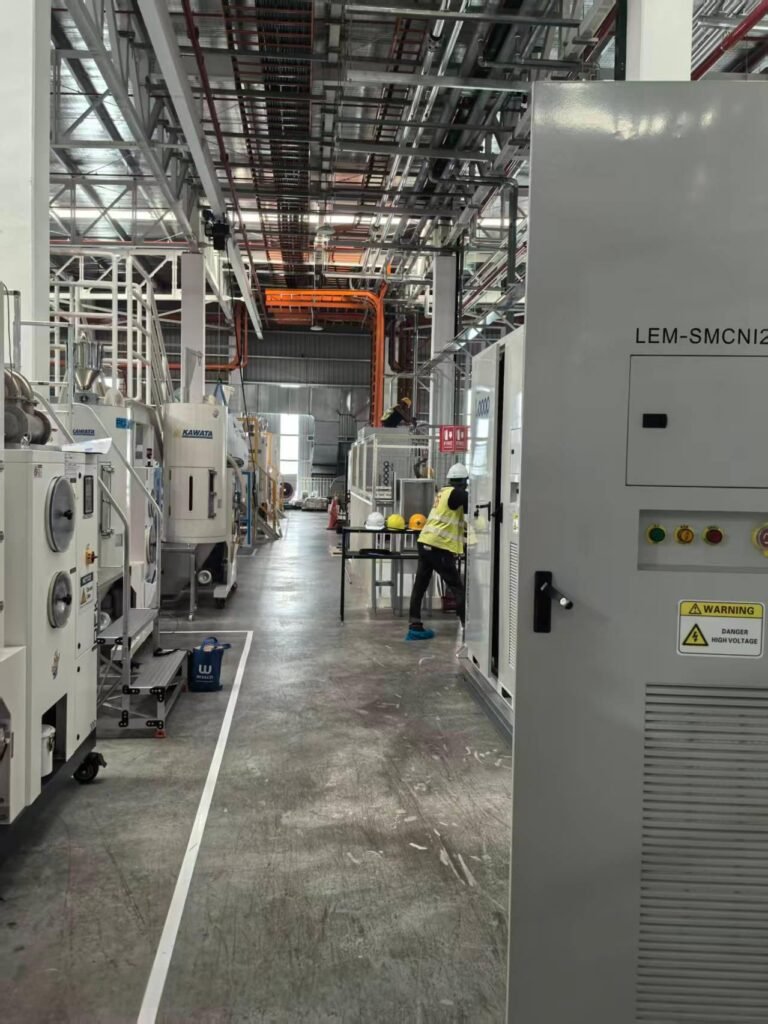
A cooling unit’s thermal capacity describes heat removal under stated conditions. It is not the same quantity as electrical consumption. The electrical input, operating conditions, control strategy and time spent running determine the energy drawn by the unit. Mixing these figures can distort both the auxiliary budget and the site electrical design.
Rittal’s enclosure climate-control guidance distinguishes cooling approaches according to ambient conditions and heat load. Use that distinction to frame supplier questions; do not transfer a standalone enclosure cooler’s performance to an integrated battery cabinet.
For a hot-climate site, ask what happens when the battery is idle but exposed to sun, when charging resumes after a long wait, and when ambient conditions move outside the quoted performance point. Also establish whether the supplier’s test was indoors, with a conditioned enclosure, or under a documented outdoor duty cycle. These details are more informative than an unexplained annual average.
Our air-cooled versus liquid-cooled BESS comparison addresses the architecture decision. The next step is configuration-specific evidence: an attractive cooling concept does not, by itself, establish the auxiliary consumption of the cabinet being purchased.
Measure the states that the commercial model actually uses
A single discharge test cannot represent a project that waits most of the day for a short demand event. Split the observation period into understandable states, and retain the duration of each state. Use energy readings alongside power trends so that brief starts and prolonged low consumption are both visible.
| Operating state | Record alongside energy | Question answered |
|---|---|---|
| Available, no dispatch | Ambient conditions, SOC, temperature targets and control state | What does readiness cost? |
| Charging | AC input, battery state change and cooling operation | Which loads rise during recharge? |
| Discharging | Delivered energy, discharge profile and auxiliaries | What remains after supporting loads? |
| Post-dispatch recovery | Continued cooling and return to the starting condition | Are losses moved outside the test window? |
| Planned shutdown | Energised circuits and availability implications | Can consumption fall without defeating the use case? |
Agree the observation window before testing. Starting immediately before discharge and stopping at its end can omit preparation and recovery. Conversely, a broad whole-site reading can include unrelated production loads. Neither boundary is automatically wrong; the error is comparing them as though they measure the same service.
The DOE FEMP BESS evaluation method uses operating data to assess performance over time. Its long-term perspective is useful when checking whether a witnessed test represents the actual dispatch pattern, rather than only the system’s best operating point.
Bring the energy budget into the savings model
Keep useful discharge, battery charging energy and separately supplied auxiliary energy in distinct ledger lines. Before adding them, confirm that a main-meter efficiency measurement has not already included the auxiliary circuit. Otherwise the model can double-count losses and reject a viable project for the wrong reason.
A low-utilisation project needs particular care. A fixed readiness load is spread across fewer dispatched units of energy, so an efficiency assumption borrowed from a heavily cycled installation may be misleading. This is a relationship between operating time and service delivered, not a universal numeric penalty that can be applied without measurements.
For the demand-charge case, connect this ledger to the load profile used in peak-shaving battery sizing. Recharge timing, the need to remain available, and any site demand created by auxiliary circuits should be evaluated together.
The useful procurement deliverable is a reproducible budget
When shortlisting liquid-cooled commercial storage systems, request an auxiliary circuit list, named meter locations, state-by-state data, environmental conditions and an explanation of how the values enter the quotation. Require the same deliverables from alternative cooling architectures.
The acceptance criterion should allow another engineer to reproduce the accounting without guessing which circuits were included. Retain raw timestamps, calibration information and configuration records. If the cabinet is later modified, that baseline makes it possible to distinguish a change in operation from a change in equipment.
A quote that clearly separates measured consumption, modelled consumption and unresolved assumptions gives the buyer something useful to negotiate. A headline efficiency figure without that separation does not.