
Off-grid sizing must balance energy across days, not just match one evening load. Tropical sites may have strong annual solar resource but still experience cloudy periods, high cooling demand and seasonal business loads.
A useful design begins with load tiers and an agreed operating strategy for low-solar days. Oversizing every component is expensive; ignoring weather and load priority creates service complaints.
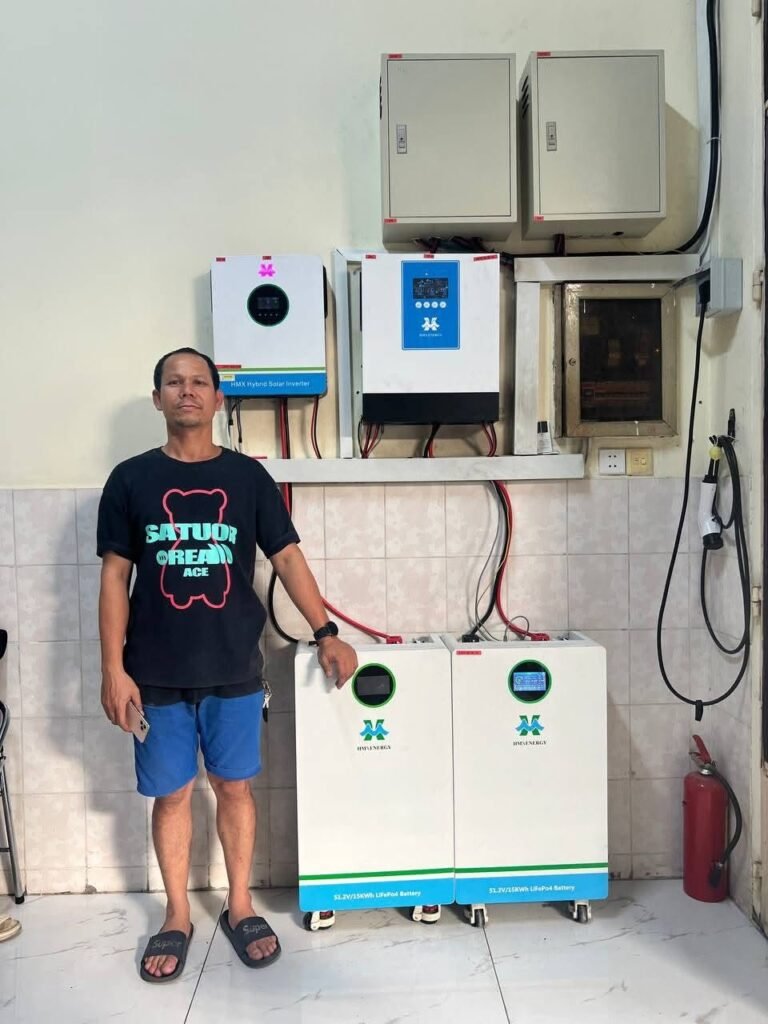
Para una revisión concreta a nivel de equipo, aplique las comprobaciones anteriores al Cambodia 43kWh home-storage installation y solicite confirmación para las condiciones del sitio y el modo de operación previstos.
Respuesta directa: Divide loads into critical, managed and non-backup groups. Then model daily energy, peak power, solar production, battery reserve and any generator contribution on the same hourly timeline.
Fecha de revisión de la investigación: 30 de septiembre de 2026. Las declaraciones cuantitativas están vinculadas a la fuente enlazada y deben verificarse nuevamente si la adquisición ocurre más tarde.
Para el contexto actual de mercado y políticas, revisar Calculadora PVWatts del NREL. PVWatts estimates grid-connected PV energy production from location and system inputs. It is useful for the PV side of a study, but it does not replace interval-load and outage analysis for battery sizing.
Buyer decision path
For Philippines, Cambodia, island and rural markets, the first task is to turn the intended service into measurable inputs and acceptance limits. The following table keeps the decision tied to evidence instead of a broad product label.
| Design input | Minimum record | Reason |
|---|---|---|
| Critical loads | Power, hours and start surge | Sets minimum service |
| Managed loads | Allowed operating windows | Creates dispatch flexibility |
| Solar resource | Hourly or monthly location data | Sizes PV and seasonal balance |
| Weather reserve | Consecutive low-solar scenario | Sets autonomy target |
| Generator plan | Start condition and minimum loading | Avoids deep discharge and poor fuel use |
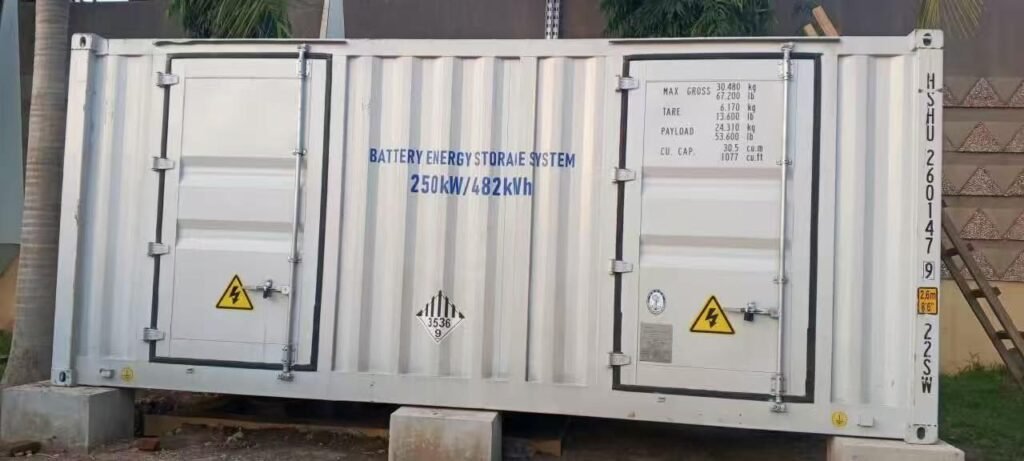
Las mismas preguntas de evidencia y aceptación pueden usarse al evaluar los Philippines solar-storage project; de HMX; la información del catálogo debe conciliarse con la cotización controlada y los planos.
La comparación técnica también debe verificarse contra Philippines DOE 2026 own-use solar update. The Philippines DOE links simplified own-use solar rules with national renewable-power targets of 35% by 2030 and 50% by 2040, while retaining technical safeguards.
Project controls
La oferta comercial debe indicar sus supuestos, exclusiones y límite de medición. Los compradores pueden entonces comparar sistemas sobre la misma base y mantener los cambios de diseño posteriores bajo control documental.
| Operating state | Control priority | Customer rule |
|---|---|---|
| Normal solar day | Serve loads, charge battery, limit curtailment | Run flexible loads in solar hours |
| Evening | Serve selected loads from battery | Avoid unnecessary high-power loads |
| Low state of charge | Shed managed loads or start generator | Preserve critical reserve |
| Extended cloud | Coordinate PV, battery and generator | Use agreed fuel-versus-autonomy plan |
| Maintenance | Provide temporary supply or planned outage | Communicate service window |
Puntos de acción para el equipo del proyecto
- Use separate weekday, weekend and seasonal load profiles where the business changes.
- Check motor and compressor starting power, not only daily kWh.
- Define generator auto-start, warm-up, loading and stop rules.
- Train the customer on load priorities and alarm response.
Para el trabajo de especificación y aceptación, IEA Southeast Asia Energy Outlook 2026 provides an independent reference. IEA reports that Southeast Asian energy investment exceeded USD 100 billion in 2025, while grid and storage investment still needs to catch up with generation growth.
Off-grid pain points hidden by daily averages
These are the practical objections and failure modes most likely to stop approval, delay commissioning or create an avoidable service call for Philippines, Cambodia, island and rural markets.
- Cloudy-day sequences are replaced with one average solar day.
- Load growth and customer behavior erode the planned reserve.
- Generator start, minimum run and battery recharge logic are not tested together.
Preguntas que el comprador debe formular antes de la aprobación
- Which loads can be shed before the battery reaches its minimum reserve?
- How many low-solar days must the system ride through?
- What manual recovery path remains if automatic generator start fails?
Design around the worst energy sequence the owner will accept
Start with a time-based load model and classify essential, deferrable and shed loads. Daily kWh alone cannot show the evening peak, motor starts or the period when PV and demand do not overlap. Interview the operator about seasonal business activity and expected growth, then state which future loads are inside or outside the design.
Una referencia relacionada de HMX es la home battery storage range. Utilícela para enmarcar la próxima conversación con el proveedor, luego registre las desviaciones específicas del proyecto antes de realizar el pedido.
Use a location-specific solar model, but test several consecutive low-production days rather than only an annual average. Include PV temperature effects, inverter limits, battery charge power and system losses. If a generator is available, model start threshold, minimum run time, loading range, fuel constraints and the energy needed to restore reserve while serving the site.
Antes de la congelación del diseño, el equipo del proyecto debe revisar Alcance de IEC 63056:2020. IEC 63056 agrega requisitos de seguridad para celdas y baterías secundarias de litio utilizadas en sistemas de almacenamiento de energía eléctrica de hasta 1.500 V CC nominal.
Define what the controls do when energy becomes scarce. The sequence may shed flexible loads, start a generator, lower an operating target or preserve energy for controls and communications. Test failed generator start and low state of charge during commissioning. The operator should receive a simple daily energy budget and escalation procedure.
Cómo aplicar esto en un proyecto en curso
- Build hourly load profiles for normal, growth and critical-operation cases.
- Model low-solar sequences with realistic conversion and auxiliary losses.
- Coordinate battery reserve, load shedding and generator operation.
- Test low-energy states and train the operator on recovery.
Mantener el cálculo reproducible
Guardar el archivo crudo del medidor o de carga, el registro de limpieza, la tarifa o reglas operativas, la versión del modelo y cada supuesto que convierte los datos del sitio en potencia y energía. El propietario debería poder volver a ejecutar el caso base cuando cambien la producción, las tarifas, las cargas o la política de reserva en lugar de tratar el resultado original como permanente.
Los compradores que definen el alcance inicial pueden comparar estos requisitos con los de HMX residential solar procurement guide. La página es una referencia de producto o proyecto; la idoneidad final aún requiere una especificación de proyecto por escrito.
- Datos de series temporales crudos y limpios con zona horaria e intervalo documentados.
- Escenarios base, de crecimiento y de estrés con entradas de pérdidas, reserva y degradación.
- Setpoints de control seleccionados y la razón por la que no se eligieron las alternativas rechazadas.
- Una traza de puesta en marcha que conecte el modelo con el comportamiento medido del sitio.
En la entrega, dar al propietario las entradas del modelo y un disparador de actualización. Un cambio material en tarifa, carga, producción, clima o reserva debería llevar a una reejecución controlada en lugar de una promesa no respaldada de que el ahorro o runtime original todavía aplica.
Field Note
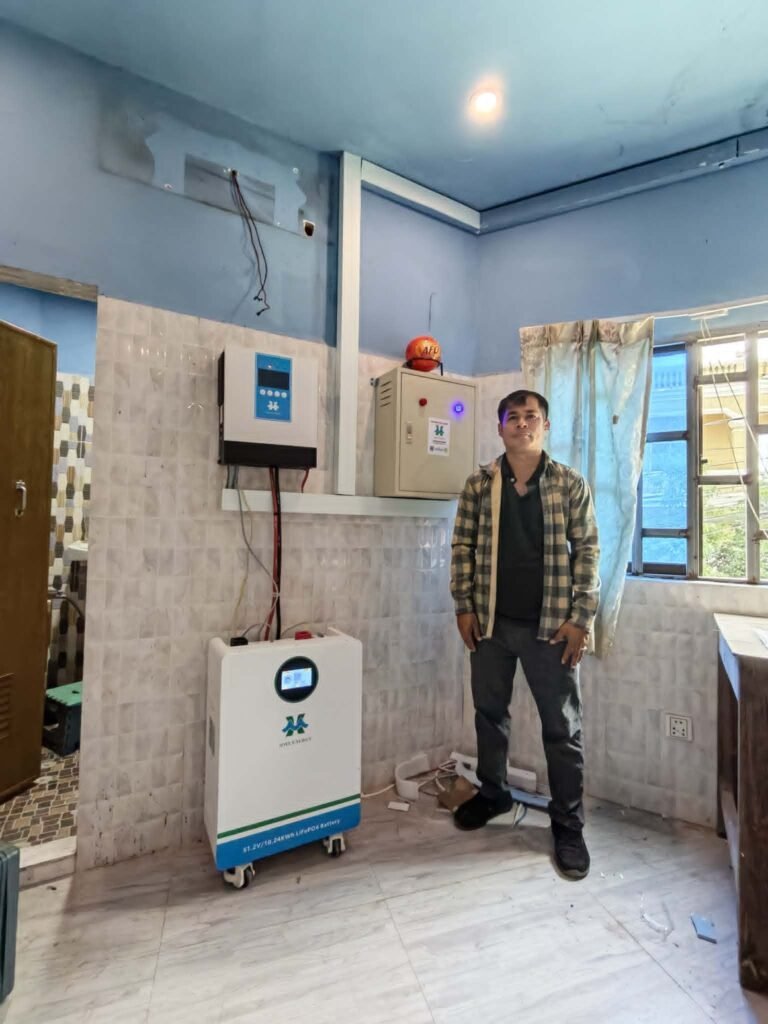
The best field design is one the local team can operate and service. Include training, spares, labels and a clear escalation path in the supply scope.