
Off-grid sizing must balance energy across days, not just match one evening load. Tropical sites may have strong annual solar resource but still experience cloudy periods, high cooling demand and seasonal business loads.
A useful design begins with load tiers and an agreed operating strategy for low-solar days. Oversizing every component is expensive; ignoring weather and load priority creates service complaints.
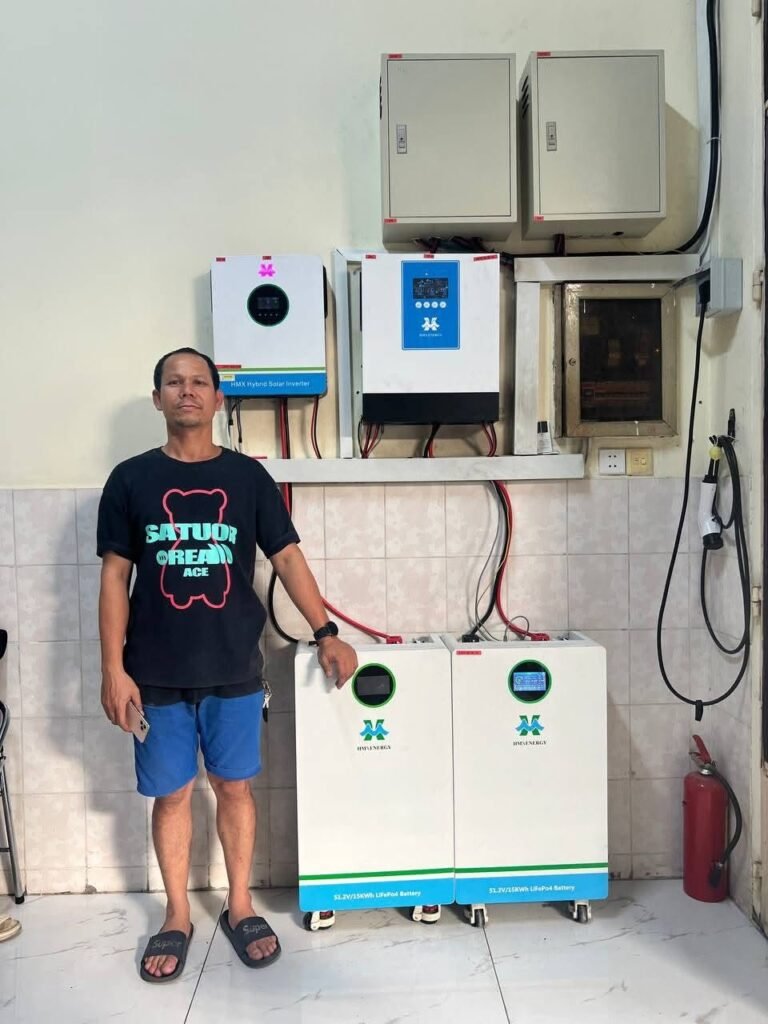
Für eine konkrete Prüfung auf Geräteebene wenden Sie die oben genannten Prüfungen auf die Cambodia 43kWh home-storage installation an und fordern Sie Bestätigung für die vorgesehenen Standortbedingungen und den Betriebsmodus an.
Direkte Antwort: Divide loads into critical, managed and non-backup groups. Then model daily energy, peak power, solar production, battery reserve and any generator contribution on the same hourly timeline.
Rechercheprüfdatum: 30. September 2026. Quantitative Aussagen sind mit der verlinkten Quelle verknüpft und sollten erneut überprüft werden, falls die Beschaffung später erfolgt.
Für aktuellen Markt- und Politikkontext prüfen Sie NREL PVWatts Calculator. PVWatts schätzt die Energieerzeugung netzgekoppelter PV-Anlagen anhand von Standort- und Systemeingaben. Es ist nützlich für die PV-Seite einer Studie, ersetzt jedoch nicht die Intervalllast- und Ausfallanalyse für die Batteriedimensionierung.
Buyer decision path
For Philippines, Cambodia, island and rural markets, the first task is to turn the intended service into measurable inputs and acceptance limits. The following table keeps the decision tied to evidence instead of a broad product label.
| Design input | Minimum record | Reason |
|---|---|---|
| Critical loads | Power, hours and start surge | Sets minimum service |
| Managed loads | Allowed operating windows | Creates dispatch flexibility |
| Solar resource | Hourly or monthly location data | Sizes PV and seasonal balance |
| Weather reserve | Consecutive low-solar scenario | Sets autonomy target |
| Generator plan | Start condition and minimum loading | Avoids deep discharge and poor fuel use |
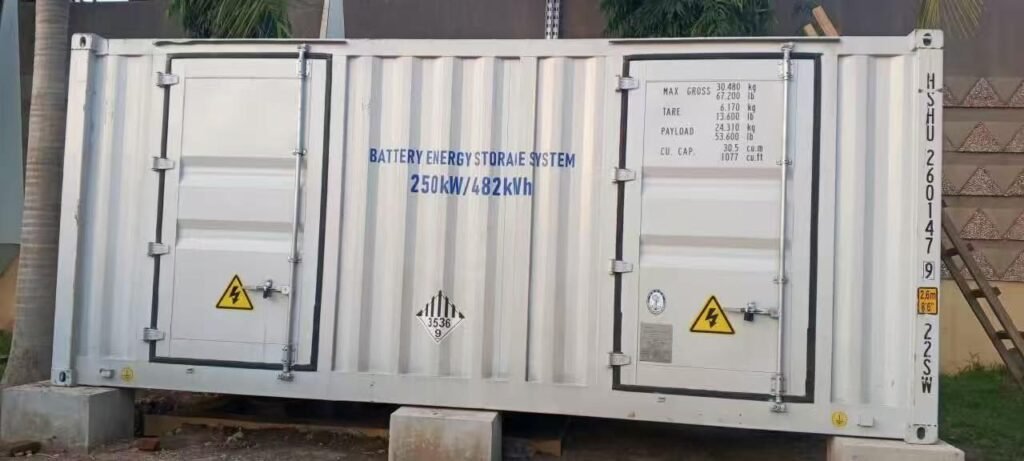
Dieselben Nachweis- und Abnahmefragen können verwendet werden, wenn HMXs Philippines solar-storage project; bewertet wird; Kataloginformationen sollten mit dem kontrollierten Angebot und den Zeichnungen abgeglichen werden.
Der technische Vergleich sollte auch gegen Philippines DOE 2026 own-use solar update. The Philippines DOE links simplified own-use solar rules with national renewable-power targets of 35% by 2030 and 50% by 2040, while retaining technical safeguards.
Project controls
Das kommerzielle Angebot sollte seine Annahmen, Ausschlüsse und Messgrenzen angeben. Käufer können Systeme dann auf derselben Basis vergleichen und spätere Designänderungen unter Dokumentenkontrolle halten.
| Operating state | Control priority | Customer rule |
|---|---|---|
| Normal solar day | Serve loads, charge battery, limit curtailment | Run flexible loads in solar hours |
| Evening | Serve selected loads from battery | Avoid unnecessary high-power loads |
| Low state of charge | Shed managed loads or start generator | Preserve critical reserve |
| Extended cloud | Coordinate PV, battery and generator | Use agreed fuel-versus-autonomy plan |
| Maintenance | Provide temporary supply or planned outage | Communicate service window |
Aktionspunkte für das Projektteam
- Use separate weekday, weekend and seasonal load profiles where the business changes.
- Check motor and compressor starting power, not only daily kWh.
- Define generator auto-start, warm-up, loading and stop rules.
- Train the customer on load priorities and alarm response.
Für Spezifikations- und Abnahmearbeiten, IEA Southeast Asia Energy Outlook 2026 provides an independent reference. IEA reports that Southeast Asian energy investment exceeded USD 100 billion in 2025, while grid and storage investment still needs to catch up with generation growth.
Off-grid pain points hidden by daily averages
These are the practical objections and failure modes most likely to stop approval, delay commissioning or create an avoidable service call for Philippines, Cambodia, island and rural markets.
- Cloudy-day sequences are replaced with one average solar day.
- Load growth and customer behavior erode the planned reserve.
- Generator start, minimum run and battery recharge logic are not tested together.
Fragen, die der Käufer vor der Genehmigung stellen sollte
- Which loads can be shed before the battery reaches its minimum reserve?
- How many low-solar days must the system ride through?
- What manual recovery path remains if automatic generator start fails?
Design around the worst energy sequence the owner will accept
Start with a time-based load model and classify essential, deferrable and shed loads. Daily kWh alone cannot show the evening peak, motor starts or the period when PV and demand do not overlap. Interview the operator about seasonal business activity and expected growth, then state which future loads are inside or outside the design.
Eine verwandte HMX-Referenz ist die Speicherkapazität für Heimbatterien. Nutzen Sie sie, um die nächste Lieferantendiskussion zu strukturieren, und dokumentieren Sie dann projektspezifische Abweichungen vor der Bestellung.
Use a location-specific solar model, but test several consecutive low-production days rather than only an annual average. Include PV temperature effects, inverter limits, battery charge power and system losses. If a generator is available, model start threshold, minimum run time, loading range, fuel constraints and the energy needed to restore reserve while serving the site.
Vor dem Design-Freeze sollte das Projektteam prüfen IEC 63056:2020 Anwendungsbereich. IEC 63056 ergänzt Sicherheitsanforderungen für sekundäre Lithiumzellen und -batterien, die in elektrischen Energiespeichersystemen bis 1.500 V DC nominal verwendet werden.
Define what the controls do when energy becomes scarce. The sequence may shed flexible loads, start a generator, lower an operating target or preserve energy for controls and communications. Test failed generator start and low state of charge during commissioning. The operator should receive a simple daily energy budget and escalation procedure.
Wie dies auf ein laufendes Projekt anzuwenden ist
- Build hourly load profiles for normal, growth and critical-operation cases.
- Model low-solar sequences with realistic conversion and auxiliary losses.
- Coordinate battery reserve, load shedding and generator operation.
- Test low-energy states and train the operator on recovery.
Die Berechnung reproduzierbar halten
Die Roh-Zähler- oder Lastdatei, das Bereinigungsprotokoll, Tarif- oder Betriebsregeln, die Modellversion und jede Annahme speichern, die Standortdaten in Leistung und Energie umrechnet. Der Eigentümer sollte in der Lage sein, den Basisfall erneut auszuführen, wenn sich Produktion, Tarife, Lasten oder Reservepolitik ändern, anstatt das ursprüngliche Ergebnis als dauerhaft zu behandeln.
Käufer, die den anfänglichen Umfang definieren, können diese Anforderungen mit HMX’s residential solar procurement guide. vergleichen. Die Seite ist eine Produkt- oder Projektreferenz; die endgültige Eignung erfordert weiterhin eine schriftliche Projektspezifikation.
- Roh- und bereinigte Zeitreihendaten mit dokumentierter Zeitzone und dokumentiertem Intervall.
- Basis-, Wachstums- und Stressszenarien mit Verlust-, Reserve- und Degradationsinputs.
- Ausgewählte Regelungssollwerte und der Grund, warum abgelehnte Alternativen nicht gewählt wurden.
- Ein Inbetriebnahme-Trace, der das Modell mit dem gemessenen Standortverhalten verbindet.
Bei der Übergabe dem Eigentümer die Modellinputs und einen Aktualisierungsauslöser geben. Eine wesentliche Änderung von Tarif, Last, Produktion, Wetter oder Reserve sollte zu einem kontrollierten erneuten Durchlauf führen, anstatt zu einem ungestützten Versprechen, dass die ursprüngliche Einsparung oder Laufzeit weiterhin gilt.
Field Note
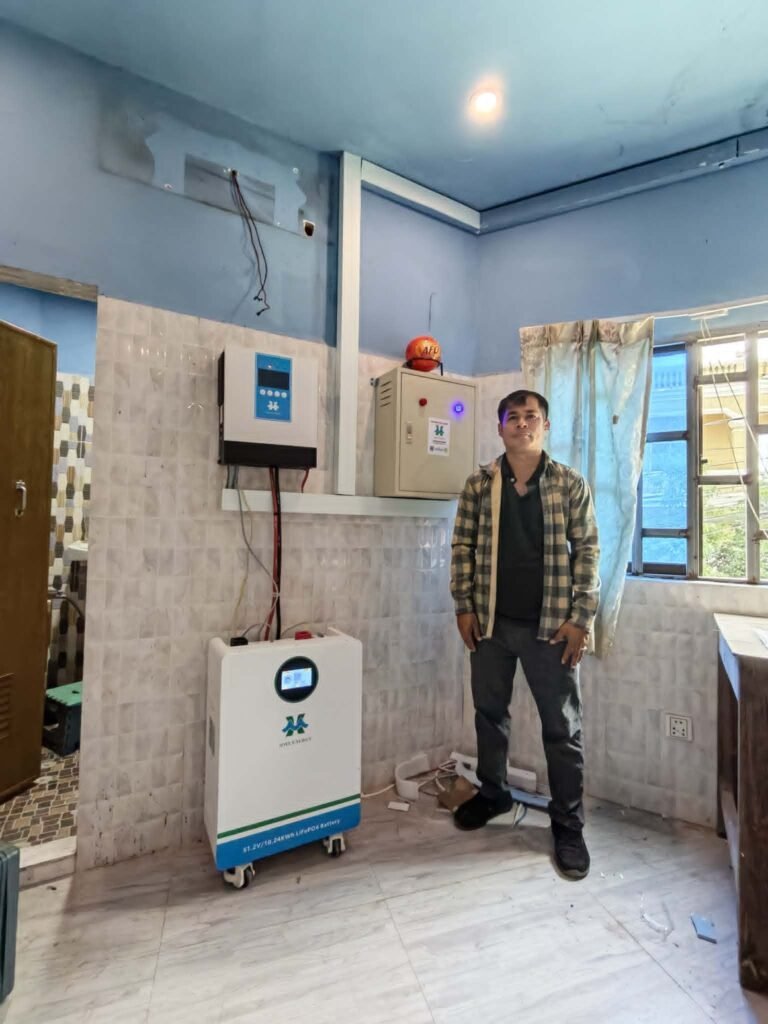
The best field design is one the local team can operate and service. Include training, spares, labels and a clear escalation path in the supply scope.