

A golf cart lithium route test should answer a fleet question: can the supplied vehicle and battery complete the required loaded duty, retain the agreed operating reserve and recharge before the next assignment? A catalogue distance does not answer that question unless its route, payload, speed, battery condition and endpoint match the buyer’s service.
For a golf course, resort or rental operator, the cost of a shortfall is rarely just a missed kilometre. It can mean collecting a stranded vehicle, moving passengers, interrupting a booking and taking a cart out of service while staff investigate. The purchasing decision should therefore be based on completed work and dependable turnaround, not the largest advertised range.
Al revisar HMX golf cart lithium battery options, request a model-specific integration assessment and an agreed acceptance test. This guide proposes a buyer’s protocol for that discussion. It is not a vehicle certification standard, a permission to modify a cart or a substitute for the vehicle and battery manufacturers’ instructions.
Define the service before defining the distance
Begin with the actual operating assignment. A golf course might need repeated rounds with passengers and bags. A resort might run short shuttle trips with long waits and frequent starts. A utility cart could carry equipment along a route that includes a steep access road. These services can cover similar distances while imposing different power, energy and charging demands.
Write a duty statement that includes the route, permitted payload, operating hours, stopping pattern, accessories and charging opportunities. Identify the point at which the cart must return to service and the condition in which it must arrive. The reserve needed to reach the charging area is part of the duty, not an optional allowance added after testing.
Separate the normal duty from exceptional operations. A supplier should not have to guess whether towing, unusual loads or an extended event belong in the acceptance case. Equally, the fleet manager should not discover after delivery that the quoted battery was assessed only on a flat route with an empty vehicle. Put the agreed cases in the purchase specification.
Define the stopping rule before the first run. The target is completion within approved limits, not deliberate operation until a protective shutdown occurs. Use the applicable vehicle and battery instructions to establish the permitted endpoint. A cart that finishes only by crossing an agreed operational reserve has not demonstrated the promised service.
Keep nominal capacity, usable energy and route range separate
The current HMX 48 V-class, 105 Ah product listing specifies a nominal voltage of 51.2 V and nominal capacity of 105 Ah. Multiplying those published ratings gives a nominal arithmetic energy of 5,376 Wh. That calculation does not measure energy delivered on a route or establish how much remains available before the system’s approved endpoint.
Voltage changes during operation, while discharge limits, temperature, current and cell conditions can affect what the system can deliver. A pack’s nominal energy is a specification input. Route energy is a measurement under stated conditions. Range is the distance or work completed within those conditions. Treating those quantities as interchangeable creates a misleading procurement comparison.
| Listing item | Published value or calculation | Buyer interpretation |
|---|---|---|
| Voltaje nominal | 51.2 V | Not the voltage at every point in the route |
| Capacidad nominal | 105 Ah | Not a guaranteed number of rounds or kilometres |
| Nominal arithmetic energy | 51.2 V × 105 Ah = 5,376 Wh | Derived from ratings; not measured usable route energy |
| Listed BMS | Built-in 100 A Smart BMS | Request continuous, transient and temperature-dependent limits separately |
A nominal current label also does not define a complete vehicle duty. Ask for the applicable continuous-current conditions, transient allowance, protection logic and integration requirements. Do not assume that a controller with a larger advertised current improves range or is safe with the proposed battery.
When comparing a 36 V-class battery alternative, start with vehicle compatibility rather than capacity alone. Matching ampere-hours across different voltage classes does not establish equivalent energy or interchangeable equipment. The approved vehicle architecture decides which proposal can enter the route comparison.
Freeze the vehicle configuration before the trial
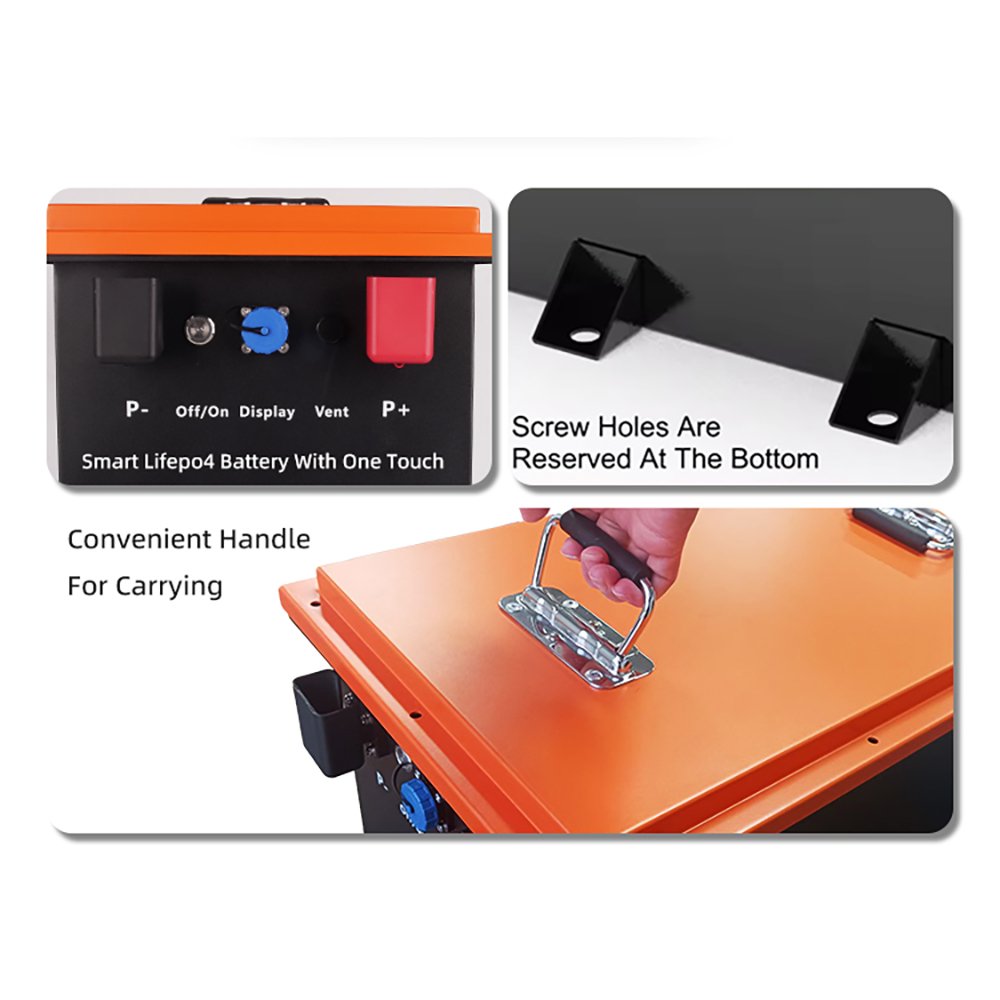
Record the cart identity, battery model, controller, motor, charger, firmware, tyre specification and accessories. Save any approved speed or operating settings that could affect the result. A test on one configuration cannot qualify a later shipment that quietly changes the controller, tyre size or battery revision.
The official E-Z-GO RXV ELiTE owner’s manual illustrates why vehicle-specific operating, loading and tyre instructions matter. Its requirements apply to the documented vehicles, not to every golf cart or an HMX conversion. Use the actual cart’s manual and qualified local support to establish the approved test configuration.
Ask a competent service team to confirm that the vehicle is fit for the planned test. Mechanical drag, an incorrect tyre setup or a pre-existing fault can obscure the battery result. Do not change tyre pressure beyond the vehicle’s permitted guidance to manufacture a better range number. Keep any corrective work in the test record.
Verify the installed restraint, connections and charging arrangement against the approved integration documents. The route trial is not the place to discover that the pack can move during a turn or that a connector is unsuitable for the duty. All electrical inspections and changes must be performed by qualified personnel.
Use a representative route and describe its hard sections
Map the route as a sequence, not only a total distance. Identify climbing sections, downhill sections, turns, stop locations, surface changes and the route back to charging. Note where passengers or cargo change. A short climbing segment late in the duty can matter more to service completion than a long easy section at the start.
Choose a normal-service route that can be repeated safely. Where several routes are important, retain them as separate cases instead of averaging away their differences. A flat shuttle route should not be allowed to hide failure on the route that carries guests to elevated accommodation.
Plan any demanding condition within the manufacturer’s operating limits. Do not conduct unsafe hill climbs, overload the vehicle or defeat a speed limit. Set an approved recovery arrangement before starting, and ensure the driver knows the stopping conditions and communications procedure.
Record distance using a consistent method and check its reliability. A tyre-size change can affect an odometer-based comparison. GPS also has limitations on short, obstructed or stop-heavy routes. Document the instrument and route method so a later repeat does not silently use a different distance basis.
Control payload, stops and accessories without creating a laboratory fiction
A repeatable test should still resemble real work. Use the agreed payload within the vehicle’s approved limits and record its distribution. Include bags, tools or other normal cargo rather than counting passengers alone. When a safe, approved substitute load is used, document what it represents and how it is secured.
Retain the stopping pattern and dwell periods that matter to operations. Repeated starts can place a different demand on the system from steady travel. Long waits can also consume energy through permitted accessories or connected equipment, even when the cart is stationary.
Record the accessories that remain active and their actual operating state. Lights, communications equipment and auxiliary loads should not be removed from the acceptance case merely because the supplier’s demonstration did not include them. Conversely, an accessory added after commissioning should trigger a review of the original service assumptions.
Agree how much driver variation is acceptable. Use trained drivers and a clear operating instruction, but do not demand an artificial driving style that staff cannot maintain during normal service. A result achieved only by unusually slow travel or unusual stop avoidance may be repeatable yet commercially irrelevant.
Measure energy at a stated boundary
El EPA’s explanation of road-EV testing distinguishes test conditions and electricity measurement at the outlet, including charging losses. Those road-vehicle procedures do not certify a golf cart. The useful principle here is to identify exactly where energy is measured before comparing results.
For operational energy, define whether the test uses battery-terminal discharge energy, an approved onboard energy record or electricity taken from the charging outlet. They answer different questions. Battery discharge helps characterize the vehicle’s duty; outlet energy helps evaluate the energy required to restore readiness. Neither should be relabelled as the other.
Use suitable measurement equipment installed and operated by competent personnel. Where voltage and current are recorded, energy calculation must account for their change over time and the declared sign convention. A single voltage multiplied by a single current is a power observation, not a complete route-energy measurement.
Do not subtract regeneration or charging events twice. Identify whether the energy counter reports gross discharge, gross charge or net energy. If the documentation is unclear, retain the raw records and obtain clarification before using the total in a supplier comparison.
| Record group | Data to retain | Comparison it enables |
|---|---|---|
| Vehicle baseline | Vehicle and battery identity, firmware, tyres and approved settings | Shows whether repeated tests used the same configuration |
| Operating duty | Route, payload, stops, accessories and elapsed service time | Connects the result to the work the fleet needs |
| Environment | Ambient and available battery temperatures, weather and surface condition | Identifies materially different test conditions |
| Battery behaviour | Declared energy boundary, current, voltage, permissions and first alarms | Separates energy consumption from a power or protection limit |
| Return condition | Completed work, displayed SOC and approved reserve status | Checks the actual operational endpoint |
| Recharge | Charger identity, start/end states, available supply and elapsed turnaround | Tests readiness for the next assignment |
Use SOC as supporting evidence, not the distance meter
A route can expose a power limitation before it exhausts the battery’s usable energy. On a demanding section, record whether vehicle performance changes with current demand, pack voltage, temperature or the available charge and discharge permissions. These observations help distinguish an energy-sizing problem from a restriction in the battery, controller or integration. They do not justify bypassing a protective limit.
Include the order of demanding sections in the comparison. Moving a climb from the end of the route to the beginning can change the condition under which the system faces it. A supplier demonstration on a rearranged route is not automatically equivalent to the buyer’s duty, even if the reported distance and total elevation gain are similar. Keep the route sequence with the acceptance evidence.
State of charge is an estimate, and different devices can display different estimates or update them at different times. Record which device supplies the value. A large percentage change over a short section does not automatically establish excessive energy use or a defective battery.
Analog Devices’ 2019 LFP fuel-gauging article explains why a flat voltage profile and hysteresis complicate charge estimation. It is a technical-method reference, not a current range guarantee for a golf cart. Its example accuracy should not be transferred to the proposed battery.
Record the approved charging or estimator reference condition before the route. Do not manually set the display to full to improve the starting appearance. Preserve reset or synchronization events and ask the supplier to explain the model’s approved learning process.
If discharge stops while the display still shows an apparently comfortable percentage, collect the first limiting event and relevant battery conditions. A cell limit, temperature condition, current demand or vehicle-control action may have ended service. Percentage alone cannot distinguish those causes.
El golf cart BMS specification guide helps frame the requested protection and diagnostic evidence. For the route report, connect those signals to the moment the service changed. Clearing a fault before exporting the sequence can remove the information needed to explain an early stop.
Test recharge turnaround as a second acceptance case
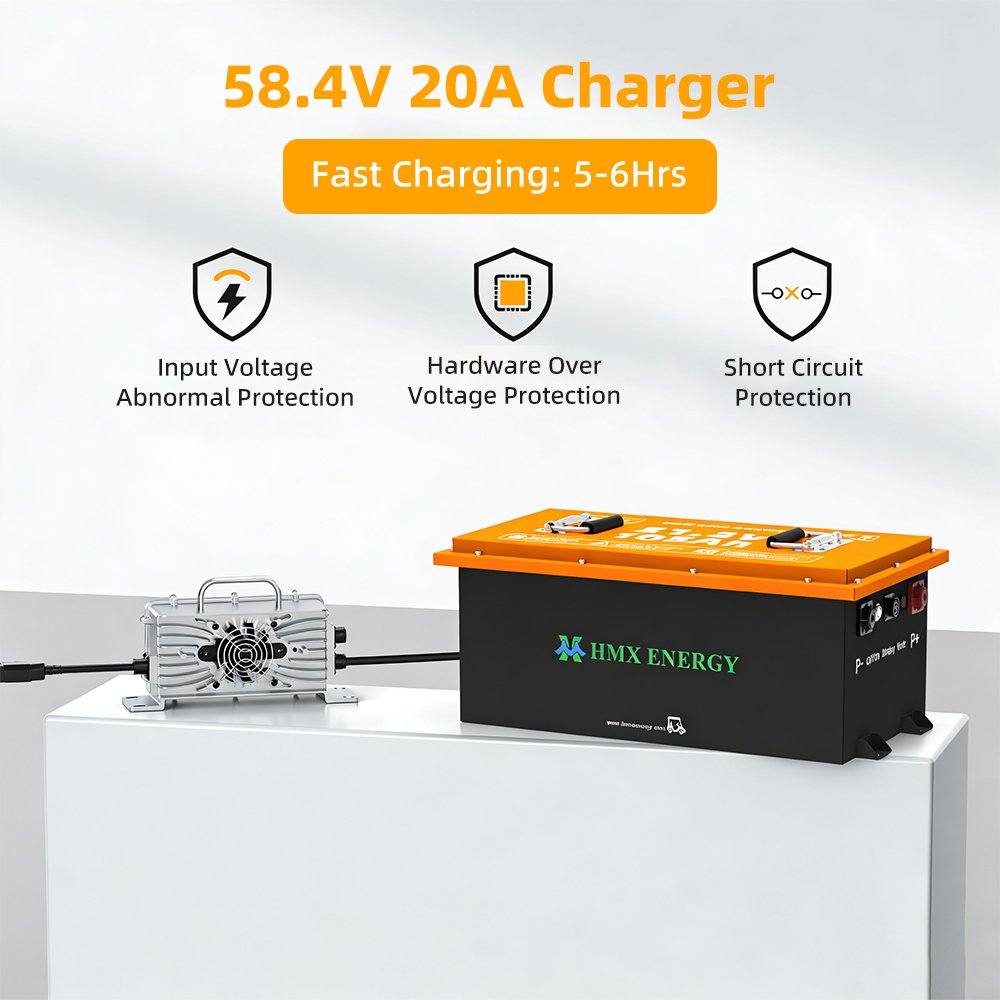
A cart that completes its route but misses the next departure is not necessarily the right fleet solution. Record how much charging opportunity actually exists between assignments, which approved charger is used and whether other carts share the electrical supply. The charger’s nameplate alone cannot establish the recharge time.
Begin the turnaround check from the return condition produced by the agreed route. A charging demonstration begun with a much less discharged battery does not prove the same readiness. Define the endpoint as the manufacturer’s approved ready state for the next duty, not just a convenient display percentage.
Include the practical sequence: return, park, inspect, connect, charge, disconnect and release. Staff availability and access can reduce the usable charging window even where sufficient electrical power exists. Record any charger or battery conditions that restrict charging and distinguish them from a supply limitation.
Keep energy costs separate from turnaround. Outlet energy can support a cost calculation only when the actual applicable tariff is known. Do not borrow an electricity price, charge efficiency or annual usage assumption from another fleet. Where the information is missing, leave the commercial result unresolved rather than invent a saving.
Repeat the right cases and report the spread
For a fleet with repeated assignments, test the next shift from the actual recharge endpoint rather than extrapolating the first run. A partial charging window, a delayed return or a shared supply can leave a different starting condition. Record that condition and repeat the required service safely. Dividing one advertised range by the length of a round cannot establish how many successive assignments the fleet will complete.
Keep the legacy vehicle comparison honest as well. If the conversion changes installed mass or settings, report those changes rather than attributing the whole difference to battery chemistry. Compare the same approved service, not necessarily an identical empty-vehicle weight. Actual measured configuration and payload records are more useful than a claimed weight saving unsupported by an installed-vehicle check.
One successful run demonstrates one observed case. It does not establish seasonal range, every vehicle in the fleet or the entire battery warranty period. Agree repeats that address the buyer’s important uncertainties, using a consistent procedure and documented conditions.
Do not hide a failed or interrupted run by reporting only the best result. Identify invalid runs, explain why they were excluded and retain their records. If the configuration changed to resolve a problem, label subsequent tests as a new configuration rather than combine them with the original baseline.
Report completed service, energy, return condition and turnaround together. When results differ, first compare payload, route conditions, temperatures, settings and starting states. A variation can be real without proving a manufacturing defect. Equally, averaging a serious recurring limitation into an acceptable mean is not a defensible fleet decision.
Any proposed reserve should have an operational reason and be agreed with the buyer. It may reflect the return-to-charger requirement, dispatch uncertainty or an approved response to an interrupted assignment. Do not apply a fixed percentage to every fleet without the relevant evidence.
Convert observations into a purchasing decision
Prepare acceptance categories before the trial. Separate a failure of the contracted service from an invalid test, an unresolved data issue and a correct protective response outside the approved duty. This prevents every disappointing result from being treated as the same battery defect.
| Result | Interpretation | Purchasing response |
|---|---|---|
| Duty and approved reserve completed; turnaround achieved | Observed configuration met the tested service | Accept that case with its conditions recorded |
| Route completed but recharge readiness missed | Energy service and charging service differ | Review charger, supply and dispatch before acceptance |
| Protection limits reached within agreed duty | Integration or sizing requires investigation | Preserve evidence and require an approved remedy and retest |
| Payload, settings or starting state differ from the protocol | Result is not a comparable acceptance case | Correct the procedure and repeat without rewriting the criteria |
| Only advertised distance or an SOC screenshot is available | Required service evidence is missing | Keep the relevant acceptance milestone open |
Put the test record into the order and the service file
Require each bidder to complete the same evidence template. Where a supplier’s existing report uses a different route, load or endpoint, identify the mismatch before ranking the proposals. A missing condition should remain a missing condition; do not replace it with an optimistic assumption simply to fill a comparison spreadsheet.
Have the responsible parties sign the accepted configuration and report revision. Retain the underlying logs alongside the readable summary, with timestamps and instrument identity. If a later shipment or service visit changes a component, the fleet can then establish which equipment was actually tested and which commitment the supplier accepted. That traceability is often more valuable during a warranty discussion than an isolated range figure.
Attach the agreed duty, permitted configuration, measurement boundary, stopping rules and evidence requirements to the purchase order. Identify who supplies the vehicle, performs the integration, witnesses the test and resolves a failed case. Define the remedy and retest process without assuming that every shortfall requires a larger pack.
Utilizar el golf cart lithium conversion review for the wider installation questions, while keeping this route protocol focused on demonstrated service. Product approval, mechanical fitment, charging compatibility and route acceptance remain separate deliverables.
Retain the final as-tested configuration with the fleet’s service records. Changes to battery revision, controller settings, tyres, accessories or the route can invalidate the old comparison. Use a documented change review to decide which cases must be repeated.
The best supplier comparison is not a contest between unexplained range numbers. It is a matched record of the required work, the conditions, the energy consumed, the reserve retained and the time needed to return the cart to service. Ask each bidder to support that record. It gives the fleet a practical basis for accepting equipment and investigating problems after delivery.