

A commercial battery project can fail before equipment is ordered. The usual cause is not cell chemistry; it is an incomplete scope. Missing interval-load data, undefined operating modes, vague acceptance tests and unclear responsibility for grid studies turn a comparable tender into a set of unrelated quotations.
This checklist is written for EPC teams, distributors and factory owners preparing an RFQ. It separates information the buyer must supply from evidence the integrator or manufacturer must return.
Where commercial BESS orders go off track
These are the practical objections and failure modes most likely to stop approval, delay commissioning or create an avoidable service call for Global EPCs, industrial buyers and energy distributors.
- Offers use different AC/DC and nominal/usable boundaries, so headline kWh cannot be compared.
- The buyer assumes the cabinet price includes studies, protection, commissioning or site works that the supplier excluded.
- A certificate is supplied, but its model or tested configuration does not match the proposed system.
Questions the buyer should ask before approval
- Who owns whole-system performance when the battery, PCS and EMS come from different vendors?
- Which output values are guaranteed at the AC point of connection?
- What service response, spares and warranty remedy are included after handover?
Direct answer: Treat the BESS as a project package rather than a battery cabinet. Define the electrical point of connection, operating objective, duty cycle, ambient conditions, communications, fire strategy and acceptance method before asking for price.
Start with the operating case
For Global EPCs, industrial buyers and energy distributors, the first task is to turn the intended service into measurable inputs and acceptance limits. The following table keeps the decision tied to evidence instead of a broad product label.
| RFQ input | Minimum detail | Why it changes the offer |
|---|---|---|
| Load data | 12 months of bills plus 15-minute or finer interval data | Determines power target and usable energy |
| Operating objective | Peak shaving, backup, PV shifting, microgrid or stacked services | Changes control logic and cycling |
| Site conditions | Temperature, humidity, altitude, corrosion class and indoor/outdoor location | Affects enclosure and thermal design |
| Grid interface | Voltage, frequency, transformer and protection details | Defines PCS and interconnection scope |
| Commercial boundary | EXW, FOB, CIF, delivered duty paid or EPC | Prevents missing logistics and site work |
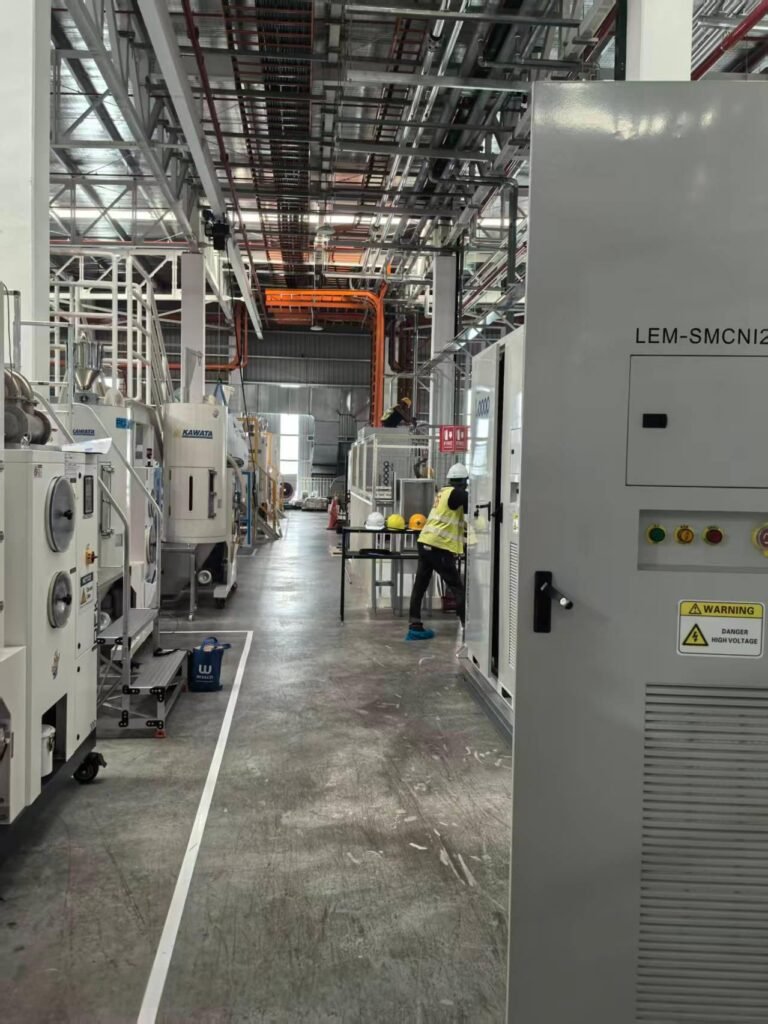
Build a comparable technical offer
The commercial offer should state its assumptions, exclusions and measurement boundary. Buyers can then compare systems on the same basis and keep later design changes under document control.
| Supplier return | Evidence to request | Acceptance point |
|---|---|---|
| Single-line diagram | Rated values and protection devices | Design review |
| Data sheets | Cell, rack, BMS, PCS, EMS and HVAC | Document control |
| Safety package | Applicable certificates and test reports | Named model and configuration match |
| FAT protocol | Measurements, alarms and pass/fail limits | Witnessed or recorded FAT |
| Warranty schedule | Years, throughput, operating limits and exclusions | Contract exhibit |
Action points for the project team
- Name one party responsible for the integrated system response, even when major components come from different vendors.
- Require software, firmware and protocol versions in the document register.
- Tie milestone payments to approved drawings, FAT evidence, shipping documents and commissioning results.
- State which values are guaranteed at the AC point of connection and which are nominal DC values.
Build the bid comparison before requesting prices
Start with a controlled requirement sheet, not a supplier questionnaire. Record the point of connection, available fault data, normal and abnormal operating states, load-data interval, dispatch objective, ambient design conditions, communications boundary and local approval route. Give every bidder the same revision. When a question changes the scope, issue the answer to all participants so that later price comparisons remain meaningful.
Normalise the performance boundary before ranking offers. Ask for continuous AC power at the stated ambient condition, usable energy delivered through the PCS, efficiency at identified load points, auxiliary consumption and the state-of-charge window used for each value. Keep nominal cell or rack energy in a separate field. This prevents a low price from winning only because the offer measures output at a more favourable boundary.
The commercial schedule should follow the evidence schedule. Link drawing approval, design freeze, FAT, shipment, SAT and final acceptance to named documents and pass criteria. State who provides civil works, transformer studies, protection settings, network access, lifting, fire interfaces and operator training. A deviation register should remain open until each exception is accepted, priced or removed.
How to apply this on a live project
- Issue one numbered RFQ data sheet with an editable compliance column.
- Hold a clarification meeting focused on exclusions, interfaces and guaranteed measurement points.
- Approve the document register and FAT protocol before manufacturing is complete.
- Close the project with SAT results, configuration backups, training records and a warranty contact path.
Additional commercial check
A strong offer should also explain the service model after commissioning. Separate remote diagnostics, software maintenance, preventive visits, emergency response, spare parts and performance remedies. Request response times by severity and identify what support is available in the destination country. This makes lifecycle support comparable without assuming that a general warranty includes every operational service.
Records that should survive the purchase order
The project file should let a new engineer reconstruct what was bought, why it was selected and how compliance was demonstrated. Keep source data and approved revisions together; a collection of undated email attachments is not adequate configuration control.
- Approved single-line, layout, interface schedule and equipment data sheets.
- Guarantee schedule showing operating conditions, measurement points and exclusions.
- Certificate and report index matched to the ordered model and configuration.
- FAT, shipping, SAT, training, settings backups and open-item closure records.
Review this baseline whenever equipment, firmware, operating mode or site responsibility changes. The technical file, guarantees and acceptance method should describe the same configuration throughout the project.
Use source-backed checks
Research review date: 30 September 2026. Quantitative statements below are tied to the named source and should be rechecked if the project is procured later.
The U.S. Department of Energy checklist separates early project development, technical specifications and interconnection work for commercial lithium-ion systems. See U.S. DOE BESS procurement checklist.
The IEA scenario used for planning reaches 1,500 GW of global storage by 2030, with batteries providing 1,200 GW. This is a system-planning scenario, not a supplier sales forecast. See IEA Batteries and Secure Energy Transitions.
IEC 62619:2022 covers safety requirements and tests for secondary lithium cells and batteries used in industrial applications, including stationary and motive uses. See IEC 62619:2022 scope.
IEC 63056 adds safety requirements for secondary lithium cells and batteries used in electrical energy storage systems up to 1,500 V DC nominal. See IEC 63056:2020 scope.
Wartsila publicly separates software support, planned maintenance, performance guarantees and extended warranty into different service levels. That structure is a useful procurement benchmark: buyers should price and contract each lifecycle responsibility instead of accepting a general promise of support. See Wartsila Service+ lifecycle scope.
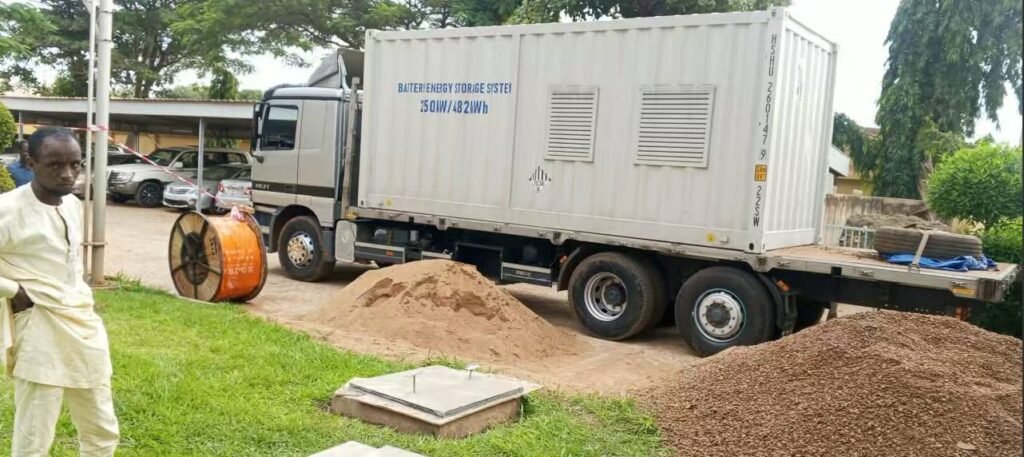
Related HMX Product and Project Pages
For product-level comparison, review the commercial and industrial energy storage range, 100kW/215kWh air-cooled system, 125kW/261kWh liquid-cooled system, HMX project references. These pages show available HMX categories or references; final suitability still depends on the project specification and written confirmation.
What to Put in the RFQ Now
Send suppliers the same load file, site sheet and compliance matrix. Ask for a numbered deviation schedule so that price differences can be traced to real scope differences.