

A home battery commissioning checklist should prove the service sold to the customer, not merely confirm that the display turns on. If the promised service is backup for a refrigerator, communications equipment and a water pump, those loads belong in the agreed site acceptance test. A lamp connected to the backup output cannot demonstrate the same result.
Site acceptance testing, or SAT, takes place after installation and before final handover. It combines the installer’s required electrical checks with a witnessed demonstration of the configured operating modes. All electrical testing and switching must be performed by qualified personnel using the manufacturer-approved procedure and applicable local rules.
Agree the acceptance boundary before the visit
Write down which circuits are backed up, which appliances may run together and which loads must remain disconnected during an outage. Include the customer’s tolerance for interruption. A successful backup transfer is not evidence of uninterrupted power suitable for every appliance.
For a project using an all-in-one residential ESS, record the exact system model, battery configuration and backup arrangement. The term all-in-one describes packaging; it does not establish the scope of the backed-up circuits or remove the need for local protection and installation checks.
Define pass criteria before testing. Use documented equipment limits and contractual service requirements, not a target chosen after seeing the result. Where a requirement cannot be verified during the visit, mark it as outstanding and agree the next test. An unchecked box should not silently become a passed item.
| Élément | Record before testing | Pourquoi c'est important |
|---|---|---|
| Essential circuits | As-built circuit list and excluded loads | Prevents whole-house backup assumptions |
| Starting loads | Actual appliances and allowed combinations | Steady running power does not prove starting capability |
| Backup settings | Approved reserve, operating mode and relevant limits | Connects the test to the customer’s actual configuration |
| Interruption requirement | Contractual tolerance and measurement method | A working transfer is not automatically UPS performance |
| Recovery behaviour | Expected grid restoration and charging policy | Proves the system can return to its normal service |
Keep safety inspection ahead of functional demonstrations
Confirm that the installation’s electrical, mechanical and documentation checks have been completed before introducing test loads. The qualified installer must verify the required protection, earthing arrangement, isolation, labels and configured grid profile. This article is not a live-switching instruction or a substitute for those checks.
A useful reference is Victron’s ESS commissioning guidance, which verifies particular operating states and transitions in its own architecture. Its menu labels and switching steps are manufacturer-specific. The general lesson for procurement is to request an approved test procedure for the supplied configuration rather than adapting another brand’s checklist.
Save the firmware versions and settings before the test. If a setting changes during fault finding, record why, who approved it and which tests must be repeated. Otherwise the final screenshot may describe a configuration that never passed the original acceptance sequence.
Witness the load behaviour, not only the inverter status
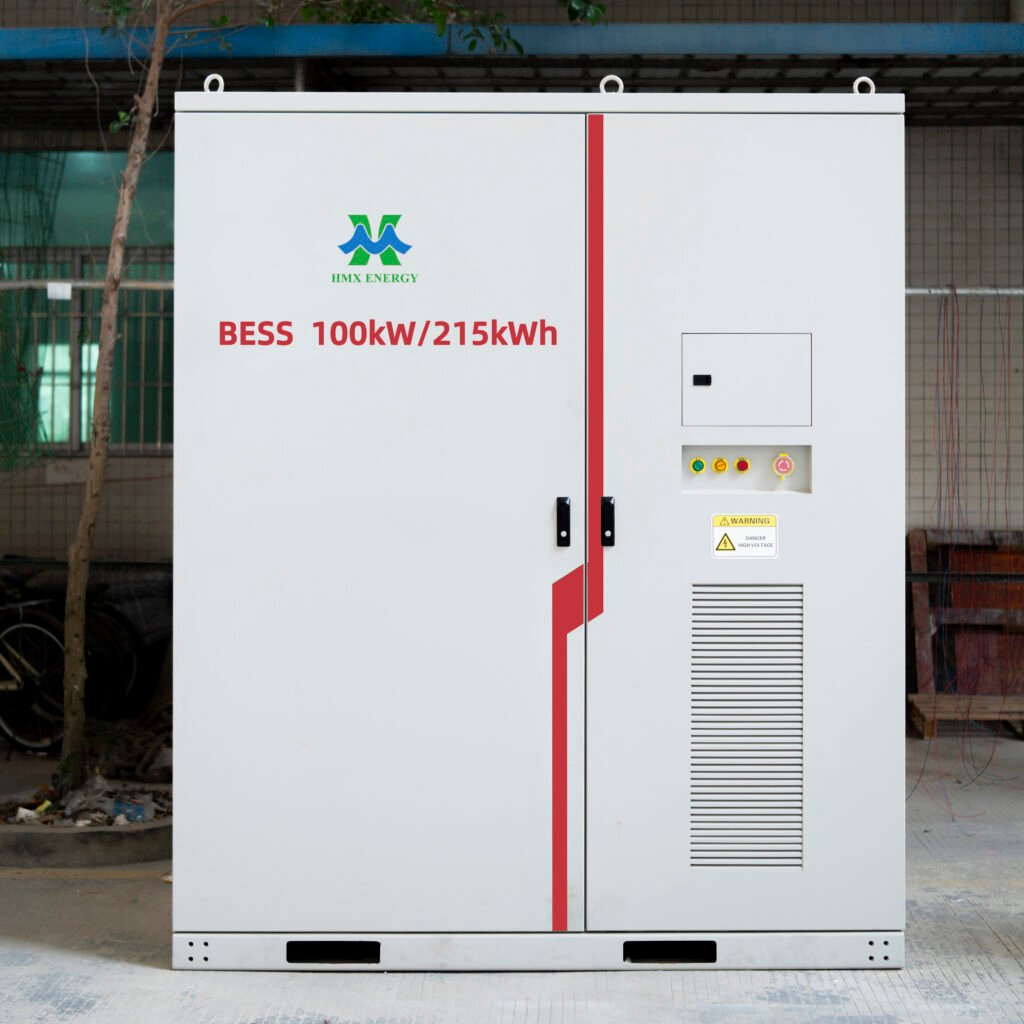
Observe each agreed load through the approved outage simulation. Does communications equipment restart? Does the refrigerator resume correctly? Can the pump start when the other agreed loads are already operating? Record both the equipment indications and the customer’s service outcome. A healthy status page can coexist with an appliance that has stopped.
Le solar inverter model determines available operating modes and output limits. Obtain the applicable manual before agreeing the test sequence. Do not create an uncontrolled overload to discover a limit, and do not bypass a protective function to make a demonstration pass.
Record the battery state of charge and available PV conditions at each relevant stage. A daytime demonstration with strong solar input is not proof of the same service at night. If solar support is part of the acceptance case, distinguish it from battery-only operation in the result.
| Demonstration | Preuve à conserver | Claim it can support |
|---|---|---|
| Normal operation | Meter direction, mode, battery status and load readings | The configured system operates under the observed conditions |
| Backup transition | Event timestamps and actual appliance behaviour | The agreed circuits transferred within the tested requirement |
| Agreed starting load | Load combination, starting event and alarms | That combination started under the recorded conditions |
| Return to grid | Restoration event and subsequent operating state | The tested system recovered as specified |
| Customer controls | Approved user access and witnessed demonstration | The customer understands the permitted controls |
Do not turn a short SAT into a battery-life certificate
A site visit cannot establish long-term capacity retention, annual savings or operation through every outage. The DOE’s 2024 BESS evaluation method uses collected charge and discharge data for deployed-system assessment. That is a different task from a short handover demonstration.
Keep measured results separate from estimates. A brief test proves the observed operating sequence; a runtime forecast needs a documented load profile, usable energy assumptions and relevant losses. Where a customer needs a capacity test, agree its procedure, measurement boundary and acceptance conditions separately.
Le guide de dimensionnement de batterie hors réseau can help frame the energy requirement, but sizing calculations should not be labelled measured SAT performance. Distinguishing those records protects the installer from overstated promises and helps the buyer understand what remains uncertain.
Hand over an evidence package the next technician can use
Le DOE’s August 2025 lithium-ion procurement template is explicitly customizable for federal projects. It is not a residential acceptance rule, but its project-specific approach is useful: define the required deliverables for this installation rather than accept an unexplained generic report.
Retain the signed load list, test observations, as-built drawing, model and serial records, final settings, firmware versions and unresolved items. Give the customer the approved user instructions, emergency contacts and service route. Do not hand over installer credentials or encourage changes to protection settings.
The handover decision
Accept the installation when its required safety checks are complete and the agreed service has passed the approved tests. If a critical load fails to start or the recovery sequence remains uncertain, record the issue and close it through a controlled retest. A signature should mark an evidenced result, not the end of the appointment.