
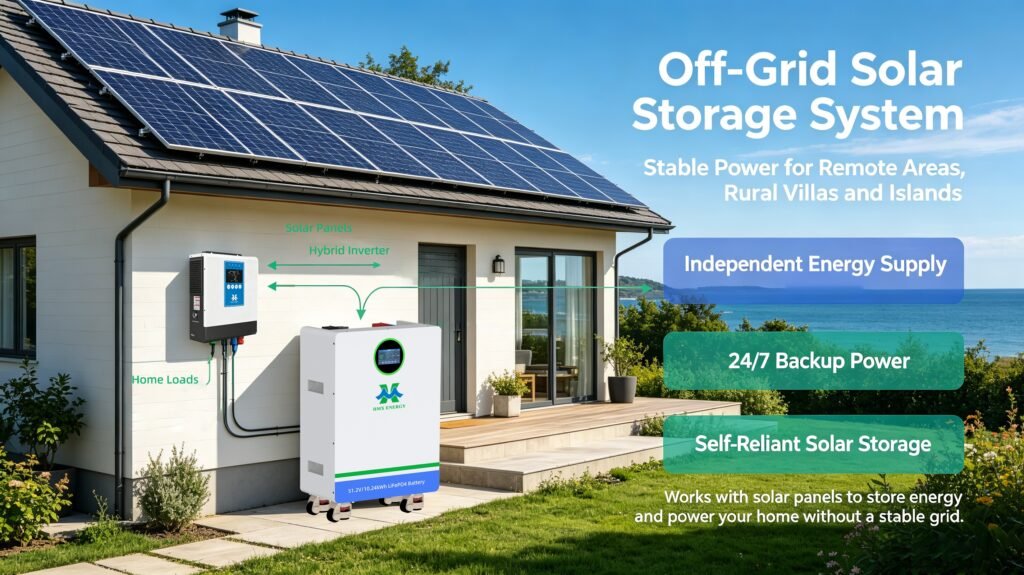
Home battery sizing starts with the customer’s load, not a preferred cabinet size. A household that wants evening solar use has a different requirement from one that expects air-conditioning, refrigeration and pumps to run through a long outage.
The four common nominal sizes in this comparison are reference points. Delivered energy depends on the allowed operating window, inverter efficiency, temperature and the power drawn by each load.
The same evidence and acceptance questions can be used when assessing HMX’s home battery storage range; catalogue information should be reconciled with the controlled quotation and drawings.
What causes residential battery complaints
These are the practical objections and failure modes most likely to stop approval, delay commissioning or create an avoidable service call for Residential solar distributors and installers in tropical markets.
- A single peak appliance value is multiplied by outage hours.
- Compressor or pump starting power is not checked against inverter capability.
- Future battery expansion is promised without rules for age, firmware or state-of-health matching.
Questions the buyer should ask before approval
- Which circuits must remain on during an outage?
- What is the measured overnight energy use, not the monthly average?
- What reserve and replacement policy will the installer explain to the homeowner?
Direct answer: Create two schedules: a normal evening schedule and a critical-load outage schedule. Size energy for the chosen hours and check that the inverter can start and run the connected loads.
Research review date: 30 September 2026. Quantitative statements are tied to the linked source and should be rechecked if procurement occurs later.
Before design freeze, the project team should review NREL PVWatts Calculator. PVWatts estimates grid-connected PV energy production from location and system inputs. It is useful for the PV side of a study, but it does not replace interval-load and outage analysis for battery sizing.
Start with the operating case
For Residential solar distributors and installers in tropical markets, the first task is to turn the intended service into measurable inputs and acceptance limits. The following table keeps the decision tied to evidence instead of a broad product label.
| Nominal size | Typical planning question | Common design check |
|---|---|---|
| 5kWh | Which essential loads must run for a limited period? | Avoid large simultaneous motor loads |
| 10kWh | Can evening household use shift away from the grid? | Match inverter and battery current |
| 15kWh | Is longer backup or higher night consumption required? | Check floor space and expansion plan |
| 16kWh | Does the project need a larger single-module option? | Verify usable energy and handling method |
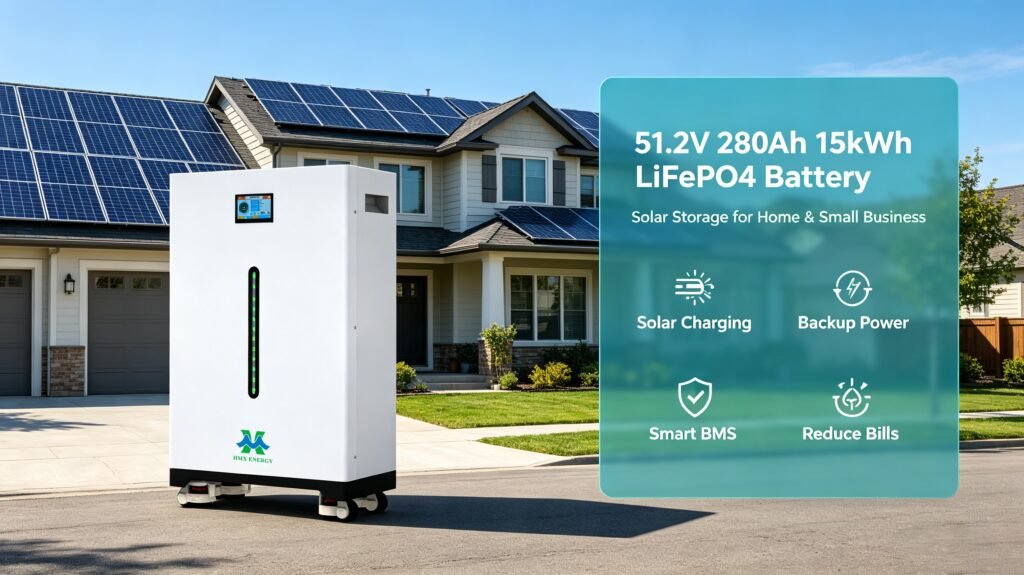
A related HMX reference is the 10kWh wall-mounted LiFePO4 battery. Use it to frame the next supplier discussion, then record project-specific deviations before ordering.
For the final evidence review, use IEC 63056:2020 scope as a source check. IEC 63056 adds safety requirements for secondary lithium cells and batteries used in electrical energy storage systems up to 1,500 V DC nominal.
Build a comparable technical offer
The commercial offer should state its assumptions, exclusions and measurement boundary. Buyers can then compare systems on the same basis and keep later design changes under document control.
| Load group | Data to record | Sizing effect |
|---|---|---|
| Lighting and electronics | Watts and hours | Base energy |
| Refrigeration | Running and starting power | Power and energy |
| Air conditioning | Rated input, surge and duty cycle | Often dominates both |
| Water pump | Motor rating and start method | Inverter surge requirement |
| Optional loads | Cooking, water heating and EV charging | Usually separated during outage |
Action points for the project team
- Measure or obtain nameplate power for the actual appliances.
- Keep a reserve for low state of charge and unexpected outage duration.
- Use hourly PV production and load overlap instead of monthly solar totals.
- Confirm battery-to-inverter communication and approved current limits.
For current market and policy context, review IEA Batteries and Secure Energy Transitions. The IEA scenario used for planning reaches 1,500 GW of global storage by 2030, with batteries providing 1,200 GW. This is a system-planning scenario, not a supplier sales forecast.
Use an outage load schedule instead of a sales calculator
List every proposed backup circuit and record typical power, starting power, duty cycle and hours of use. Separate loads that must operate continuously from flexible loads the homeowner can defer. Refrigeration, pumps, air conditioning and cooking equipment need particular attention because their short peaks or user behaviour may dominate inverter selection even when daily energy looks modest.
Buyers defining the initial scope can compare these requirements with HMX’s 15kWh floor-standing LiFePO4 battery. The page is a product or project reference; final suitability still requires a written project specification.
Build at least a normal-night and conservative-outage case. Apply the usable state-of-charge window, conversion losses, standby power and temperature limits. If PV is expected to recharge during an outage, show a low-solar case and the charge power available while loads are running. A sunny-day estimate should not be presented as guaranteed autonomy.
The technical comparison should also be checked against DOE utility-rate guidance. Utility bills can combine energy, demand and time-of-use components, so savings models must use the actual tariff rather than a generic peak/off-peak spread.
The installer should give the customer an operating guide with backed-up circuits, maximum simultaneous loads, reserve setting and recovery procedure. Expansion rules must name approved modules, age or state-of-health limits and firmware requirements. Clear expectations reduce nuisance trips and prevent a future add-on from compromising the original system.
Project workflow
- Measure or estimate each critical circuit separately.
- Check inverter continuous and surge capability against the load sequence.
- Model usable energy for normal and conservative outage cases.
- Document customer load priorities, reserve settings and expansion conditions.
Keep the calculation reproducible
Save the raw meter or load file, cleaning log, tariff or operating rules, model version and every assumption that converts site data into power and energy. The owner should be able to rerun the base case when production, tariffs, loads or reserve policy change instead of treating the original result as permanent.
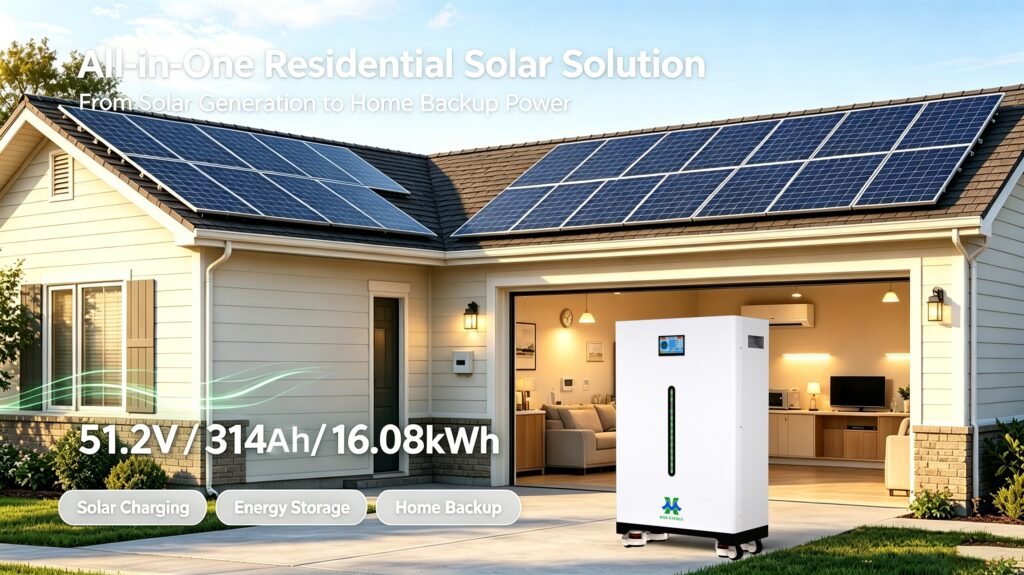
For a concrete equipment-level review, apply the checks above to the 16kWh floor-standing LiFePO4 battery and request confirmation for the intended site conditions and operating mode.
- Raw and cleaned time-series data with time zone and interval documented.
- Base, growth and stress scenarios with losses, reserve and degradation inputs.
- Selected control setpoints and the reason rejected alternatives were not chosen.
- A commissioning trace that connects the model to measured site behaviour.
At handover, give the owner the model inputs and an update trigger. A material tariff, load, production, weather or reserve change should lead to a controlled rerun rather than an unsupported promise that the original saving or runtime still applies.
Next Step
The useful output of the study is not one battery size. It is a repeatable model with stated inputs, sensitivities and an acceptance test that the owner can audit.
Frequently Asked Questions
Is a 10kWh battery always twice the runtime of a 5kWh battery?
Only under the same usable-energy window, losses, temperature and load. Inverter limits and appliance cycling can change the result.
Should air conditioning be on the backup circuit?
Only after checking continuous power, compressor starting demand and the customer’s runtime expectation.
Can batteries be added later?
Only if the product, BMS and inverter support the proposed expansion and the installation follows the manufacturer’s rules.