

Um teste de rota de lítio para carrinho de golfe deve responder a uma pergunta da frota: o veículo e a bateria fornecidos conseguem completar o serviço carregado exigido, manter a reserva operacional acordada e recarregar antes da próxima atribuição? Uma distância de catálogo não responde a essa pergunta, a menos que sua rota, carga útil, velocidade, condição da bateria e ponto final correspondam ao serviço do comprador.
Para um campo de golfe, resort ou operador de aluguel, o custo de uma insuficiência raramente é apenas um quilômetro perdido. Pode significar recolher um veículo encalhado, transportar passageiros, interromper uma reserva e retirar um carrinho de serviço enquanto a equipe investiga. A decisão de compra deve, portanto, basear-se no trabalho concluído e na rotatividade confiável, não na maior autonomia anunciada.
Ao revisar Opções de bateria de lítio para carrinho de golfe HMX, solicite uma avaliação de integração específica para o modelo e um teste de aceitação acordado. Este guia propõe um protocolo do comprador para essa discussão. Não é uma norma de certificação de veículos, uma permissão para modificar um carrinho ou um substituto para as instruções dos fabricantes do veículo e da bateria.
Defina o serviço antes de definir a distância
Comece pela atribuição operacional real. Um campo de golfe pode precisar de voltas repetidas com passageiros e sacolas. Um resort pode operar viagens curtas de traslado com longas esperas e partidas frequentes. Um carrinho utilitário pode transportar equipamentos ao longo de uma rota que inclui uma via de acesso íngreme. Esses serviços podem cobrir distâncias semelhantes enquanto impõem demandas diferentes de potência, energia e recarga.
Escreva uma declaração de serviço que inclua a rota, a carga útil permitida, as horas de operação, o padrão de paradas, os acessórios e as oportunidades de recarga. Identifique o ponto em que o carrinho deve retornar ao serviço e a condição em que deve chegar. A reserva necessária para alcançar a área de recarga faz parte do serviço, não é uma margem opcional adicionada após o teste.
Separe o serviço normal das operações excepcionais. Um fornecedor não deve ter que adivinhar se reboque, cargas incomuns ou um evento prolongado pertencem ao caso de aceitação. Da mesma forma, o gerente de frota não deve descobrir após a entrega que a bateria cotada foi avaliada apenas em uma rota plana com o veículo vazio. Coloque os casos acordados na especificação de compra.
Defina a regra de parada antes da primeira execução. O objetivo é a conclusão dentro dos limites aprovados, não a operação deliberada até que ocorra um desligamento de proteção. Use as instruções aplicáveis do veículo e da bateria para estabelecer o ponto final permitido. Um carrinho que termina apenas cruzando uma reserva operacional acordada não demonstrou o serviço prometido.
Mantenha a capacidade nominal, a energia utilizável e a autonomia de rota separadas
A atual listagem do produto HMX classe 48 V, 105 Ah especifica uma tensão nominal de 51,2 V e capacidade nominal de 105 Ah. Multiplicar essas classificações publicadas resulta em uma energia aritmética nominal de 5.376 Wh. Esse cálculo não mede a energia entregue em uma rota nem estabelece quanto permanece disponível antes do ponto final aprovado do sistema.
A tensão muda durante a operação, enquanto os limites de descarga, temperatura, corrente e condições das células podem afetar o que o sistema pode entregar. A energia nominal de um pacote é um dado de especificação. A energia de rota é uma medição sob condições declaradas. A autonomia é a distância ou o trabalho concluído dentro dessas condições. Tratar essas grandezas como intercambiáveis cria uma comparação de compra enganosa.
| Item da listagem | Valor publicado ou cálculo | Interpretação do comprador |
|---|---|---|
| Tensão nominal | 51,2 V | Não é a tensão em todos os pontos da rota |
| Capacidade nominal | 105 Ah | Não é um número garantido de voltas ou quilômetros |
| Energia aritmética nominal | 51,2 V × 105 Ah = 5.376 Wh | Derivada das classificações; não é energia utilizável de rota medida |
| BMS listado | Smart BMS de 100 A integrado | Solicite separadamente os limites contínuos, transitórios e dependentes de temperatura |
Um rótulo de corrente nominal também não define um serviço completo do veículo. Solicite as condições aplicáveis de corrente contínua, a margem transitória, a lógica de proteção e os requisitos de integração. Não presuma que um controlador com maior corrente anunciada melhora a autonomia ou é seguro com a bateria proposta.
Ao comparar uma alternativa de bateria classe 36 V, comece pela compatibilidade do veículo e não apenas pela capacidade. Igualar amperes-hora entre diferentes classes de tensão não estabelece energia equivalente ou equipamentos intercambiáveis. A arquitetura aprovada do veículo decide qual proposta pode entrar na comparação de rotas.
Congele a configuração do veículo antes do teste
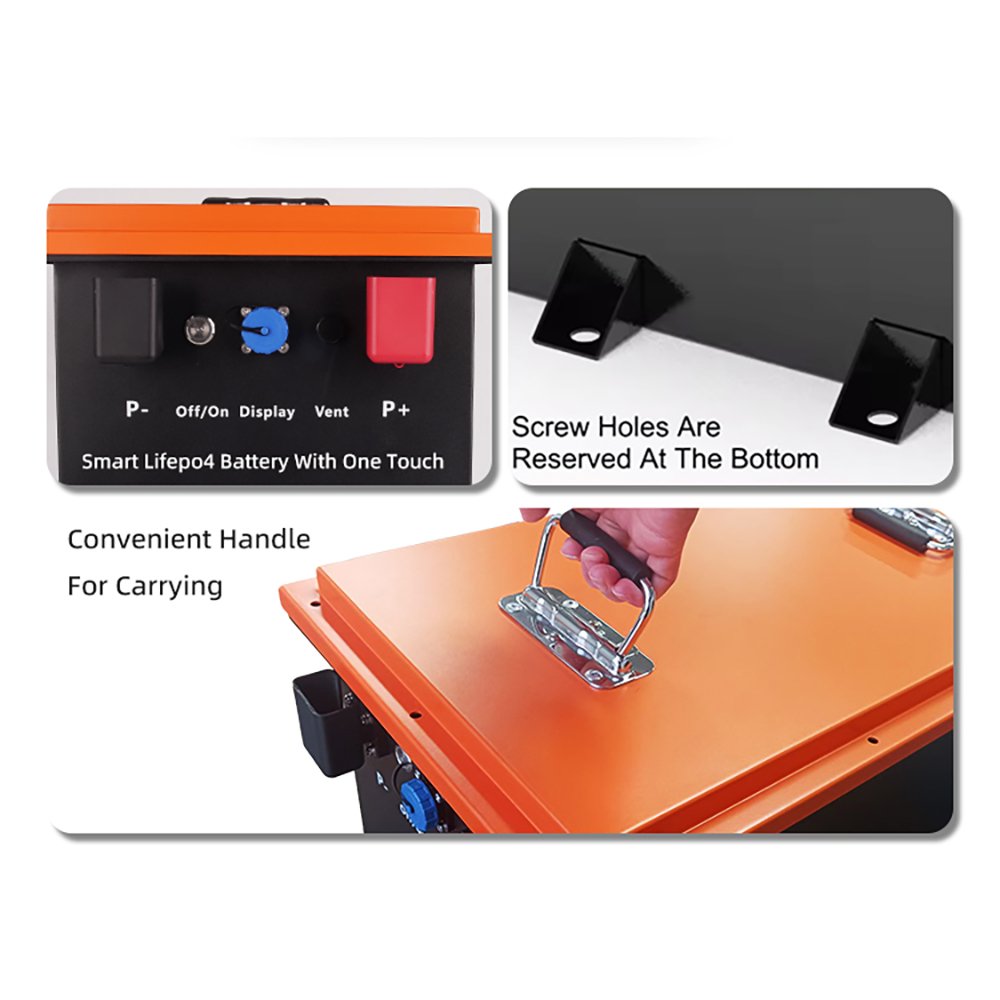
Registre a identidade do carrinho, o modelo da bateria, o controlador, o motor, o carregador, o firmware, a especificação dos pneus e os acessórios. Salve quaisquer configurações aprovadas de velocidade ou operação que possam afetar o resultado. Um teste em uma configuração não pode qualificar um envio posterior que altere silenciosamente o controlador, o tamanho dos pneus ou a revisão da bateria.
O oficial manual do proprietário do E-Z-GO RXV ELiTE ilustra por que as instruções específicas do veículo sobre operação, carregamento e pneus são importantes. Seus requisitos se aplicam aos veículos documentados, não a todos os carrinhos de golfe ou a uma conversão HMX. Use o manual do carrinho real e o suporte local qualificado para estabelecer a configuração de teste aprovada.
Peça a uma equipe de serviço competente que confirme se o veículo está apto para o teste planejado. Arrasto mecânico, uma configuração incorreta de pneus ou uma falha preexistente podem obscurecer o resultado da bateria. Não altere a pressão dos pneus além da orientação permitida do veículo para fabricar um número de autonomia melhor. Mantenha qualquer trabalho corretivo no registro do teste.
Verifique a fixação instalada, as conexões e o arranjo de recarga de acordo com os documentos de integração aprovados. O teste de rota não é o lugar para descobrir que o pacote pode se mover durante uma curva ou que um conector é inadequado para o serviço. Todas as inspeções e alterações elétricas devem ser realizadas por pessoal qualificado.
Use uma rota representativa e descreva suas seções difíceis
Mapeie a rota como uma sequência, não apenas uma distância total. Identifique seções de subida, seções de descida, curvas, locais de parada, mudanças de superfície e a rota de volta para a recarga. Anote onde passageiros ou carga mudam. Um segmento curto de subida no final do serviço pode importar mais para a conclusão do serviço do que uma longa seção fácil no início.
Escolha uma rota de serviço normal que possa ser repetida com segurança. Quando várias rotas forem importantes, mantenha-as como casos separados em vez de nivelar suas diferenças pela média. Uma rota plana de traslado não deve ser permitida esconder falhas na rota que leva hóspedes a acomodações elevadas.
Planeje qualquer condição exigente dentro dos limites operacionais do fabricante. Não realize subidas íngremes inseguras, sobrecarregue o veículo ou desative um limite de velocidade. Estabeleça um arranjo de recuperação aprovado antes de começar e garanta que o motorista conheça as condições de parada e o procedimento de comunicação.
Registre a distância usando um método consistente e verifique sua confiabilidade. Uma mudança no tamanho dos pneus pode afetar uma comparação baseada no odômetro. O GPS também tem limitações em rotas curtas, obstruídas ou com muitas paradas. Documente o instrumento e o método da rota para que uma repetição posterior não use silenciosamente uma base de distância diferente.
Controle a carga útil, as paradas e os acessórios sem criar uma ficção de laboratório
Um teste repetível ainda deve se assemelhar ao trabalho real. Use a carga útil acordada dentro dos limites aprovados do veículo e registre sua distribuição. Inclua sacolas, ferramentas ou outras cargas normais em vez de contar apenas passageiros. Quando uma carga substituta segura e aprovada for usada, documente o que ela representa e como está fixada.
Mantenha o padrão de paradas e os períodos de permanência que importam para as operações. Partidas repetidas podem impor uma demanda diferente ao sistema em comparação com viagem constante. Longas esperas também podem consumir energia por meio de acessórios permitidos ou equipamentos conectados, mesmo quando o carrinho está parado.
Record the accessories that remain active and their actual operating state. Lights, communications equipment and auxiliary loads should not be removed from the acceptance case merely because the supplier’s demonstration did not include them. Conversely, an accessory added after commissioning should trigger a review of the original service assumptions.
Agree how much driver variation is acceptable. Use trained drivers and a clear operating instruction, but do not demand an artificial driving style that staff cannot maintain during normal service. A result achieved only by unusually slow travel or unusual stop avoidance may be repeatable yet commercially irrelevant.
Measure energy at a stated boundary
O EPA’s explanation of road-EV testing distinguishes test conditions and electricity measurement at the outlet, including charging losses. Those road-vehicle procedures do not certify a golf cart. The useful principle here is to identify exactly where energy is measured before comparing results.
For operational energy, define whether the test uses battery-terminal discharge energy, an approved onboard energy record or electricity taken from the charging outlet. They answer different questions. Battery discharge helps characterize the vehicle’s duty; outlet energy helps evaluate the energy required to restore readiness. Neither should be relabelled as the other.
Use suitable measurement equipment installed and operated by competent personnel. Where voltage and current are recorded, energy calculation must account for their change over time and the declared sign convention. A single voltage multiplied by a single current is a power observation, not a complete route-energy measurement.
Do not subtract regeneration or charging events twice. Identify whether the energy counter reports gross discharge, gross charge or net energy. If the documentation is unclear, retain the raw records and obtain clarification before using the total in a supplier comparison.
| Record group | Data to retain | Comparison it enables |
|---|---|---|
| Vehicle baseline | Vehicle and battery identity, firmware, tyres and approved settings | Shows whether repeated tests used the same configuration |
| Operating duty | Route, payload, stops, accessories and elapsed service time | Connects the result to the work the fleet needs |
| Environment | Ambient and available battery temperatures, weather and surface condition | Identifies materially different test conditions |
| Battery behaviour | Declared energy boundary, current, voltage, permissions and first alarms | Separates energy consumption from a power or protection limit |
| Return condition | Completed work, displayed SOC and approved reserve status | Checks the actual operational endpoint |
| Recharge | Charger identity, start/end states, available supply and elapsed turnaround | Tests readiness for the next assignment |
Use SOC as supporting evidence, not the distance meter
A route can expose a power limitation before it exhausts the battery’s usable energy. On a demanding section, record whether vehicle performance changes with current demand, pack voltage, temperature or the available charge and discharge permissions. These observations help distinguish an energy-sizing problem from a restriction in the battery, controller or integration. They do not justify bypassing a protective limit.
Include the order of demanding sections in the comparison. Moving a climb from the end of the route to the beginning can change the condition under which the system faces it. A supplier demonstration on a rearranged route is not automatically equivalent to the buyer’s duty, even if the reported distance and total elevation gain are similar. Keep the route sequence with the acceptance evidence.
State of charge is an estimate, and different devices can display different estimates or update them at different times. Record which device supplies the value. A large percentage change over a short section does not automatically establish excessive energy use or a defective battery.
Analog Devices’ 2019 LFP fuel-gauging article explains why a flat voltage profile and hysteresis complicate charge estimation. It is a technical-method reference, not a current range guarantee for a golf cart. Its example accuracy should not be transferred to the proposed battery.
Record the approved charging or estimator reference condition before the route. Do not manually set the display to full to improve the starting appearance. Preserve reset or synchronization events and ask the supplier to explain the model’s approved learning process.
If discharge stops while the display still shows an apparently comfortable percentage, collect the first limiting event and relevant battery conditions. A cell limit, temperature condition, current demand or vehicle-control action may have ended service. Percentage alone cannot distinguish those causes.
O golf cart BMS specification guide helps frame the requested protection and diagnostic evidence. For the route report, connect those signals to the moment the service changed. Clearing a fault before exporting the sequence can remove the information needed to explain an early stop.
Test recharge turnaround as a second acceptance case

A cart that completes its route but misses the next departure is not necessarily the right fleet solution. Record how much charging opportunity actually exists between assignments, which approved charger is used and whether other carts share the electrical supply. The charger’s nameplate alone cannot establish the recharge time.
Begin the turnaround check from the return condition produced by the agreed route. A charging demonstration begun with a much less discharged battery does not prove the same readiness. Define the endpoint as the manufacturer’s approved ready state for the next duty, not just a convenient display percentage.
Include the practical sequence: return, park, inspect, connect, charge, disconnect and release. Staff availability and access can reduce the usable charging window even where sufficient electrical power exists. Record any charger or battery conditions that restrict charging and distinguish them from a supply limitation.
Keep energy costs separate from turnaround. Outlet energy can support a cost calculation only when the actual applicable tariff is known. Do not borrow an electricity price, charge efficiency or annual usage assumption from another fleet. Where the information is missing, leave the commercial result unresolved rather than invent a saving.
Repeat the right cases and report the spread
For a fleet with repeated assignments, test the next shift from the actual recharge endpoint rather than extrapolating the first run. A partial charging window, a delayed return or a shared supply can leave a different starting condition. Record that condition and repeat the required service safely. Dividing one advertised range by the length of a round cannot establish how many successive assignments the fleet will complete.
Keep the legacy vehicle comparison honest as well. If the conversion changes installed mass or settings, report those changes rather than attributing the whole difference to battery chemistry. Compare the same approved service, not necessarily an identical empty-vehicle weight. Actual measured configuration and payload records are more useful than a claimed weight saving unsupported by an installed-vehicle check.
One successful run demonstrates one observed case. It does not establish seasonal range, every vehicle in the fleet or the entire battery warranty period. Agree repeats that address the buyer’s important uncertainties, using a consistent procedure and documented conditions.
Do not hide a failed or interrupted run by reporting only the best result. Identify invalid runs, explain why they were excluded and retain their records. If the configuration changed to resolve a problem, label subsequent tests as a new configuration rather than combine them with the original baseline.
Report completed service, energy, return condition and turnaround together. When results differ, first compare payload, route conditions, temperatures, settings and starting states. A variation can be real without proving a manufacturing defect. Equally, averaging a serious recurring limitation into an acceptable mean is not a defensible fleet decision.
Any proposed reserve should have an operational reason and be agreed with the buyer. It may reflect the return-to-charger requirement, dispatch uncertainty or an approved response to an interrupted assignment. Do not apply a fixed percentage to every fleet without the relevant evidence.
Convert observations into a purchasing decision
Prepare acceptance categories before the trial. Separate a failure of the contracted service from an invalid test, an unresolved data issue and a correct protective response outside the approved duty. This prevents every disappointing result from being treated as the same battery defect.
| Result | Interpretation | Purchasing response |
|---|---|---|
| Duty and approved reserve completed; turnaround achieved | Observed configuration met the tested service | Accept that case with its conditions recorded |
| Route completed but recharge readiness missed | Energy service and charging service differ | Review charger, supply and dispatch before acceptance |
| Protection limits reached within agreed duty | Integration or sizing requires investigation | Preserve evidence and require an approved remedy and retest |
| Payload, settings or starting state differ from the protocol | Result is not a comparable acceptance case | Correct the procedure and repeat without rewriting the criteria |
| Only advertised distance or an SOC screenshot is available | Required service evidence is missing | Keep the relevant acceptance milestone open |
Put the test record into the order and the service file
Require each bidder to complete the same evidence template. Where a supplier’s existing report uses a different route, load or endpoint, identify the mismatch before ranking the proposals. A missing condition should remain a missing condition; do not replace it with an optimistic assumption simply to fill a comparison spreadsheet.
Have the responsible parties sign the accepted configuration and report revision. Retain the underlying logs alongside the readable summary, with timestamps and instrument identity. If a later shipment or service visit changes a component, the fleet can then establish which equipment was actually tested and which commitment the supplier accepted. That traceability is often more valuable during a warranty discussion than an isolated range figure.
Attach the agreed duty, permitted configuration, measurement boundary, stopping rules and evidence requirements to the purchase order. Identify who supplies the vehicle, performs the integration, witnesses the test and resolves a failed case. Define the remedy and retest process without assuming that every shortfall requires a larger pack.
Use o golf cart lithium conversion review for the wider installation questions, while keeping this route protocol focused on demonstrated service. Product approval, mechanical fitment, charging compatibility and route acceptance remain separate deliverables.
Retain the final as-tested configuration with the fleet’s service records. Changes to battery revision, controller settings, tyres, accessories or the route can invalidate the old comparison. Use a documented change review to decide which cases must be repeated.
The best supplier comparison is not a contest between unexplained range numbers. It is a matched record of the required work, the conditions, the energy consumed, the reserve retained and the time needed to return the cart to service. Ask each bidder to support that record. It gives the fleet a practical basis for accepting equipment and investigating problems after delivery.