
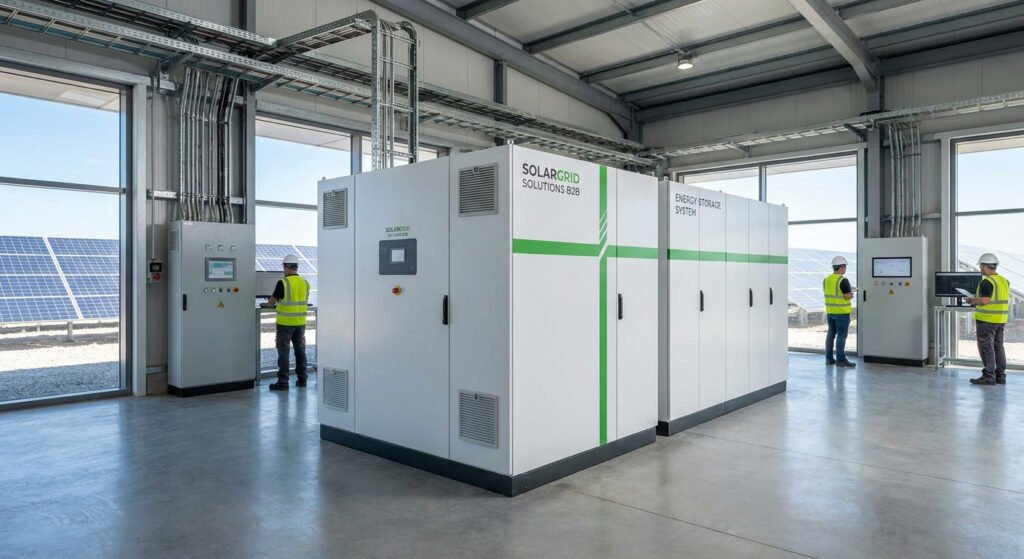
全球对可再生能源储能的需求正在加速推动从标准并网光伏逆变器向多模式 太阳能混合逆变器. 的转变。对于B2B分销商、太阳能系统集成商和OEM设备合作伙伴而言,选择正确的混合逆变器平台直接影响系统可靠性、保修索赔和项目利润率。.
评估太阳能混合逆变器需要超越表面效率数字。商业采购方必须分析核心技术参数——如最大功率点跟踪(MPPT)电压窗口、电池管理系统(BMS)通信协议集成、不间断电源(UPS)切换速度以及国际并网合规性。.
本指南概述了采购可融资、高性能太阳能混合逆变器以进行全球分销所必需的关键技术规格、系统拓扑结构和制造尽职调查标准。.
了解混合逆变器架构:直流耦合与交流耦合拓扑结构
太阳能混合逆变器将光伏(PV)发电、电池储能充放电以及电网互动电力调节集成到单一一体化硬件架构中。根据安装需求,系统采用直流耦合或交流耦合拓扑结构。.
| 拓扑特性 | 直流耦合混合逆变器 | 交流耦合混合逆变器 |
|---|---|---|
| 功率流动路径 | 单级直流到直流转换至电池 | 双重转换(直流→交流→直流)用于电池充电 |
| 往返效率(RTE) | 更高(通常为94%–96%) | 较低(通常为88%–92%) |
| 最佳应用场景 | 新建太阳能+储能系统 | 改造现有并网光伏阵列 |
| 安装复杂度 | 简化的单机布线 | 需要独立的光伏逆变器和储能逆变器 |
| 系统成本 | 较低的平衡系统(BOS)硬件成本 | 因双逆变器单元导致较高的BOS成本 |
在新建住宅和商业储能系统(C&I BESS)中,直流耦合混合逆变器通过高效直流到直流转换级将光伏电力直接输送到电池组,避免了不必要的交流转换损耗,从而提供卓越的往返效率。.
B2B采购的关键技术评估标准
在为区域分销或OEM集成选型太阳能混合逆变器时,工程团队应评估五项主要技术参数:
1. MPPT效率和电压工作窗口
顶级商用太阳能混合逆变器具有≥99.9%的跟踪效率,对快速太阳辐照度变化的动态响应时间低于1秒。.
宽MPPT工作电压窗口(如150V–850V DC)确保逆变器在早晨更早开始采集太阳能,并在傍晚更晚继续运行。此外,验证最大光伏输入电压(商用机型可达1000V DC)可使集成商优化组串配置并降低电缆安装成本。.
专业提示:始终索取完整的制造商数据手册,而非营销摘要宣传册。密切关注40°C以上的温度降额曲线以及110%标准测试条件(STC)下的光伏限功率损耗。.
2. 电池储能电压平台与BMS协议兼容性
混合逆变器与两类主要电池电压等级接口:
- 低压(LV)系统(标称48V):住宅应用的标准配置(5 kW至12 kW),需要高电流处理能力(100A–200A充放电)和更粗的铜缆。.
- 高压(HV)系统(160V–800V DC):适用于工商业(C&I)BESS,可降低I²R传导损耗、减少电缆规格要求,并实现更高的整体热效率。.
逆变器微控制器与锂电池BMS之间的通信协议不匹配仍然是现场调试失败的主要原因。高质量的混合逆变器具有CANbus、RS485和Modbus TCP/RTU的原生硬件支持,确保在不同锂电池化学体系(LiFePO4)下的握手稳定性。.
关键要点:互操作性故障通常源于未经验证的BMS固件更新。请指定具有现场验证的Modbus/SunSpec协议合规性或经预验证的电池兼容性矩阵的逆变器。.
3. UPS级切换速度与电网隔离
在备用电源场景中,切换速度决定了所连接负载是否会经历电力中断。标准应急电源(EPS)模式在20毫秒或更长时间内完成切换,这可能导致敏感商业设备、服务器和自动化工业控制系统重启。.
现代混合逆变器提供真正的 10毫秒以下的UPS级转换时间. 。快速自动转换开关(ATS)在电网停电时瞬时将本地微电网与主电网隔离,保持连续电力流动而不会出现电压暂降。.
4. 热设计与环境防护等级
Outdoor installations expose power electronics to extreme temperature swings, moisture, and ambient airborne particulates.
- IP65 / IP66 Protection: Dust-tight and resistant to high-pressure water jets, enabling direct outdoor wall mounting.
- Conformal Coating: PCBs coated according to IEC 60721-3-3 class 3C2/3S2 standards resist salt fog corrosion, industrial gases, and high humidity.
- Heat Dissipation: Passive or intelligent fan-assisted heat sinks prevent severe power derating up to 45°C ambient temperatures.
Grid Compliance, Safety Standards, and Market Certifications
Distributors and EPC contractors must verify that hybrid inverters hold complete, accredited certification packages for their target geographic markets before placing bulk orders:
- North America: UL 1741 SA/SB (California Rule 21 and Hawaiian Electric grid support requirements), IEEE 1547-2018, FCC Part 15 Class B.
- Europe & International: CE, IEC 62109-1 (safety), IEC 62109-2 (inverter safety), EN 50549-1 / EN 50549-2 (grid connection), and UN38.3 for integrated battery transport.
- Australia & Oceania: AS/NZS 4777.2 grid interconnection compliance.
Distributors should verify certified test reports directly from accredited testing bodies (such as TÜV Rheinland, SGS, or Intertek). Unverified certifications risk severe customs delays and utility grid interconnection rejections.
B2B Supplier Due-Diligence: Evaluating Factory Quality and OEM/ODM Support
Sourcing directly from an established manufacturing vendor provides significant commercial and technical advantages over sourcing from tier-2 trading intermediaries. When auditing potential manufacturing partners, evaluate the following operational criteria:
Automated Manufacturing → 100% Full-Load Burn-in → Accredited Certifications → Direct Engineering Support
(ISO9001:2015 SMT) (Full Thermal Testing) (UL, CE, IEC Reports) (OEM/ODM Customization)
- Vertical Integration: Manufacturers controlling the vertical production of battery packs, BMS protocols, and inverter electronics eliminate cross-vendor finger-pointing when technical field issues arise.
- Precision Manufacturing & Yield Rates: Look for automated surface-mount technology (SMT) assembly, high precision tolerances (0.01 mm), and verified factory yield rates exceeding 99.99%.
- Custom Engineering & Protocol Matching: Distributors operating under proprietary brand names require flexible OEM/ODM capabilities, including custom enclosure designs, localized firmware translations, and custom BMS protocol integration.
Engineering-driven vendors such as 华美能源有限公司, drawing on 20+ years of solar hardware manufacturing experience and R&D expertise from former Huawei and BYD engineers, operate an ISO9001-certified vertical manufacturing facility that delivers certified hardware directly from the factory floor.
Procurement Red Flags and Common Field Failure Modes
To protect brand reputation and minimize warranty claims, procurement teams should watch for these red flags during vendor evaluation:
- Vague Compatibility Claims: Vendor claims “universal battery compatibility” without providing an explicit, tested BMS compatibility list.
- Incomplete Certification Packs: Vendor provides self-declarations instead of official test reports from recognized testing laboratories (e.g., TÜV, UL).
- Missing Thermal Derating Charts: Inverter ratings do not specify power output drops at elevated ambient temperatures (>40°C).
- Lack of Local RMA and Spare Parts Support: Vendor offers no direct engineering backup, remote diagnostic assistance, or fast-turnaround spare parts replacement.
Strategic Recommendations for Solar Distributors and OEM Partners
Building a successful renewable energy storage business requires aligning with a manufacturing partner capable of supporting technical innovation, strict regulatory compliance, and scalable volume production.
By specifying solar hybrid inverters with wide MPPT ranges, sub-10ms UPS transfer speeds, robust IP65/IP66 enclosures, and verified grid compliance, distributors can offer reliable hardware that reduces installation friction and field failure rates.
Partner with a Leading Solar Manufacturing Vendor
For distributors, system integrators, and equipment OEMs seeking high-performance solar hybrid inverters and BESS components at factory-direct pricing:
- Explore the full certified BESS and solar inverter product portfolio to review complete technical specifications.
- Learn more about the solar distributor and OEM partner program 关于批量定价与定制化工程支持。.
- 准备好洽谈您的下一个项目了吗? 申请工厂直供的OEM工程咨询。 直接与HMX Energy技术团队对接。.