
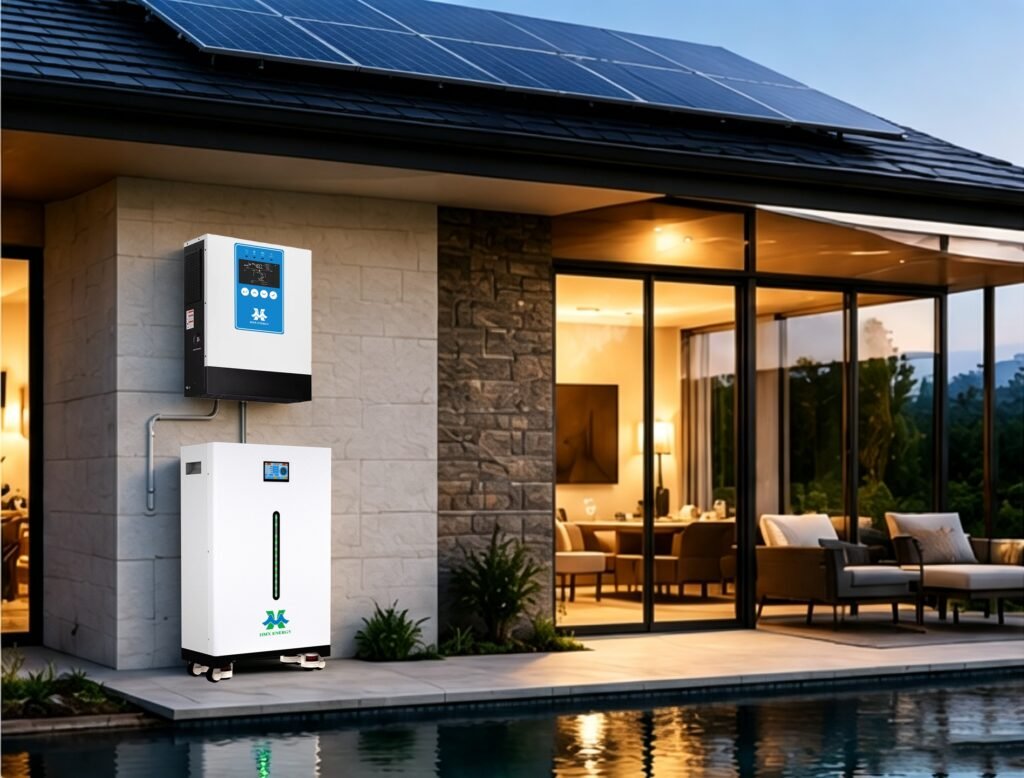
PV string design must remain inside the inverter’s voltage and current limits across real module temperatures. A string that looks acceptable at standard test conditions can exceed maximum DC voltage on a cold morning or fall below the MPPT window when modules are hot.
The calculation also needs the number of trackers, inputs per tracker and any current sharing rules stated by the inverter manufacturer.
For a concrete equipment-level review, apply the checks above to the solar inverter range and request confirmation for the intended site conditions and operating mode.
For systems that must operate beyond the grid, combine the string calculation here with the hourly energy-balance method in the tropical off-grid battery sizing guide. MPPT compliance does not prove that the system can carry the night load or recover after cloudy days.
Direct answer: Use the module data sheet, site design temperatures and the exact inverter model. Check maximum voltage, MPPT operating voltage, short-circuit current and input power as separate limits.
Research review date: 30 September 2026. Quantitative statements are tied to the linked source and should be rechecked if procurement occurs later.
For current market and policy context, review NREL PVWatts Calculator. PVWatts estimates grid-connected PV energy production from location and system inputs. It is useful for the PV side of a study, but it does not replace interval-load and outage analysis for battery sizing.
Calculate the coldest-case open-circuit voltage
For Residential and light-commercial PV designers, the first task is to turn the intended service into measurable inputs and acceptance limits. The following table keeps the decision tied to evidence instead of a broad product label.
| Check | Calculation input | Pass condition |
|---|---|---|
| Cold open-circuit voltage | Module Voc and cold temperature coefficient | String Voc stays below absolute maximum |
| Hot operating voltage | Module Vmp and hot cell temperature | String Vmp remains in MPPT window |
| Tracker current | Module Imp, parallel strings and bifacial allowance where applicable | Does not exceed operating-current limit |
| Short-circuit current | Module Isc and required design factor | Does not exceed input short-circuit limit |
| Array power | Module count and rated watts | Fits approved DC/AC design range |
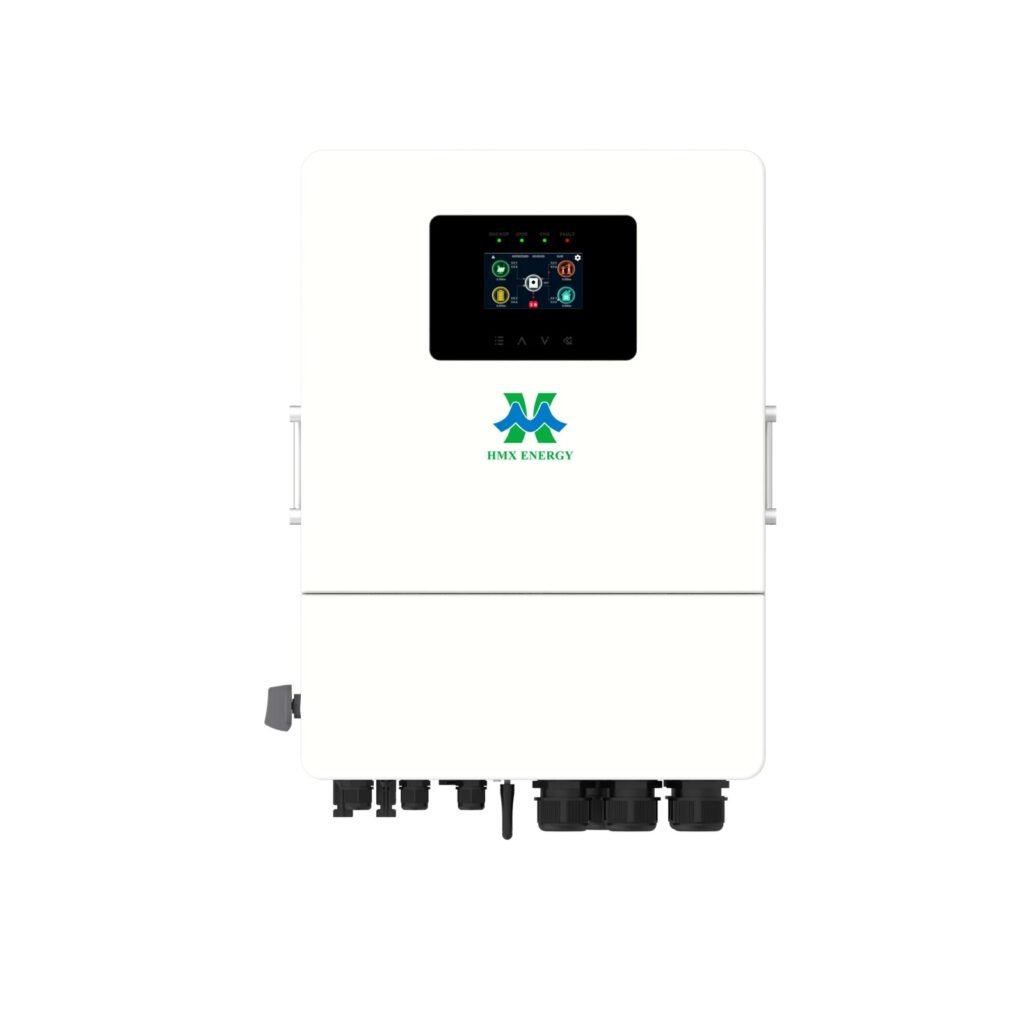
The same evidence and acceptance questions can be used when assessing HMX’s IP65 solar inverters; catalogue information should be reconciled with the controlled quotation and drawings.
The technical comparison should also be checked against IEC 62109-2 inverter safety scope. IEC 62109-2 addresses safety requirements for photovoltaic inverters, including protection against electrical, thermal, fire and mechanical hazards.
String-design errors that appear after module delivery
These are the practical objections and failure modes most likely to stop approval, delay commissioning or create an avoidable service call for Residential and light-commercial PV designers.
- Cold open-circuit voltage is checked only at standard test conditions.
- Parallel strings exceed a per-tracker current limit even though total inverter current looks acceptable.
- Substitute modules change current or temperature coefficients.
Questions the buyer should ask before approval
- Does every string remain inside the MPPT window at hot cell temperature?
- Are tracker limits checked separately?
- Which module revisions are approved for substitution?
Check hot-module voltage and current per MPPT
The commercial offer should state its assumptions, exclusions and measurement boundary. Buyers can then compare systems on the same basis and keep later design changes under document control.
| Common error | Why it matters | Correction |
|---|---|---|
| Using annual average temperature | Misses cold and hot electrical extremes | Use design temperatures |
| Adding tracker currents together | May hide a per-tracker overload | Check each tracker separately |
| Ignoring module replacement | Future module may have different current | Record approved module set |
| Assuming clipping is a fault | Some clipping may be intentional | Model annual energy and thermal limits |
| Mixing string orientations on one tracker | Can reduce tracking quality | Group compatible strings |
Action points for the project team
- Keep a calculation sheet with module and inverter revision numbers.
- Show string allocation on the single-line diagram.
- Check connector, isolator and cable ratings against design current and voltage.
- Commission each string with polarity, voltage and insulation checks.
For specification and acceptance work, IEC 60529 IP Code provides an independent reference. IEC 60529 is the reference for enclosure ingress-protection classifications. An IP rating describes tested enclosure protection; it does not by itself approve an installation site.
Keep every string inside all four electrical limits
Calculate cold open-circuit voltage using the module temperature coefficient and the project design minimum, not annual average air temperature. Calculate hot operating voltage using an appropriate cell-temperature assumption and confirm that the string remains inside the MPPT range. Record the equation, units and source data so a module substitution can be reviewed quickly.
A related HMX reference is the 16kW IP65 hybrid inverter. Use it to frame the next supplier discussion, then record project-specific deviations before ordering.
Current must be checked per tracker and per input. Add parallel-string operating current and verify the inverter rule for short-circuit current and any required design factors. Bifacial gain, high-irradiance conditions and unequal orientations may affect the review. Do not combine tracker limits unless the data sheet explicitly describes shared hardware.
Before design freeze, the project team should review ASEAN electrical-safety assessment for PV and BESS. The ASEAN Centre for Energy finds uneven adoption and enforcement of PV and BESS safety standards across the region and recommends closer alignment with international standards.
The final string schedule should name module count, orientation, tracker assignment, cable, connector and isolator ratings. During commissioning, measure polarity and open-circuit voltage by string and investigate unexpected differences before connection. Preserve the approved module and inverter revisions with the calculation sheet.
Project workflow
- Collect exact module coefficients and inverter per-tracker limits.
- Calculate cold Voc, hot Vmp, operating current and short-circuit current.
- Map each string to a tracker on the design drawings.
- Verify polarity and voltage before energising the DC inputs.
Freeze the module and inverter assumptions
Compatibility and safety depend on the equipment as installed, not only on a catalogue selection. Preserve model and firmware identifiers, wiring and protection drawings, physical clearances, settings and test conditions. Later service work should begin from this baseline and record every approved change.
Buyers defining the initial scope can compare these requirements with HMX’s hybrid inverter buyer’s guide. The page is a product or project reference; final suitability still requires a written project specification.
- Named equipment, firmware, accessories, cables and communication settings.
- As-built electrical and physical drawings with isolation points identified.
- Commissioning results for normal operation, limits and selected failure states.
- Backups, photographs, change log and a technician recovery procedure.
After service or firmware work, compare the returned system with the approved baseline and repeat affected tests. This makes later troubleshooting faster and prevents an undocumented field change from invalidating a compatibility or safety conclusion.
Release Checklist
Release equipment only after design calculations, settings, drawings and test records agree with the physical build.