
CAN and RS485 describe communication technologies; they do not guarantee that two products understand the same battery protocol. Electrical compatibility, connector pinout, message definitions, baud rate, addressing and firmware all have to match.
For a distributor, the safest compatibility claim is a tested combination of named models and firmware versions, supported by a wiring diagram and a defined operating result.
A related HMX reference is the 10kWh wall-mounted LiFePO4 battery. Use it to frame the next supplier discussion, then record project-specific deviations before ordering.
Communication commissioning becomes clearer when signal ownership is defined first. The BMS, PCS and EMS interface guide shows how to assign command, limit, alarm and fallback responsibilities before testing the physical link.
Direct answer: Ask for a compatibility matrix and test record. Do not infer support because both products list CAN, RS485 or the name of a third-party protocol.
Research review date: 30 September 2026. Quantitative statements are tied to the linked source and should be rechecked if procurement occurs later.
The technical comparison should also be checked against IEC 62619:2022 scope. IEC 62619:2022 covers safety requirements and tests for secondary lithium cells and batteries used in industrial applications, including stationary and motive uses.
Separate the physical layer from the battery protocol
For Battery distributors, inverter installers and system integrators, the first task is to turn the intended service into measurable inputs and acceptance limits. The following table keeps the decision tied to evidence instead of a broad product label.
| Layer | CAN check | RS485 check |
|---|---|---|
| Physical connection | Connector and CAN-H/CAN-L pins | Connector and A/B polarity |
| Network setup | Termination and node rules | Termination, bias and address |
| Data link | Bit rate and frame format | Baud, parity and frame format |
| Application protocol | Required message set | Register map or message definition |
| Product evidence | Named battery, inverter and firmware | Named battery, inverter and firmware |
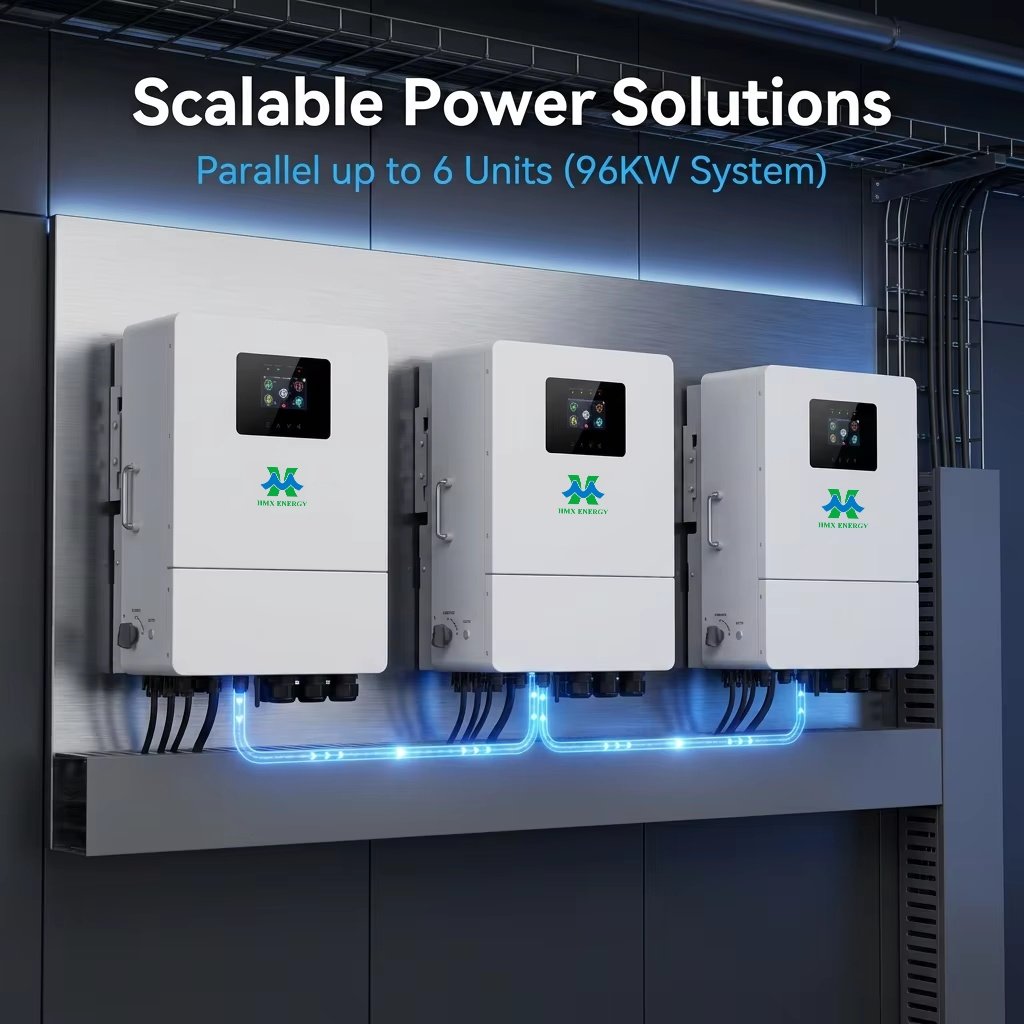
Buyers defining the initial scope can compare these requirements with HMX’s 15kWh floor-standing LiFePO4 battery. The page is a product or project reference; final suitability still requires a written project specification.
For specification and acceptance work, IEC 62109-2 inverter safety scope provides an independent reference. IEC 62109-2 addresses safety requirements for photovoltaic inverters, including protection against electrical, thermal, fire and mechanical hazards.
Commission the named battery-inverter-firmware combination
The commercial offer should state its assumptions, exclusions and measurement boundary. Buyers can then compare systems on the same basis and keep later design changes under document control.
| Test | Expected result | Failure test |
|---|---|---|
| Power limit | Inverter follows battery charge/discharge limit | Limit becomes conservative on lost data |
| State of charge | Displays remain consistent | Invalid data is flagged |
| Alarm transfer | Battery faults appear correctly | No false normal state |
| Restart | Communication recovers in sequence | Defined timeout and retry |
| Parallel batteries | Aggregate limits are correct | One-unit isolation handled safely |
Action points for the project team
- Use the supplied communication cable or verify every pin.
- Record DIP-switch, address and termination settings.
- Test low and high state of charge, not only idle operation.
- Freeze working firmware versions before shipment and define update responsibility.
Before design freeze, the project team should review U.S. DOE BESS procurement checklist. The U.S. Department of Energy checklist separates early project development, technical specifications and interconnection work for commercial lithium-ion systems.
Compatibility problems behind a familiar connector
These are the practical objections and failure modes most likely to stop approval, delay commissioning or create an avoidable service call for Battery distributors, inverter installers and system integrators.
- CAN or RS485 is mistaken for a complete application protocol.
- Pinout, termination, addressing or firmware differs from the tested combination.
- The inverter continues with unsafe or stale limits after communication loss.
Questions the buyer should ask before approval
- Which named models and firmware were bench-tested?
- What cable, pinout and termination are required?
- What conservative limit applies if battery data is lost?
Validate the complete protocol stack, not the port name
Create a compatibility record with the battery model, inverter model, communication board, firmware, cable part or pinout, selected protocol and required switch settings. CAN and RS485 define lower communication layers; the products must still agree on messages, registers, units, scaling, timing and fault behaviour.
For a concrete equipment-level review, apply the checks above to the 6.5kW–12kW 48V inverter platform and request confirmation for the intended site conditions and operating mode.
Bench testing should cover state of charge, dynamic charge and discharge limits, temperature restrictions, warnings, shutdown alarms and restart. Compare values on both products and, where possible, in the captured traffic or service log. A normal idle screen is weak evidence because many important limits appear only during charging, discharging or faults.
For the final evidence review, use IEC 63056:2020 scope as a source check. IEC 63056 adds safety requirements for secondary lithium cells and batteries used in electrical energy storage systems up to 1,500 V DC nominal.
Disconnect the cable, power-cycle one device and introduce a controlled battery limit. The inverter should move to the documented safe state, flag invalid data and recover in the approved sequence. Freeze working firmware before shipment and define who is authorised to update either product later.
How to apply this on a live project
- Identify the named hardware and firmware combination.
- Verify pinout, termination, address and application protocol.
- Test dynamic limits, alarms, communication loss and restart.
- Save settings and define change control for future updates.
Record every communication setting and recovery step
Compatibility and safety depend on the equipment as installed, not only on a catalogue selection. Preserve model and firmware identifiers, wiring and protection drawings, physical clearances, settings and test conditions. Later service work should begin from this baseline and record every approved change.
The same evidence and acceptance questions can be used when assessing HMX’s hybrid inverter buyer’s guide; catalogue information should be reconciled with the controlled quotation and drawings.
- Named equipment, firmware, accessories, cables and communication settings.
- As-built electrical and physical drawings with isolation points identified.
- Commissioning results for normal operation, limits and selected failure states.
- Backups, photographs, change log and a technician recovery procedure.
After service or firmware work, compare the returned system with the approved baseline and repeat affected tests. This makes later troubleshooting faster and prevents an undocumented field change from invalidating a compatibility or safety conclusion.
Related HMX Equipment Video
This equipment video is included because it matches the hardware or setup discussed here. It is supporting visual material, not third-party certification or proof of performance for a different project.
If Communication Fails
When a fault occurs, preserve logs and identify whether the cause is wiring, configuration, firmware, protocol or an actual protection event before changing settings.