
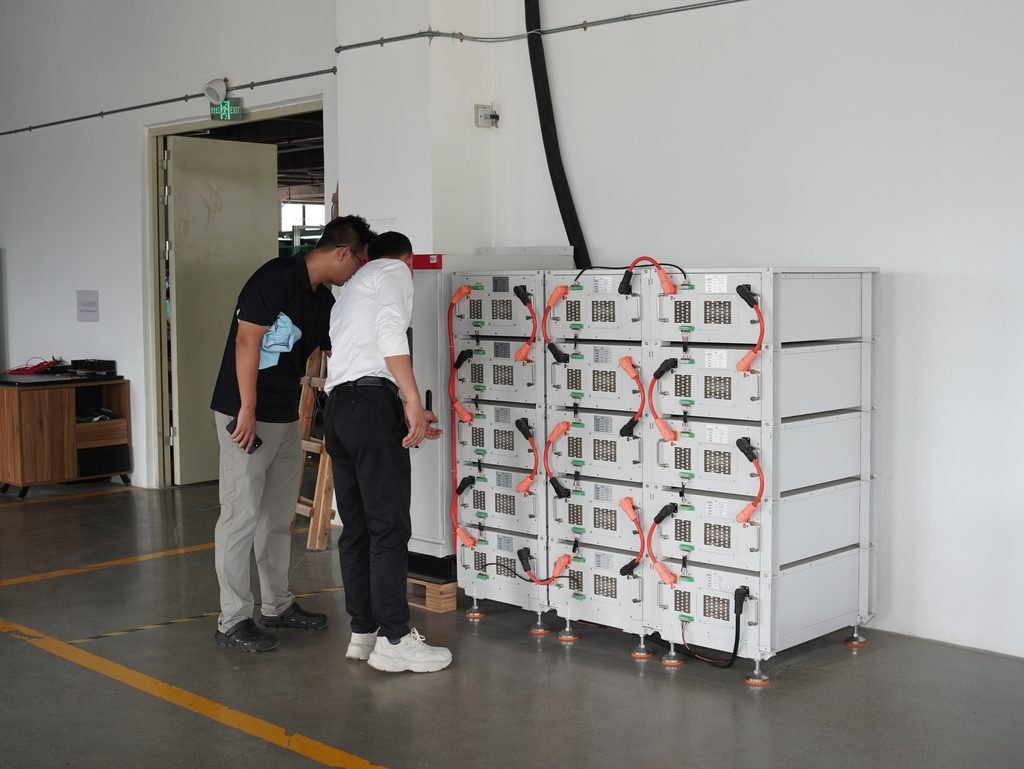
IEC 62619 and IEC 63056 are related, but they are not interchangeable labels. IEC 62619 addresses secondary lithium cells and batteries for industrial applications. IEC 63056 adds requirements for cells and batteries used in electrical energy storage systems.
A buyer should review the certificate, report scope and exact product identity rather than counting standard numbers on a brochure.
A related HMX reference is the home battery storage range. Use it to frame the next supplier discussion, then record project-specific deviations before ordering.
Product-standard evidence remains only one part of project approval. The Malaysia BESS safety procurement guide illustrates how certificates, system design, site review and energisation records must be tracked as separate evidence lines.
Direct answer: Ask the certification body or qualified compliance specialist to confirm which standards and editions apply to the destination market and system. Then map each certificate to the shipped model and configuration.
Research review date: 30 September 2026. Quantitative statements are tied to the linked source and should be rechecked if procurement occurs later.
For specification and acceptance work, IEC 62619:2022 scope provides an independent reference. IEC 62619:2022 covers safety requirements and tests for secondary lithium cells and batteries used in industrial applications, including stationary and motive uses.
Start with the tested object and intended ESS application
For Battery importers, EPCs and compliance teams, the first task is to turn the intended service into measurable inputs and acceptance limits. The following table keeps the decision tied to evidence instead of a broad product label.
| Standard | Published scope in brief | Buyer use |
|---|---|---|
| IEC 62619:2022 | Industrial secondary lithium cells and batteries, including stationary and motive applications | Base industrial battery safety evidence |
| IEC 63056:2020 | Secondary lithium cells and batteries used in electrical energy storage systems up to 1,500V DC nominal | ESS-specific battery safety evidence |
| System-level requirements | May be covered by other standards, codes and local rules | Do not infer from a battery certificate |
| Transport testing | Separate UN transport framework | Do not substitute IEC certificate for UN 38.3 |
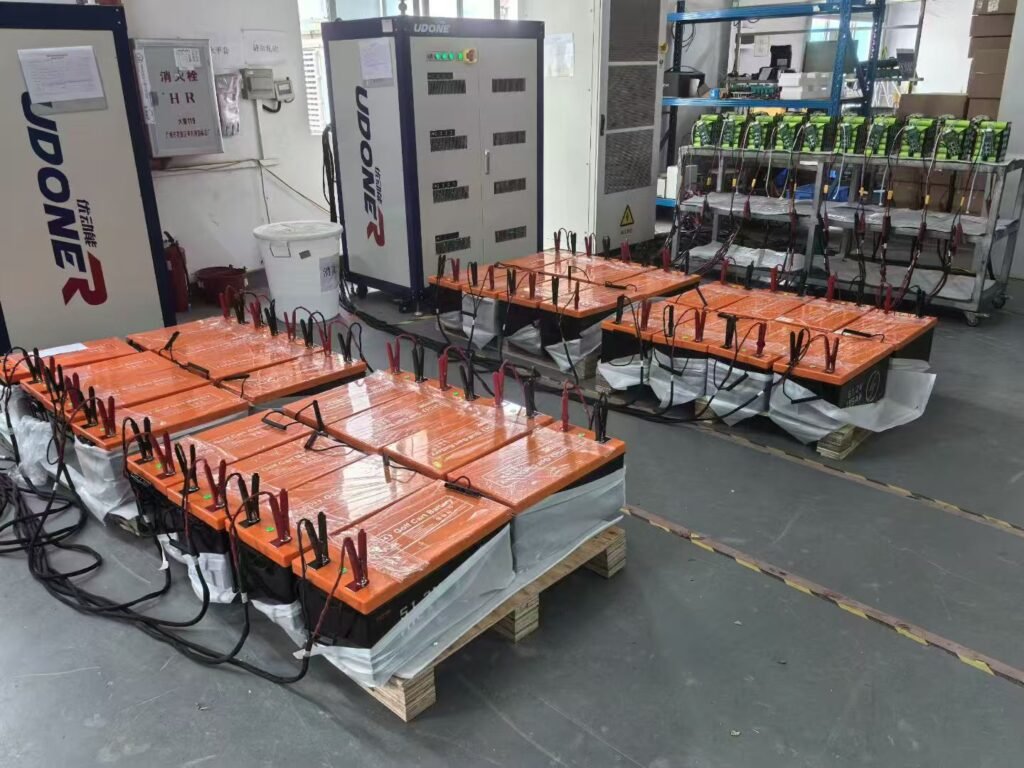
Buyers defining the initial scope can compare these requirements with HMX’s commercial and industrial energy storage range. The page is a product or project reference; final suitability still requires a written project specification.
Before design freeze, the project team should review IEC 63056:2020 scope. IEC 63056 adds safety requirements for secondary lithium cells and batteries used in electrical energy storage systems up to 1,500 V DC nominal.
Certificate scope is more important than the logo
These are the practical objections and failure modes most likely to stop approval, delay commissioning or create an avoidable service call for Battery importers, EPCs and compliance teams.
- A cell or battery report is presented as approval of the full BESS.
- The certificate edition, factory or model suffix differs from the offer.
- Installation and fire requirements are assumed to be covered by product testing.
Questions the buyer should ask before approval
- Which level was tested: cell, module, battery or system?
- Does the report list the exact shipped configuration?
- Which project approvals remain outside the IEC certificate?
Match report scope, edition and product configuration
The commercial offer should state its assumptions, exclusions and measurement boundary. Buyers can then compare systems on the same basis and keep later design changes under document control.
| Certificate check | Acceptable evidence | Concern |
|---|---|---|
| Applicant/manufacturer | Matches supply-chain legal entities | Unknown or unrelated name |
| Model | Exact or clearly covered family | Marketing name only |
| Standard edition | Stated clearly | No edition or obsolete assumption |
| Test report reference | Traceable and available as agreed | Certificate with no scope detail |
| Configuration | Cell, module and protective design match | Uncontrolled component changes |
Action points for the project team
- Keep certificates and reports in the project document register.
- Confirm the certification mark through the issuing body when project risk warrants it.
- Link supplier change control to re-evaluation obligations.
- Check local installation, fire, grid and electrical rules separately.
For the final evidence review, use ASEAN electrical-safety assessment for PV and BESS as a source check. The ASEAN Centre for Energy finds uneven adoption and enforcement of PV and BESS safety standards across the region and recommends closer alignment with international standards.
Review the tested object, edition and configuration
Begin with the scope page and identify whether the evidence covers cells, modules, a battery, or another defined assembly. Record the standard edition, certificate holder, manufacturing site, model designation, ratings and referenced reports. Marketing use of an IEC number is not enough to establish that the offered configuration appears in the evidence.
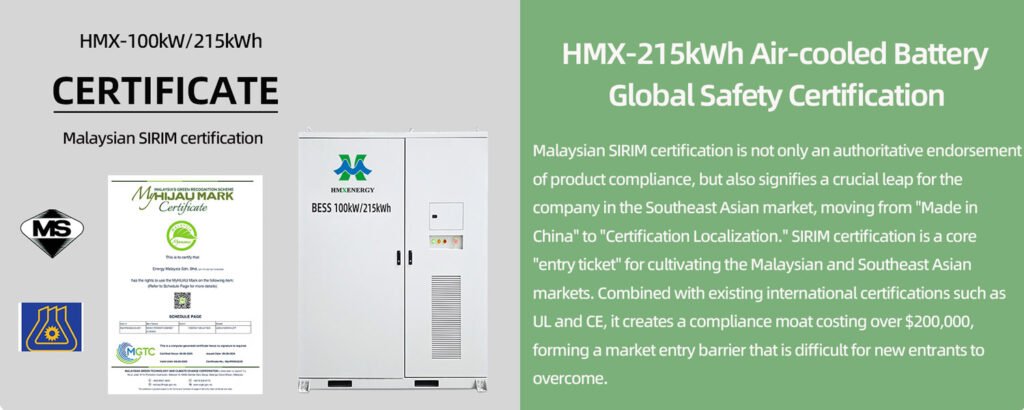
For a concrete equipment-level review, apply the checks above to the Malaysia-certified 100kW/215kWh C&I ESS and request confirmation for the intended site conditions and operating mode.
Compare the bill of materials and safety architecture with the certified or tested sample. Cell changes, series count, enclosure, BMS, contactors, fuses, cooling and firmware may affect applicability. Ask the supplier to explain differences and provide the assessment or updated evidence rather than accepting a general statement of equivalence.
For current market and policy context, review Malaysia Energy Commission BESS Safety Guidelines. Malaysia’s Energy Commission published its BESS safety guideline on 22 May 2026. Project teams should use the issued document and local authority process, not an older tender template.
Keep product testing separate from system and installation approval. The complete BESS also includes conversion, protection, controls, wiring, thermal management, fire strategy and site conditions governed by other standards and local rules. The compliance matrix should show what IEC 62619 or IEC 63056 supports and what remains for project review.
From analysis to an auditable decision
- Read the standard scope and evidence schedule.
- Match holder, site, model, rating and edition to the offer.
- Assess configuration changes against the tested sample.
- List remaining system, installation and authority requirements.
Maintain an evidence register, not a certificate folder
For every legal, standard or authority requirement, record the applicable edition, responsible party, evidence reference, model or site scope, reviewer and current status. This exposes gaps between product testing, complete-system approval and installation obligations before they become shipment or energisation delays.
The same evidence and acceptance questions can be used when assessing HMX’s 12V and 24V LiFePO4 range; catalogue information should be reconciled with the controlled quotation and drawings.
- Dated applicability matrix with effective dates and local reviewers.
- Model, rating, factory and configuration cross-check for each certificate or report.
- Authority comments, approved responses and superseded-document history.
- Final drawings, tests, emergency information, training and operating responsibilities.
Schedule formal reviews at design freeze, pre-shipment and pre-energisation. Each review should confirm current editions, unresolved authority comments and configuration changes, with a named owner and due date for every gap. Preserve superseded evidence so the project can explain what changed and why.
Claim to Avoid
Avoid the claim that one rating or certificate answers every installation question. State the tested scope and the remaining project checks.