
These three references answer different questions. UL 9540 concerns energy storage systems and equipment. UL 9540A is a test method for thermal-runaway fire propagation. NFPA 855 addresses installation of stationary energy storage systems.
Confusing them can lead to a tender that requests a test report when the authority expects a listed system, or a listed product when the site design still needs code review.
For a concrete equipment-level review, apply the checks above to the commercial and industrial energy storage range and request confirmation for the intended site conditions and operating mode.
The same separation between product evidence and site approval appears in the Malaysia BESS safety procurement guide. It is a useful comparison for buyers who operate across jurisdictions and must not transfer one approval path into another.
Direct answer: Ask the authority having jurisdiction and project fire engineer which editions, listings, tests and installation provisions apply. Make the equipment configuration in the evidence match the proposed site design.
Research review date: 4 October 2026. Quantitative statements are tied to the linked source and should be rechecked if procurement occurs later.
UL Solutions’ 2026 fire-testing update explains that the 2026 edition of NFPA 855 puts greater emphasis on large-scale fire testing, while UL 9540A Edition 6 introduces an installation-level large-scale test with pass/fail criteria. UL states that an effective date of 1 January 2027 is planned for Edition 6. Projects must still use the edition adopted by the authority having jurisdiction rather than assuming the newest document is already enforceable.
Before design freeze, the project team should review UL Solutions overview of UL 9540A. UL 9540A is a test method for evaluating thermal-runaway fire propagation in battery energy storage systems; it is not a substitute for a complete system listing or local installation approval.
Assign one approval question to each reference
For North American storage buyers and global suppliers, the first task is to turn the intended service into measurable inputs and acceptance limits. The following table keeps the decision tied to evidence instead of a broad product label.
| Reference | Primary function | Not the same as |
|---|---|---|
| UL 9540 | System/equipment safety standard and certification basis | A site permit |
| UL 9540A | Test method for thermal-runaway fire propagation | A complete product listing |
| NFPA 855 | Installation standard for stationary ESS | A laboratory test report |
| Local code adoption | Makes specific editions enforceable | A global rule |
| Fire-service review | Addresses site response and access | Manufacturer approval alone |
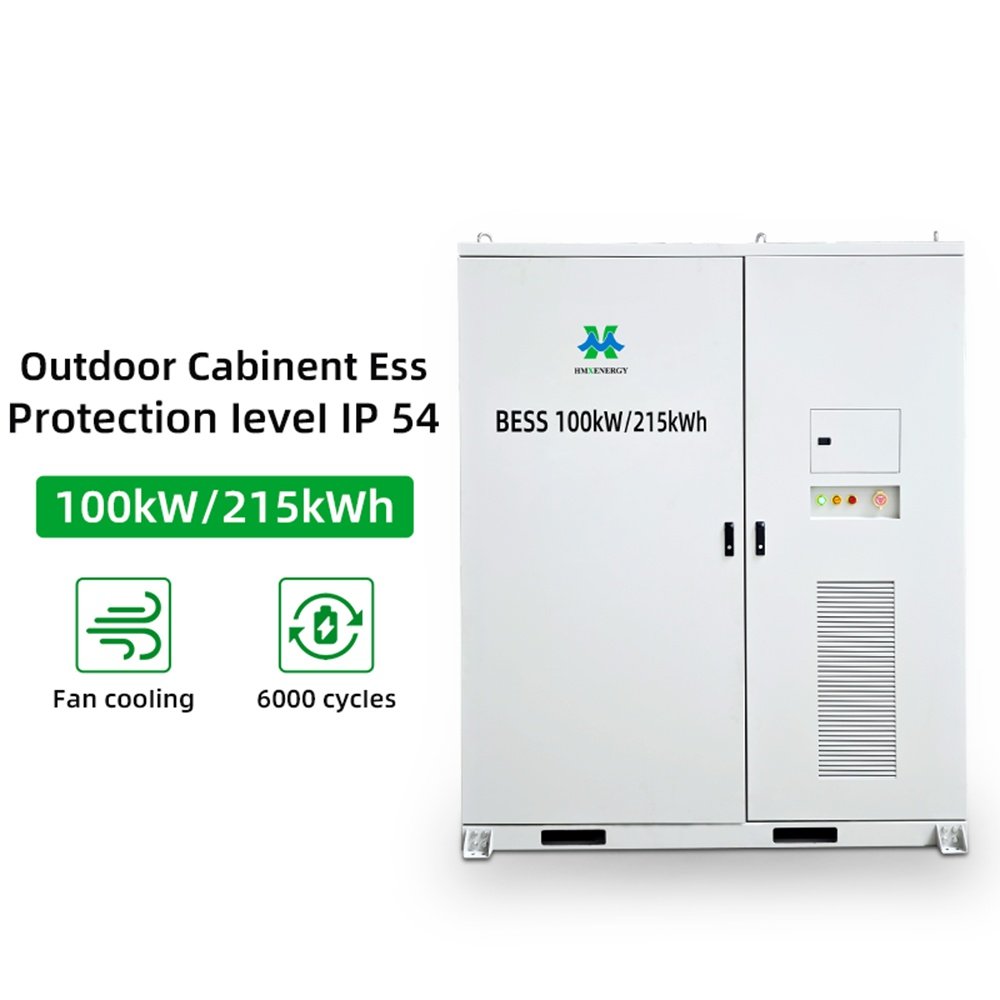
The same evidence and acceptance questions can be used when assessing HMX’s 100kW/215kWh air-cooled system; catalogue information should be reconciled with the controlled quotation and drawings.
For the final evidence review, use U.S. DOE BESS procurement checklist as a source check. The U.S. Department of Energy checklist separates early project development, technical specifications and interconnection work for commercial lithium-ion systems.
Match system listing, propagation test and site approval
The commercial offer should state its assumptions, exclusions and measurement boundary. Buyers can then compare systems on the same basis and keep later design changes under document control.
| Tender item | Evidence | Reviewer |
|---|---|---|
| System listing | Certificate and listing details for exact configuration | AHJ and electrical/fire engineer |
| 9540A report | Applicable level and configuration | Fire engineer and AHJ |
| Layout | Separation, access and exposure drawings | Architect/fire engineer |
| Mitigation | Detection, ventilation, suppression or other design | Fire engineer |
| Emergency plan | Isolation, signage, response and contacts | Owner and fire service |
Action points for the project team
- Use the edition adopted by the project jurisdiction, not simply the newest edition available.
- Check whether field-added components affect the listed configuration.
- Provide the fire service with clear isolation and hazard information.
- Keep marketing claims narrower than the actual certificate and report scope.
For current market and policy context, review IEC 62619:2022 scope. IEC 62619:2022 covers safety requirements and tests for secondary lithium cells and batteries used in industrial applications, including stationary and motive uses.
Three references, three different questions
These are the practical objections and failure modes most likely to stop approval, delay commissioning or create an avoidable service call for North American storage buyers and global suppliers.
- A UL 9540A test report is described as a UL 9540 system listing.
- The tested unit, installation spacing or fire configuration differs from the project.
- The authority having jurisdiction is engaged after layout freeze.
Questions the buyer should ask before approval
- What product or configuration does each report cover?
- Which code edition and local amendments does the reviewer use?
- What fire-service access and emergency plan does the site require?
Give each reference its correct job in the approval file
Separate system certification, fire-propagation test information and installation-code requirements. Ask for the listing record and the exact equipment or combinations it covers, then review the UL 9540A report scope, test level and configuration. Neither document by itself decides the final site layout or replaces the authority having jurisdiction.
A related HMX reference is the 125kW/261kWh liquid-cooled system. Use it to frame the next supplier discussion, then record project-specific deviations before ordering.
Compare the proposed cells, modules, racks, enclosures, spacing, suppression or ventilation features and installation arrangement with the evaluated configuration. If the project differs, identify the engineering or authority review required. Engage fire and building reviewers before layout freeze so access, separation, water supply, detection and emergency controls can influence the design.
The technical comparison should also be checked against IEC 63056:2020 scope. IEC 63056 adds safety requirements for secondary lithium cells and batteries used in electrical energy storage systems up to 1,500 V DC nominal.
The submission package should include equipment evidence, single-line and layout drawings, hazard and emergency information, commissioning tests, signage, shutdown instructions and responder coordination as required by the project. Record the adopted code edition and local amendments; do not assume that the same interpretation applies in every jurisdiction.
A practical decision sequence
- Confirm listings and report scope for the exact configuration.
- Compare project layout with evaluated conditions.
- Engage the authority and emergency stakeholders before design freeze.
- Close approval comments through drawings, testing and operating documents.
Maintain an evidence register, not a certificate folder
For every legal, standard or authority requirement, record the applicable edition, responsible party, evidence reference, model or site scope, reviewer and current status. This exposes gaps between product testing, complete-system approval and installation obligations before they become shipment or energisation delays.
Buyers defining the initial scope can compare these requirements with HMX’s HMX project references. The page is a product or project reference; final suitability still requires a written project specification.
- Dated applicability matrix with effective dates and local reviewers.
- Model, rating, factory and configuration cross-check for each certificate or report.
- Authority comments, approved responses and superseded-document history.
- Final drawings, tests, emergency information, training and operating responsibilities.
Schedule formal reviews at design freeze, pre-shipment and pre-energisation. Each review should confirm current editions, unresolved authority comments and configuration changes, with a named owner and due date for every gap. Preserve superseded evidence so the project can explain what changed and why.
Next Step
The useful output of the study is not one battery size. It is a repeatable model with stated inputs, sensitivities and an acceptance test that the owner can audit.
Frequently Asked Questions
Does a UL 9540A report mean the whole system is UL 9540 listed?
No. UL 9540A is a test method; system listing and installation approval are separate questions.
Does a listed system remove the need for site review?
No. Layout, separation, fire protection, electrical design and local permits still apply.
Can an IEC certificate replace North American requirements?
Not automatically. The authority and project specification determine accepted evidence.