
A BESS power-quality acceptance test should prove how the installed system behaves at the point of connection, not merely repeat a PCS datasheet. The test plan needs an agreed measurement point, instrument class, background condition, operating modes, active and reactive power setpoints, state-of-charge window, auxiliary configuration and pass/fail limits taken from the applicable interconnection agreement or local rule.
This matters because the grid, transformer, cables, nearby nonlinear loads and control settings all influence the measured result. A factory test can characterize the equipment. Only a properly controlled site test can show the interaction at the actual point of common coupling or point of connection.
Direct answer: define the applicable limits first, record the background grid, test charge and discharge across representative power and reactive-power states, separate system emissions from existing distortion, and retain raw time-series and spectrum data with the approved settings.
Research review date: 19 November 2026. This article is a procurement and commissioning guide, not a statement that one standard applies in every country. The utility, electrical designer and authority having jurisdiction must identify the governing code, interconnection rule and contractual limit for the specific project.
Define the Electrical Boundary before Selecting Limits
Mark the point at which compliance will be assessed. It may be the PCS terminals, low-voltage switchboard, transformer high-voltage side or utility point of common coupling. These locations do not produce interchangeable results. Transformer impedance and vector group, cable impedance, filtering and other site loads sit between them.
The boundary should match the commercial obligation. Our guide to BESS transformer headroom explains why active and reactive current share the same equipment path. A power-quality test that commands reactive power without checking transformer, cable and protection limits may test a setting the plant cannot use continuously.
| Item to freeze | Buyer question | Required record |
|---|---|---|
| Compliance point | Where are voltage, current and power assessed? | Approved single-line diagram and meter location |
| Applicable limit | Which utility rule, contract or adopted standard controls? | Dated requirement and agreed interpretation |
| Plant state | Which PCS blocks, auxiliaries and filters are operating? | Equipment status and configuration export |
| Grid condition | What was the pre-existing voltage distortion and unbalance? | Background measurement before BESS operation |
| Operating point | What active power, reactive power, SOC and voltage apply? | Setpoint and measured response trace |
| Instrument method | Which accuracy, aggregation and observation settings are used? | Instrument specification, calibration and configuration |
| Pass/fail rule | How are unstable grid conditions or unrelated loads treated? | Approved test procedure and exception process |
The IEEE 1547-2018 overview identifies power quality, abnormal-condition response, commissioning and periodic tests within its distribution-interconnection scope. International buyers should use it only where adopted or contractually selected. Its broader lesson is still useful: performance requirements and verification method belong together.
Measure the Background before Blaming or Clearing the BESS
Industrial sites often contain variable-frequency drives, rectifiers, welders, UPS equipment and switched capacitor banks. Their harmonic currents and rapid load changes can already affect the point of common coupling. Record a representative baseline with the BESS isolated or in a clearly defined non-converting state. Document production loads, utility voltage and switching events during the baseline.
Do not subtract one headline total-harmonic-distortion value from another and call the difference the BESS contribution. Magnitude, phase, system impedance and individual harmonic orders affect interaction. The test engineer should retain spectra and simultaneous voltage and current records, then apply the method accepted by the utility or contract.
The IEEE’s power-quality technical overview distinguishes waveform distortion, voltage events and frequency behavior and points to established monitoring practices. It is a useful map of the subject, not a replacement for the project-specific limits or the purchased standards used by the responsible engineer.
Test Charge, Discharge and Reactive-Power States
A single full-power discharge is not a complete acceptance sequence. Converter switching behavior and control interaction may change at low power, near zero crossing, during charge, during discharge and while delivering or absorbing reactive power. Test the operating points relevant to the contracted use without pushing the plant outside approved equipment limits.
| Test state | What to observe | Common interpretation risk |
|---|---|---|
| BESS isolated | Background voltage harmonics, unbalance and site events | Baseline does not represent normal factory production |
| Active standby | Auxiliaries, filters, controls and transformer energization | Standby is treated as electrically inactive |
| Low-power charge | Current spectrum, power factor and control stability | Only rated-power performance is reviewed |
| High-power charge | Voltage response, current distortion and equipment loading | Grid voltage changed between test steps |
| Low-power discharge | Current spectrum and setpoint tracking | Measurement resolution is insufficient |
| High-power discharge | PCC voltage, current and transformer loading | Nearby load switching contaminates the result |
| Reactive-power command | Available kvar, voltage control, current and thermal limits | Reactive capability is assumed independent of kW |
| Ramp or step | Transient response, overshoot and recovery | Steady-state aggregation hides the event |
| Block unavailable | Derated plant response and control redistribution | Healthy-block behavior is assumed unchanged |
The Sandia energy-storage performance protocol covers response time, ramp rate, reference-signal tracking and power factor alongside other application metrics. It does not set the local harmonic limit. It does show why a useful acceptance program evaluates the service response, not only a static nameplate.
Keep Harmonic, Unbalance and Transient Results Separate
Power quality is not one score. Report individual voltage and current harmonic orders, the agreed aggregate metrics, voltage unbalance, frequency, flicker or rapid voltage change where applicable, and transient events separately. Use the measurement interval and aggregation required by the adopted rule. A short clean window should not conceal a repeatable event during setpoint changes.
Link every result to operating state. An exceedance at low power may disappear at rated output, while a voltage-control oscillation may appear only when another regulator is active. Preserve the EMS mode, PCS limits, transformer tap, capacitor status and site load. Without this context, a later retest cannot reproduce the result.
Verify Meter Polarity and Time Alignment First
Incorrect CT polarity, phase mapping or sign convention can make charge look like discharge and reactive power appear to have the wrong direction. Complete the checks in the BESS meter and CT commissioning plan before the power-quality witness test. Confirm that the portable analyzer and plant SCADA use consistent phase labels and timestamps.
Synchronize the records from the power-quality analyzer, protection relay, PCS, plant controller and utility meter closely enough for the event being assessed. State the verified accuracy rather than claiming that all clocks are synchronized because they display the same minute.
Separate Equipment Capability from Site Acceptance
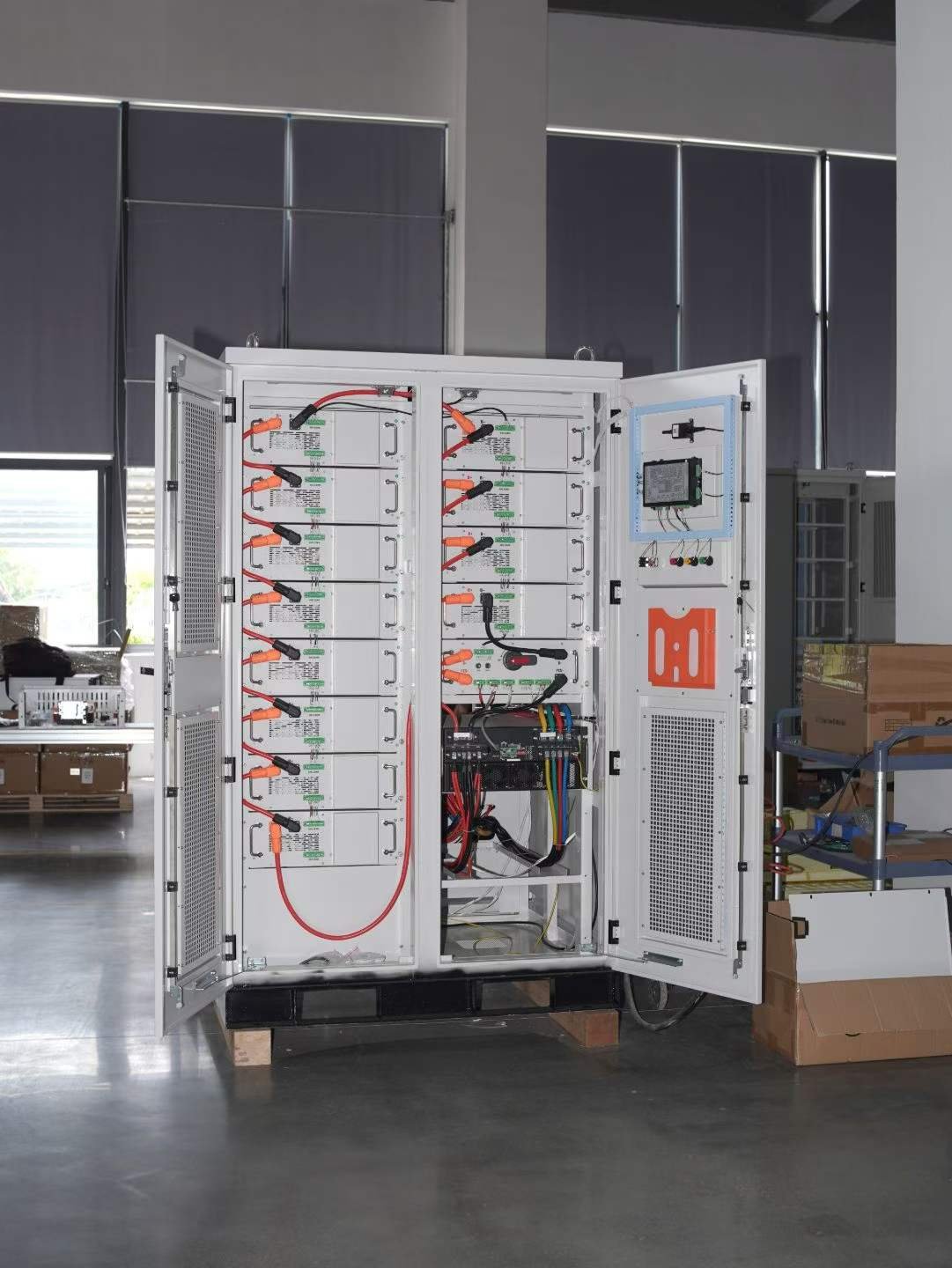
Request type-test and product evidence during procurement, but identify what must be repeated after installation. Factory evidence may establish converter capability under controlled conditions. Site acceptance confirms wiring, transformer, protection, settings, plant controller and grid interaction. Neither evidence set automatically replaces the other.
The DOE Distributed Energy Interconnection Checklist organizes tasks and questions by interconnection stage. Buyers can use that structure to assign data exchange, study inputs, witness responsibilities and closeout evidence rather than treating the utility test as an isolated commissioning activity.
Control Settings after the Test
A passing result applies to the tested configuration. Record PCS firmware, plant-controller version, reactive-power mode, voltage-control parameters, ramp limits, filter configuration, transformer tap, enabled blocks and protection settings. Route later changes through change control and identify when a focused or full retest is required.
This is especially important when selecting grid-forming or grid-following BESS controls. A control-mode change can alter voltage and frequency response, current limiting and interaction with other equipment. The acceptance record must describe the mode that was actually tested.
Use a Cause-Isolation Matrix before Ordering Corrective Work
When a limit is exceeded, first determine whether the result is repeatable and whether it follows BESS operation. Repeat the same operating point after confirming the analyzer setup, CT range, phase mapping and data quality. Compare the BESS isolated, active-standby and converting states without changing unrelated plant loads where practical. Record the grid voltage and short-circuit context supplied by the utility or study engineer.
Use individual harmonic orders and simultaneous voltage/current phasors or spectra as required by the accepted method. A rise in voltage distortion with little BESS current contribution may point to a system-resonance or background issue, while a repeatable current component that follows one PCS block may support a different investigation. The responsible engineer should interpret the data; the procurement team should ensure the evidence is available.
Do not permit uncontrolled parameter tuning during the witness test. Changing current-control gains, voltage droop, filter settings or switching strategy can affect protection, stability and equipment stress. Pause, issue a controlled engineering action, obtain OEM approval and define which earlier tests must be repeated. Retain both the failed and corrected datasets.
The NERC reliability-guidelines library includes current resources for inverter-based-resource performance, modeling, commissioning and disturbance analysis. These documents do not set every distribution-site harmonic limit, but they reinforce the need to relate plant response, controls and evidence rather than treating a single measurement as an isolated product defect.
Define Correction, Retest and Conditional Acceptance
The contract should distinguish a measurement anomaly, a background-grid condition, an installation error, a configuration problem and an equipment nonconformance. Each route needs a responsible party and closure evidence. If the utility changes its system or the factory changes major loads between tests, record the difference and decide whether results remain comparable.
A focused retest can be appropriate when the cause and affected states are bounded. A full retest may be required after firmware, filter, transformer, plant-controller or protection changes. State who decides the scope and who bears mobilization and utility-witness costs. Avoid wording that lets the party performing the correction decide unilaterally that no retest is needed.
Conditional acceptance should identify the unavailable function and interim operating envelope. For example, the plant may be restricted from a reactive-power mode until correction while another contracted service remains available. The restriction must be implemented in controls, communicated to operations and linked to a closure date; a note in the commissioning report is not an operating control.
Plan a post-handover review after the plant has operated with representative factory loads and utility conditions. This is not an excuse to defer acceptance. It is a way to compare the controlled commissioning baseline with real duty and detect interactions that a short witness period could not expose. Define the data, trigger and remedy before commercial operation.
Write the RFQ as an Evidence Schedule
Plan the Measurement Campaign around Site Constraints
Confirm the operating states that the site can safely produce before the witness date. The utility may restrict export, the facility may not be able to interrupt production loads, and battery state of charge may limit sustained charge or discharge. Convert those constraints into a sequence that reaches the required points without encouraging operators to bypass protection or thermal limits simply to complete a table.
State who supplies and installs portable instruments, who provides CT and VT access, who validates scaling and phase rotation, and who owns the network and plant data needed to explain each interval. Include safe access, permits, outages, arc-flash controls and utility witnessing in the readiness review. A missing test point or unapproved connection should be discovered before the specialist arrives onsite.
Create contingency steps for unstable grid conditions, plant trips, unavailable load, communications failure and insufficient battery energy. The procedure should say which steps can be repeated, which must restart after a settling period, and what data are retained from an interrupted run. This keeps schedule pressure from turning an invalid interval into an accepted result.
Close the campaign with an instrument and file reconciliation. Confirm that every recorder stopped normally, clocks and channel maps remained valid, all expected files were copied, and original media are protected until the owner accepts the data package. The test team should leave with a documented exception list, not discover missing waveforms after equipment has been returned.
Preserve the Test Context for Future Disputes
A pass/fail report without operating context has a short useful life. The owner should retain the one-line revision, point of measurement, instrument model and calibration status, connection diagram, sampling method, aggregation intervals, active and reactive power, voltage, state of charge, enabled control modes, transformer taps, filter status and major site loads for every accepted interval. Weather and temperature matter when they affect cooling, derating or factory-load behavior, but they should be recorded because they are relevant, not added as generic paperwork.
Raw files should remain in the instrument’s native or another lossless, documented format. A PDF plot is useful for review but cannot replace the underlying waveform, trend and event records. Require a file index that maps each test step to its raw data, calculated result, screenshot, operator note and witness sign-off. The same index should identify discarded intervals and the reason for exclusion. This prevents a later reviewer from unknowingly selecting only the cleanest snapshot.
Before demobilization, give a technically independent reviewer enough time to open a sample of the files and reproduce at least one reported calculation. Confirm that time zones, channel names, CT and VT ratios and unit conversions are unambiguous. This small reconstruction exercise catches export, scaling and timestamp problems while the test equipment and responsible engineers are still available.
Assign ownership of the acceptance dataset and define how it can be shared with the utility, insurer, equipment supplier and future service contractors. Retain the approved report with the as-left settings rather than in an isolated commissioning folder. If the plant later changes firmware, filters, transformer taps or control tuning, the change record should state whether the accepted power-quality baseline remains applicable.
| RFQ deliverable | Minimum content | Release gate |
|---|---|---|
| Applicable-requirement register | Utility rule, code, contract limits and responsible reviewer | Approved before detailed design |
| Study model and inputs | Network impedance, transformer, cables, loads and control modes | Utility or engineer acceptance |
| Equipment evidence | Applicable type tests and declared operating envelope | Technical submittal approval |
| Site test procedure | Boundary, instruments, states, sequence and pass/fail method | Approved before energization |
| Background survey | Operating context and simultaneous voltage/current records | Accepted before BESS contribution analysis |
| Witness dataset | Raw records, spectra, settings and event notes | Owner receives usable files |
| Exception report | Cause, affected state, corrective action and retest scope | Closed by named authority |
| As-left configuration | Firmware, parameters, taps, blocks and protection | Handover baseline completed |
Use the fault and witness discipline in the BESS FAT protocol to keep pre-shipment and site evidence connected. When comparing a commercial and industrial energy storage system, ask each bidder to state which power-quality evidence is product-level, which is modelled and which will be demonstrated at site.
The Acceptance Decision
Accept the plant only when the agreed boundary, operating states and applicable limits are supported by traceable records and the as-left settings are controlled. If a result is affected by unstable background conditions, document the evidence and repeat the relevant state; do not silently discard the interval.
A useful BESS power-quality test lets the owner reproduce what happened and know which later changes can invalidate the result. That is more valuable than a single harmonic screenshot detached from the plant duty and grid condition.