

A thermal-runaway propagation report can contain hundreds of pages of temperatures, gas measurements, photographs and observations. Buyers often reduce it to one sentence—“no propagation”—without confirming what was initiated, which level was tested, which design revision was used or whether the installation differs from the test arrangement.
The report is not a general certificate that every project using a similar battery is safe. It is evidence from a defined test object, initiation method, state, enclosure, spacing, ventilation and mitigation configuration. A professional review traces those conditions to the offered equipment and the site’s fire, explosion, separation and emergency-response design.
UL Solutions’ current UL 9540A overview describes cell, module, unit and installation-level objectives and explains recent editions. Buyers should identify the applicable edition, test level and local approval basis rather than treating “UL 9540A tested” as a complete response.
Identify the Report, Test Level and Intended Decision
Record laboratory, accreditation scope, report number, date, standard edition, test level, client, product name, model, cell and module identity, enclosure revision and any report limitations. Confirm whether the document is a complete report, an executive summary, a letter or a marketing extract. A summary may omit setup and deviations needed for engineering review.
State the project decision the report must support: product certification, separation, fire-system design, gas or explosion analysis, responder planning, permitting or insurer review. Different questions need different test levels and data. Do not ask a cell-level gas result to prove unit-to-unit fire spread, or a unit test to prove an altered building arrangement.
| Test level | Evidence focus | Buyer should not infer |
|---|---|---|
| Cell | Thermal-runaway characteristics and gas data | Complete module or enclosure behavior |
| Module | Cell-to-cell propagation tendency and releases | Unit-to-unit or building fire performance |
| Unità | Module propagation, heat/gas behavior and enclosure effects | Every site spacing or room arrangement |
| Installation/large scale | Fire spread, exposures and installed mitigation under defined setup | Unreviewed changes to equipment or layout |
| Product certification | Evaluation to the product standard and named configuration | Automatic approval for every jurisdiction |
Match the Cell and Module to the Offered Product
Compare manufacturer, model, chemistry, format, capacity, mass, dimensions and production revision of the tested cell. Then compare module layout, series/parallel arrangement, spacing, compression, barriers, thermal paths, busbars, fusing and enclosure. “Same chemistry” or “same capacity” does not establish equivalence.
Trace substitutions and supply-chain changes. If the offered product uses another cell, barrier, vent path or module material, require a documented technical assessment and any additional test evidence demanded by the authority, certification body, fire engineer or insurer. Keep the decision with the project record.
The broader distinctions in the guida UL 9540, UL 9540A e NFPA 855 help procurement teams separate a product evaluation, a propagation test method and an installation standard. Use the edition and adoption applicable to the site.
Review the Initiation Method and State
Identify how thermal runaway was initiated, which cell was selected, where it sat in the module or unit, and whether the method created representative heating and venting. Record battery state of charge, conditioning, temperature and rest. A report may use a defined worst-case or standardized condition that differs from routine operation; the reviewer must understand the purpose rather than relabeling it as a field incident prediction.
Check whether the selected initiation location challenged neighboring cells, barriers, gas paths and mitigation. If the product contains multiple module or rack orientations, identify which were tested. Note test repetitions and deviations. One result should not be generalized beyond its documented scope without technical justification.
Il DOE Piano strategico per la sicurezza dell'accumulo di energia describes validated safety and the importance of system design and testing. Apply that lifecycle view: test evidence informs prevention, mitigation, installation, response and later change control.
Distinguish Passive Construction from Active Systems
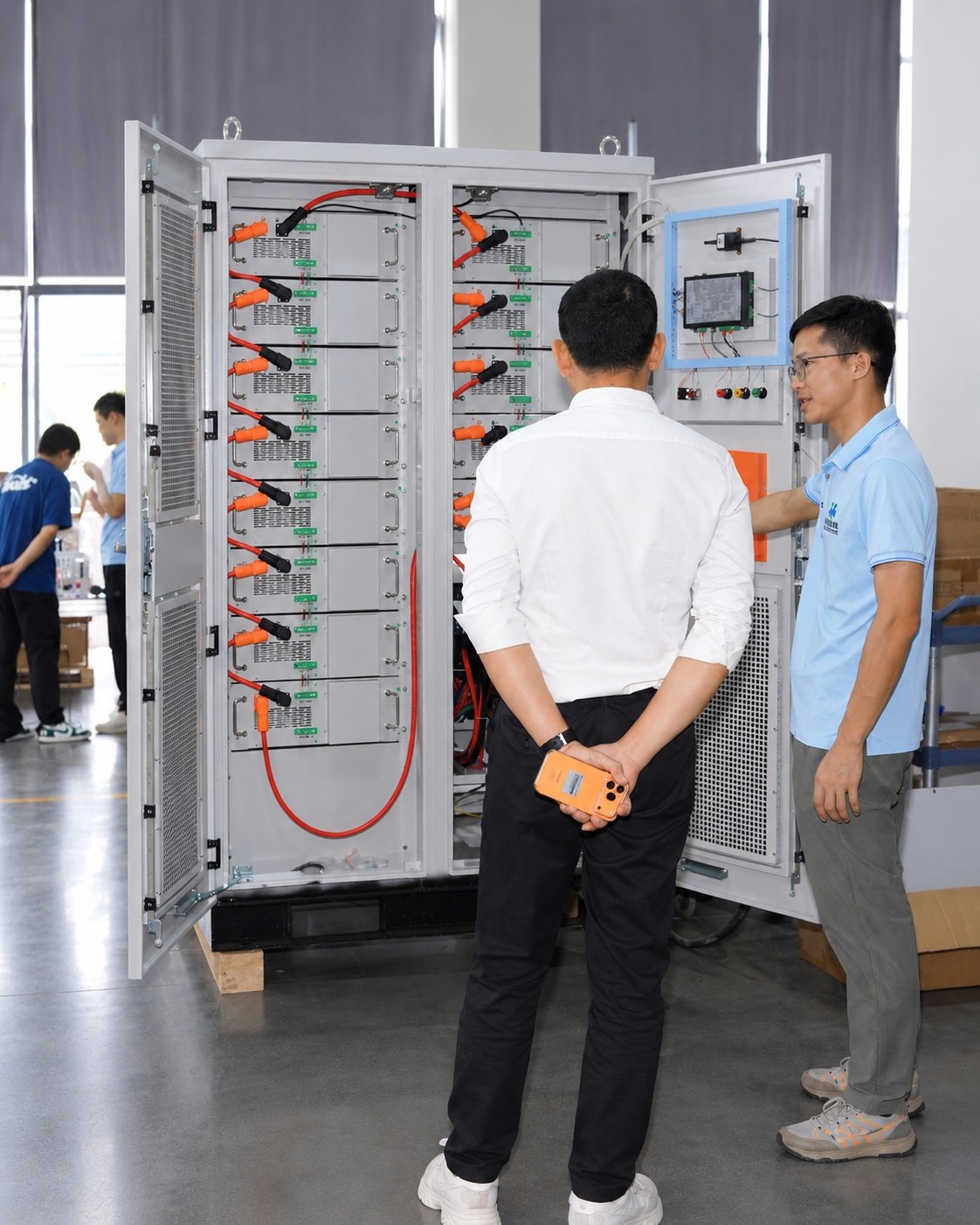
List every active and passive feature present during the test: cell spacing, insulation, barriers, vents, enclosure panels, pressure relief, detection, BMS, contactors, fans, pumps, suppression and external fire protection. State which functions were operating, disabled or unavailable by test design.
Active controls may improve normal detection and response, but thermal runaway can disrupt power, communications and sensors. The report should be read for behavior with the actual test configuration. Do not claim that a fan, pump or BMS stopped propagation if the test method intentionally did not rely on that function.
For project controls, connect report observations to the BESS fire alarm cause-and-effect matrix. Report evidence may support thresholds or actions, but the site must separately verify installed detection, isolation, ventilation, suppression and notification paths.
Read Gas, Pressure, Heat and Re-Ignition Data Together
Gas composition, release rate, flammability, temperature, heat release, heat flux and pressure address different hazards. Ask the fire and explosion specialists which data they need and whether the report supplies raw or summarized results. A statement that no flame was observed does not mean no flammable gas was produced.
Review sensor locations, sampling timing, detection limits and uncertainty. Gas measured at one point in a test enclosure may not represent every concentration in a project room. Heat flux and target temperatures depend on geometry and distance. Use engineering analysis to transfer test data to the installation.
Record reignition or continued heating observations and monitoring duration. Emergency plans should not assume the event ends when visible flame stops. Link product evidence to the BESS emergency information pack so responders receive verified facts, not simplified marketing claims.
Compare the Test Layout with the Site
Compare enclosure orientation, doors, panels, vents, spacing to adjacent units and walls, overhead exposures, indoor or outdoor condition, ceiling, room volume, ventilation, suppression, barriers and target materials. Mark each difference as equivalent, conservative, requiring analysis or requiring new evidence.
UL Solutions’ 2026 announcement on large-scale BESS fire testing describes enhanced installation-level evaluation. Buyers should confirm which edition and test method their report used and whether the current project relies on a configuration outside that evidence.
Do not overlook site drainage, access and neighboring hazards. A test can support separation and thermal exposure analysis but does not design emergency vehicle routes, runoff control, utility isolation or post-incident storage. These remain site responsibilities.
| Comparison field | Report condition | Project review |
|---|---|---|
| Cell/module/unit revision | Exact tested identity | Match, assessed change or new evidence |
| State of charge and conditioning | Defined test state | Understand purpose and conservatism |
| Initiation point/method | Cell and location used | Relevant to product arrangements |
| Enclosure openings | Doors, vents and relief state | Matches installed hardware and controls |
| Spacing/exposures | Targets, walls and adjacent units | Site layout within supported basis |
| Active mitigation | Operating, disabled or external | No unsupported reliance |
| Instrumentation | Gas, pressure, heat and temperature points | Data suitable for engineering use |
| Duration/end state | Monitoring, reignition and observations | Emergency/recovery assumptions aligned |
Check Deviations, Anomalies and Unsuccessful Runs
Read the deviation and observation sections, not only the conclusion. Note failed initiation, sensor loss, unexpected panel opening, equipment malfunction, changed setup, incomplete data or repeated runs. Determine how the laboratory and report author treated each issue and whether it limits the project decision.
Request referenced appendices, photographs and raw-data summaries required for review. Redactions may protect proprietary design, but they should not remove information the authority or fire engineer needs to assess configuration and results. Establish a confidential review route where necessary.
The US Environmental Protection Agency’s BESS safety and environmental considerations provide useful installation and emergency-planning context. Use those project-level considerations alongside the product-specific test report, and confirm current authority requirements directly.
Connect the Report to Procurement and Change Control
Require bidders to identify report numbers, applicable product models, standard editions, deviations and project gaps. The supplier should disclose planned cell, module, barrier, enclosure, firmware or mitigation changes before manufacture. The owner decides whether the updated design remains within the accepted evidence.
At factory and site review, verify construction and settings that the safety case depends on. Use the Protocollo FAT del BESS to record product identity, firmware and functional controls. FAT cannot reproduce destructive propagation testing, but it can confirm that the supplied configuration matches the reviewed evidence.
After operation begins, screen module replacement, augmentation, repowering, fire-system modification and enclosure repair against the report basis. Keep the report, gap analysis, approvals and current product register together. A report that cannot be mapped to installed serials has limited lifecycle value.
Use a Report-Review Schedule in the RFQ
| Deliverable RFQ | Contenuto minimo | Punto di accettazione |
|---|---|---|
| Report register | Lab, number, date, edition, level and product identity | Bid technical review |
| Configuration mapping | Cell, module, unit and mitigation against offered product | Before design approval |
| Project gap matrix | Test layout versus site layout and fire systems | Fire-engineer/AHJ review |
| Pacchetto dati | Gas, heat, pressure, photos, observations and deviations | Suitable for analysis |
| Safety-function mapping | Passive and active features present during test | No unsupported claim |
| Responder summary | Verified hazards, remaining energy and test observations | Emergency plan accepted |
| Production conformity | Traceability and controlled substitutions | Before shipment |
| Lifecycle change rule | Screening, re-analysis and new-test triggers | Transferred to operations |
Utilizzare il checklist di approvvigionamento commerciale per BESS to connect propagation evidence with certification, site safety, commissioning, service and change control. A low-price bid with an unmapped report can transfer significant approval work to the owner.
Turn Measurements into Project Decisions
A report can contain hundreds of temperature, heat-flux, gas and video observations. Procurement teams do not need to reproduce the laboratory analysis, but they do need a decision map. Each important observation should be assigned to a design question: separation distance, wall rating, ventilation concept, gas detection, pressure relief, emergency isolation, firefighting access or post-event monitoring. If a measurement is cited in the safety case, record its sensor location, time basis, range and any limitation. A peak value without location and timing can be easy to quote and hard to use.
Heat-flux data deserve particular care. Confirm the target surface, orientation, distance, sampling interval and whether the quoted result is a peak, an average or a threshold-duration value. Compare those details with the exposure the project engineer is assessing. A sensor positioned beside a test unit does not automatically establish the heat input at a building façade, boundary or differently oriented adjacent enclosure. The fire-protection engineer should make that translation and document the assumptions.
Gas results also require context. The report may identify gas species, concentration trends, release timing or flammability observations, but readings depend on sampling point, dilution, ventilation, enclosure state and analytical method. Ask whether the data support detector selection, alarm thresholds, ventilation logic or only general hazard identification. Do not copy a concentration from a test report into a site setpoint without a qualified controls and fire-safety review.
Pressure events should be traced against the physical sequence. Note when doors, vents, panels or other relief features moved; whether the movement was intentional; and whether fragments or hot material affected targets. Confirm that the installed relief path remains unobstructed after cable routing, weather protection, adjacent equipment and maintenance access are added. A design change outside the enclosure can still invalidate an installation assumption.
Large-scale research helps teams understand why full observations matter. Sandia National Laboratories’ report on large-scale energy-storage fire testing discusses fire spread, gas generation and the value of data for emergency response. Use such research to improve review questions, while keeping product-specific decisions tied to the tested product and the authority-approved project analysis.
Define What Happens When the Product Changes
Propagation evidence is configuration-sensitive. A change to cell supplier, electrode format, module spacing, thermal interface material, busbar insulation, vent path, barrier, door seal, firmware, cooling arrangement or fire-system logic can alter initiation, propagation or release behavior. The contract should therefore define a controlled baseline before purchase order and require written notice before a safety-relevant substitution. “Equivalent component” is not a sufficient engineering disposition.
The change review should name the responsible parties and possible outcomes. A proposed change may be accepted as within the documented test family, supported by a laboratory or engineering assessment, restricted by an installation control, or sent for additional testing. The supplier should provide the comparison evidence; the owner, engineer, insurer and authority retain their respective approval roles. Set review lead times early so a late substitution does not force an unsafe choice between schedule and evidence.
Traceability must continue through delivery. Record the installed cell and module identifiers, enclosure revision, protection and fire-system versions, and applicable report numbers. Sample production records at FAT and reconcile them again at site receipt. If several production lots or approved configurations are used, map serial-number ranges to the supporting evidence. This is especially important for multi-phase projects where a later block may look identical but contain revised components.
Apply the same discipline after handover. Maintenance teams need a rule for damaged-module replacement, fire-system repair and firmware changes. Augmentation and repowering reviews should reopen the propagation gap analysis because the new equipment may change spacing, exposure, controls or responder access. Preserve superseded reports and dispositions so an incident investigation or warranty review can reconstruct the evidence that applied at the time.
La Decisione dell'Acquirente
Accept a thermal-runaway propagation report when its test level answers the project question, the tested construction matches the offered product, the setup and deviations are understood, engineering teams can use the data and all installation differences have an approved disposition.
The conclusion is not “the battery passed.” The conclusion is a defined evidence boundary: what was tested, what was observed, which project decisions it supports and which risks still require design, operational or emergency controls.