
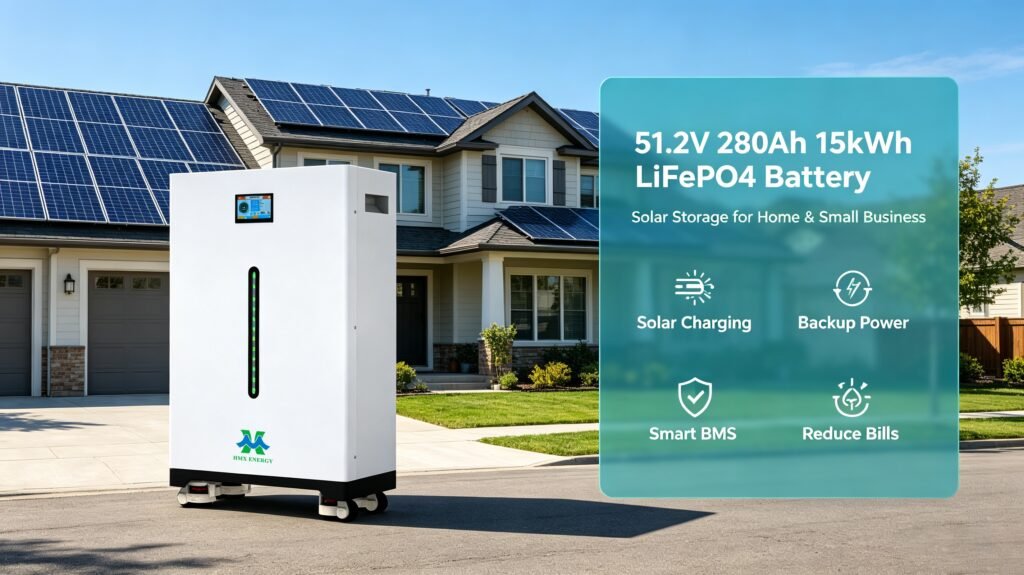
A battery can discharge on a cold morning while refusing to accept solar energy. That is not necessarily a fault. Charging, discharging and storage can have different temperature limits, and the relevant measurement may be inside the pack rather than at the weather station.
Cold-weather LiFePO4 charging should be specified as a sequence: detect the relevant temperature, restrict charging when required, manage any approved heating function, verify recovery conditions and restore charging within the permitted limits. Ask for evidence of the sequence, not only a line saying “low-temperature protection.”
Read charging and discharge limits separately
The Victron Lithium Smart operating manual is a useful manufacturer-specific example. It states different allowed ranges for charging and discharging. These values apply to that product family; they are not generic LiFePO4 limits and do not establish the operating range of an HMX battery.
| Victron Lithium Smart function | Published allowed temperature range | Procurement lesson |
|---|---|---|
| Charging | +5 to +50 degrees Celsius | Do not infer charge permission from discharge capability |
| Discharging | -20 to +50 degrees Celsius | Read the separate discharge conditions |
| Other battery models | Use their own approved documentation | Do not transfer these limits across brands or models |
For the HMX home storage range, request the exact model’s charge, discharge and storage limits, together with current derating and recovery conditions. If a sales sheet lists only an “operating temperature,” ask which function it covers. The missing distinction can change whether a winter project meets its energy objective.
Do not assume that a small charging current makes an otherwise prohibited condition acceptable. Only the applicable cell and pack documentation, validated control design and supplier approval can establish the permitted charging conditions. Protection should not be bypassed to capture a short period of morning sunshine.
Which temperature does the control actually use?
A cabinet air sensor, a cell sensor and a sensor on the control board can report different conditions. The installer needs to know which measurement controls charge permission, how the relevant channels are selected and what happens if a sensor is unavailable or implausible. An outdoor temperature forecast cannot replace the pack’s required sensing.
The TI BQ25170 charger documentation identifies battery thermistor monitoring and hot/cold charge control for that single-cell component. It illustrates the distinction between battery temperature sensing and electronics thermal regulation. It is not a suggested component choice or complete protection design for a residential storage pack.
Ask the supplier to describe the implemented sensing and protection, including the response to a sensor fault. A feature available in a control chip is not evidence that the delivered battery uses it correctly. Obtain the pack-level validation record or a suitable documented engineering confirmation.
A heater adds another operating dependency
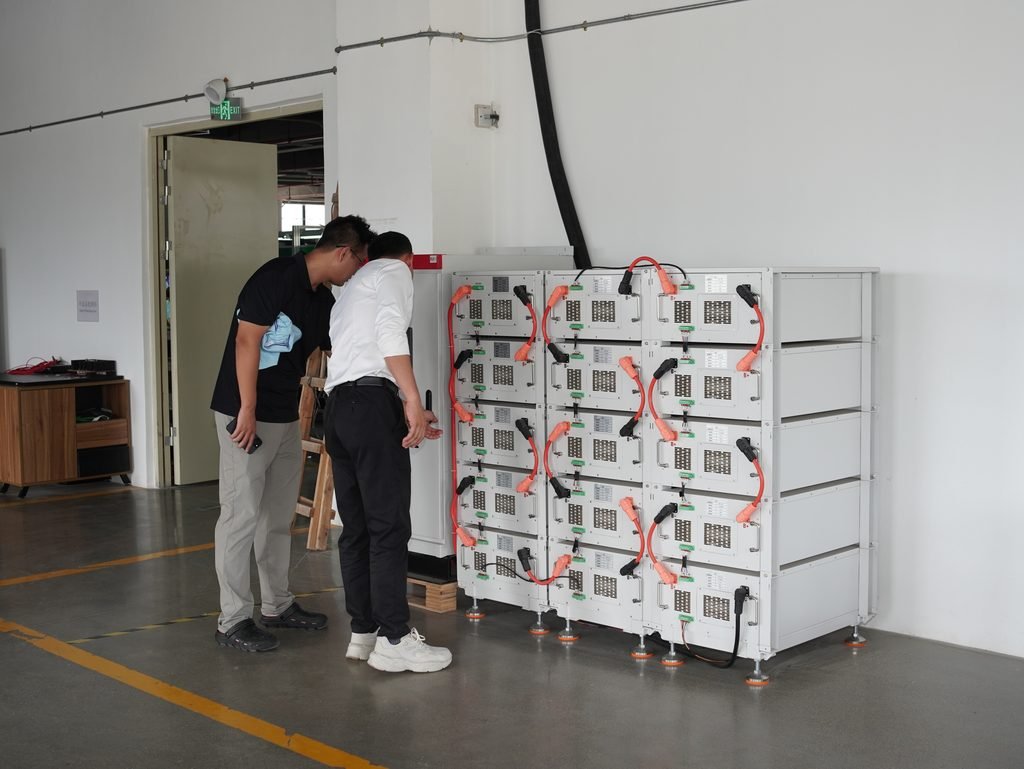
If a proposed battery has heating, verify that the exact supplied version includes it. Then ask where heater energy comes from, when heating is enabled and how the system prevents charging outside the approved cell conditions. “Self-heating” does not answer what happens when the pack is depleted, the grid is absent or solar input is weak.
Heating may compete with loads or delay the start of net battery charging. Do not insert a warm-up time or energy allowance without model-specific evidence under the relevant starting temperature and power conditions. Request those results with their test setup, not a duration copied from an unrelated battery.
A proposed floor-standing storage battery may also be installed in a room that changes temperature differently from the outdoors. Confirm the approved installation conditions, clearances and environmental controls. Improvised enclosure insulation or heaters can affect ventilation, access and product approval, so changes require a proper design review.
Check every source that can charge the battery
A solar controller, grid charger and generator-connected inverter may not respond to the same signal in the same way. Map each source to the battery’s charge permission and limits. For each permitted configuration, ask how charging is stopped and what behaviour occurs if the control communication is lost.
A solar controller showing “charging” may be reporting its own state rather than verified energy entering the cells. Conversely, a controller may deliver energy to a heater while the cells remain charge-inhibited. Record the relevant boundaries and labels in the customer documentation to reduce avoidable service calls.
| Condition | Supplier response to document | Evidence to request |
|---|---|---|
| Pack below permitted charging condition | Charge inhibition or approved current restriction | Temperature, permission and actual current trace |
| Heating requested, if fitted | Power source, limits and heating state | Model-specific cold-start record |
| Recovery condition reached | Approved restart logic and charge limits | Temperature and charging sequence |
| Sensor or communications fault | Defined restricted state and alarm | Approved validation of the fault response |
| Grid absent and battery energy low | Documented operating limitation and recovery path | System-level cold-start review |
Ask for cold-start evidence, not only a room-temperature certificate
NLR’s energy storage testing facilities combine battery cycling and environmental control to evaluate temperature-dependent performance. The principle is useful for an importer: test conditions must match the claim being assessed. This reference does not imply that HMX equipment has been tested or certified by NLR.
The supplier’s record should identify the exact pack, firmware, temperature history, charging sources and measured limits. A test started with a warm battery in a cold room does not necessarily reproduce an overnight cold soak. Agree the relevant starting condition before relying on a result.
For an off-grid buyer, incorporate any charging restrictions and heater dependence into the off-grid energy and reserve review. More nominal capacity does not guarantee that replenishment will be available when the battery is cold.
A winter-ready proposal should explain both what the system can do and when it must wait. Document that distinction before shipment, and give the customer a normal-operation explanation for a cold-weather charge pause. It protects the battery and makes service expectations more realistic.