
Series connections raise bank voltage; parallel connections raise available capacity and current capability. The arithmetic is simple, but safe implementation depends on whether the battery’s BMS and manufacturer approve the exact arrangement.
Independent lithium packs can disconnect at different times. That makes pre-charge, current sharing, state-of-charge matching and protection important.
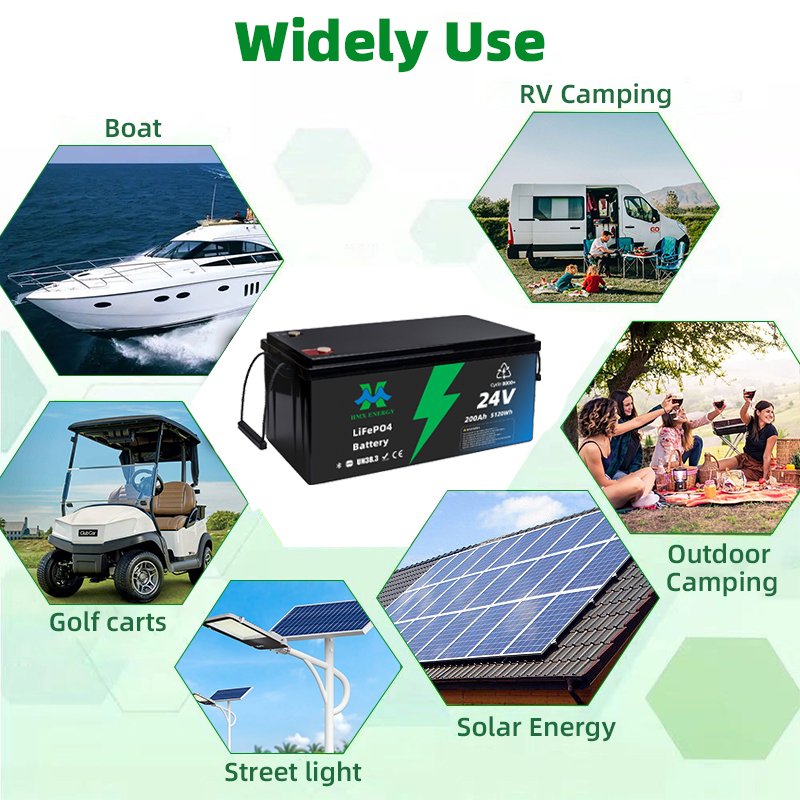
A related HMX reference is the 24V 200Ah LiFePO4 battery. Use it to frame the next supplier discussion, then record project-specific deviations before ordering.
First establish the required load power and usable energy with the home battery sizing method; only then decide whether an approved series or parallel arrangement can meet the voltage, current and expansion constraints.
Direct answer: Do not assume a battery can be placed in series or parallel. Use the published unit limit, approved topology, cable scheme and commissioning procedure for the named model.
Research review date: 30 September 2026. Quantitative statements are tied to the linked source and should be rechecked if procurement occurs later.
For current market and policy context, review IEC 62619:2022 scope. IEC 62619:2022 covers safety requirements and tests for secondary lithium cells and batteries used in industrial applications, including stationary and motive uses.
Check whether the BMS permits the intended topology
For System designers, distributors and installers, the first task is to turn the intended service into measurable inputs and acceptance limits. The following table keeps the decision tied to evidence instead of a broad product label.
| Connection | What changes | What does not automatically change |
|---|---|---|
| Series | Bank voltage increases | Amp-hour capacity |
| Parallel | Amp-hour capacity and available current may increase | Nominal voltage |
| Series-parallel | Both voltage and capacity can increase | Compatibility and protection requirements |
| Communication parallel | Master/aggregate data may be available | Electrical sharing without correct cables |
| Independent strings | Can improve service isolation | Need for coordinated protection |
Buyers defining the initial scope can compare these requirements with HMX’s 12V LiFePO4 batteries. The page is a product or project reference; final suitability still requires a written project specification.
The technical comparison should also be checked against UNECE Manual of Tests and Criteria, Revision 8. UNECE publishes the current Manual of Tests and Criteria and its 2025 amendment, including changes affecting subsection 38.3 for lithium cells and batteries.
Control pre-charge, state-of-charge matching and branch protection
The commercial offer should state its assumptions, exclusions and measurement boundary. Buyers can then compare systems on the same basis and keep later design changes under document control.
| Commissioning check | Method | Pass condition |
|---|---|---|
| Unit voltage or state of charge | Measure before connection | Within manufacturer’s matching limit |
| Polarity | Meter and visual verification | Correct on every branch |
| Cable resistance | Equal approved paths where required | Balanced current sharing |
| Branch protection | DC-rated fuse or breaker | Selective isolation |
| Load test | Measure current by branch | No abnormal imbalance or alarm |
Action points for the project team
- Never connect packs of different voltage, chemistry, model, age or firmware unless the manufacturer explicitly approves it.
- Isolate and label each branch where the design calls for it.
- Use a pre-charge method when high input capacitance can create damaging inrush.
- Record the installed topology and unit serial numbers.
For specification and acceptance work, U.S. DOE BESS procurement checklist provides an independent reference. The U.S. Department of Energy checklist separates early project development, technical specifications and interconnection work for commercial lithium-ion systems.
Expansion errors that damage reliability
These are the practical objections and failure modes most likely to stop approval, delay commissioning or create an avoidable service call for System designers, distributors and installers.
- The BMS is not approved for the proposed series voltage or parallel count.
- Packs with different state of charge or age are connected together.
- Branches share current poorly and cannot be isolated individually.
Questions the buyer should ask before approval
- What topology is explicitly allowed by the manufacturer?
- How are packs balanced before connection?
- What fuse, disconnect and monitoring does each branch receive?
Control imbalance before adding packs
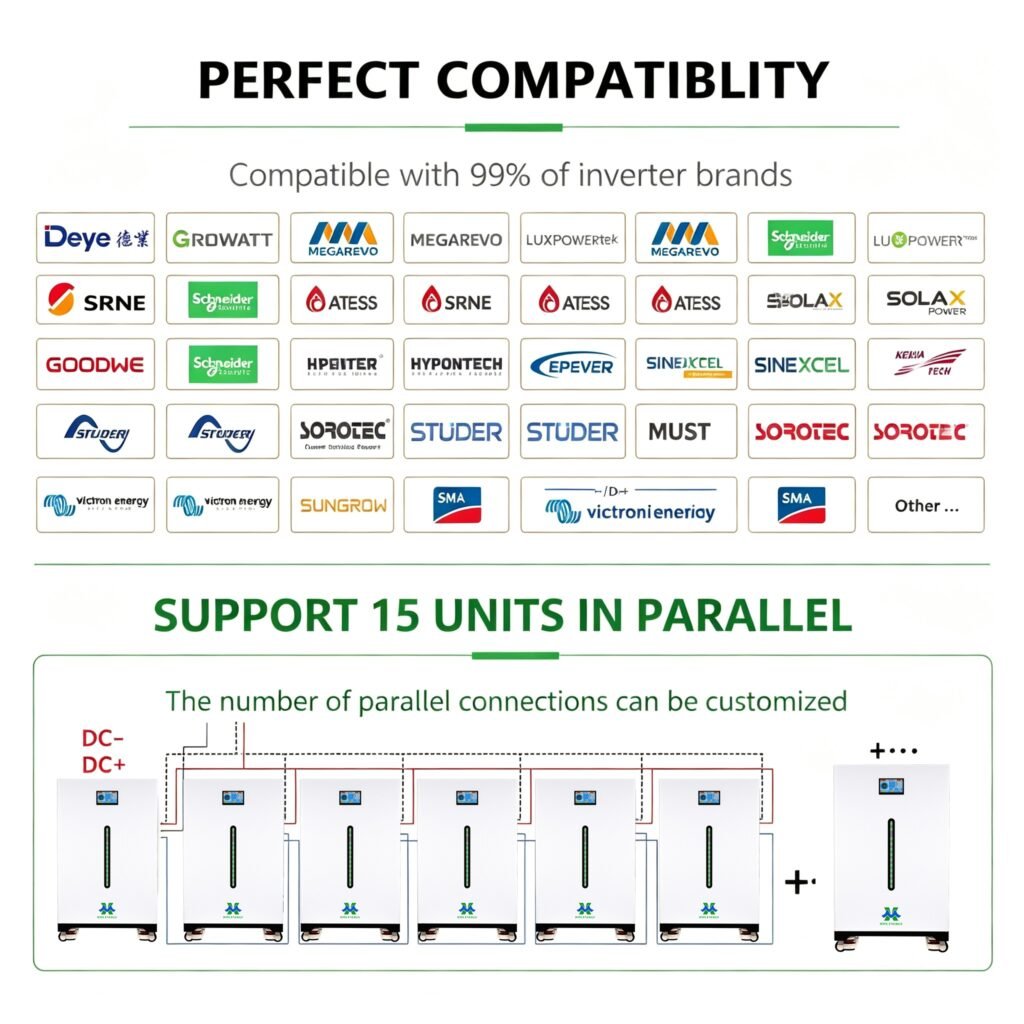
Confirm that the battery manufacturer permits the proposed series voltage, parallel count and operating mode. Each pack contains a BMS with voltage and current limits; connecting units does not automatically create a coordinated higher-voltage or higher-current system. Chargers, inverters, disconnects and protection must also match the complete bank.
For a concrete equipment-level review, apply the checks above to the 24V LiFePO4 batteries and request confirmation for the intended site conditions and operating mode.
Before parallel connection, verify model, capacity, age, firmware, state of health and state of charge. Use branch conductors and bus connections that promote current sharing, and protect and isolate each branch. Monitor branch current during initial charging and discharging to identify unequal resistance or a unit reaching its limits early.
Before design freeze, the project team should review IEC 63056:2020 scope. IEC 63056 adds safety requirements for secondary lithium cells and batteries used in electrical energy storage systems up to 1,500 V DC nominal.
Series strings need appropriate insulation, switching, monitoring and charging for the total voltage. A trip in one unit can interrupt the string and may place unexpected voltage across open points. Document the safe shutdown and restart sequence, including how technicians confirm zero energy at the work location.
From analysis to an auditable decision
- Verify approved topology and total system ratings.
- Match packs and equalise state of charge before connection.
- Protect, isolate and monitor each branch or string.
- Test current sharing, trips and safe restart at commissioning.
Leave a serviceable low-voltage system record
Low-voltage systems are often modified after installation, so the owner needs an as-built record that makes conductor, fuse and battery-bank decisions visible. Document every branch, operating voltage, expected current and isolation point so later additions are reviewed against the original limits.
The same evidence and acceptance questions can be used when assessing HMX’s 15kWh floor-standing LiFePO4 battery; catalogue information should be reconciled with the controlled quotation and drawings.
- Battery topology, approved pack count and charger or inverter settings.
- Cable sizes, lengths, protection ratings and calculated voltage drop.
- Branch labels, isolation procedure and measured commissioning values.
- Rules for adding, replacing, balancing or removing battery packs.
Attach the record near the equipment where practical and keep a controlled digital copy. Future technicians should be able to identify the design limit before adding a load or another battery branch.
Risk Control
Design safe fallback states for loss of grid, communication, cooling, sensors and auxiliary power. Test the most important states before handover.