
Off-grid sizing must balance energy across days, not just match one evening load. Tropical sites may have strong annual solar resource but still experience cloudy periods, high cooling demand and seasonal business loads.
A useful design begins with load tiers and an agreed operating strategy for low-solar days. Oversizing every component is expensive; ignoring weather and load priority creates service complaints.
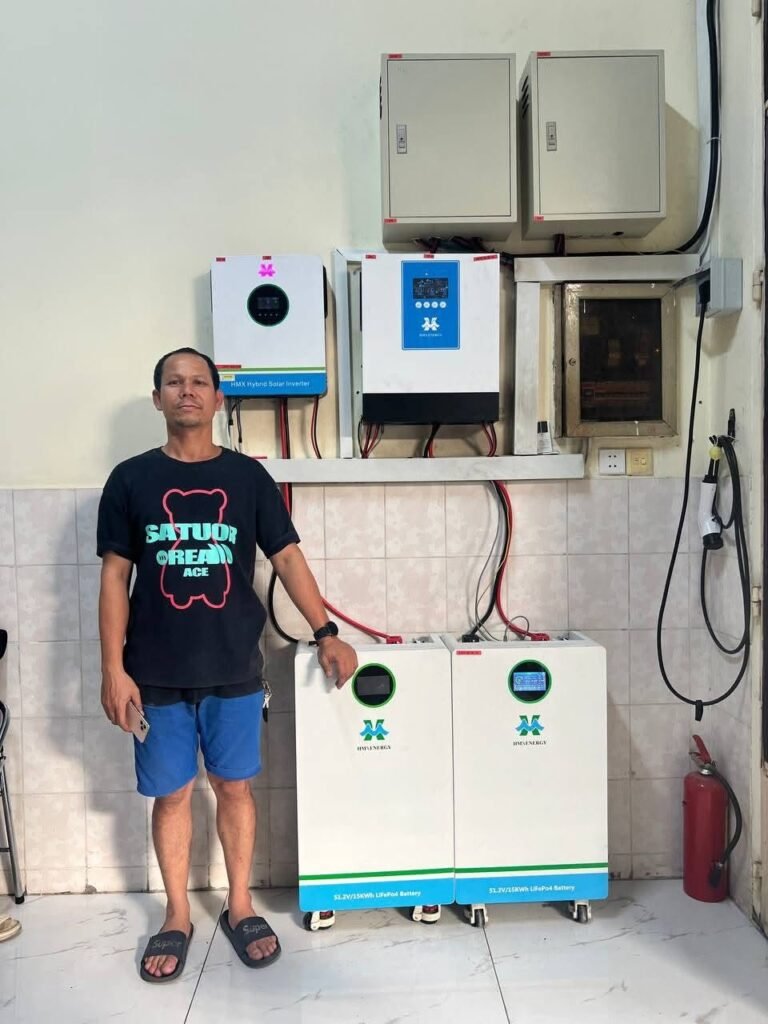
Pas voor een concrete beoordeling op apparatuurniveau de bovenstaande controles toe op het Cambodia 43kWh home-storage installation en vraag bevestiging voor de beoogde locatieomstandigheden en bedrijfsmodus.
Direct antwoord: Divide loads into critical, managed and non-backup groups. Then model daily energy, peak power, solar production, battery reserve and any generator contribution on the same hourly timeline.
Onderzoeksbeoordelingsdatum: 30 september 2026. Kwantitatieve uitspraken zijn gekoppeld aan de gelinkte bron en moeten opnieuw worden gecontroleerd als de inkoop later plaatsvindt.
Raadpleeg voor de huidige markt- en beleidscontext NREL PVWatts Calculator. PVWatts estimates grid-connected PV energy production from location and system inputs. It is useful for the PV side of a study, but it does not replace interval-load and outage analysis for battery sizing.
Buyer decision path
For Philippines, Cambodia, island and rural markets, the first task is to turn the intended service into measurable inputs and acceptance limits. The following table keeps the decision tied to evidence instead of a broad product label.
| Design input | Minimum record | Reason |
|---|---|---|
| Critical loads | Power, hours and start surge | Sets minimum service |
| Managed loads | Allowed operating windows | Creates dispatch flexibility |
| Solar resource | Hourly or monthly location data | Sizes PV and seasonal balance |
| Weather reserve | Consecutive low-solar scenario | Sets autonomy target |
| Generator plan | Start condition and minimum loading | Avoids deep discharge and poor fuel use |
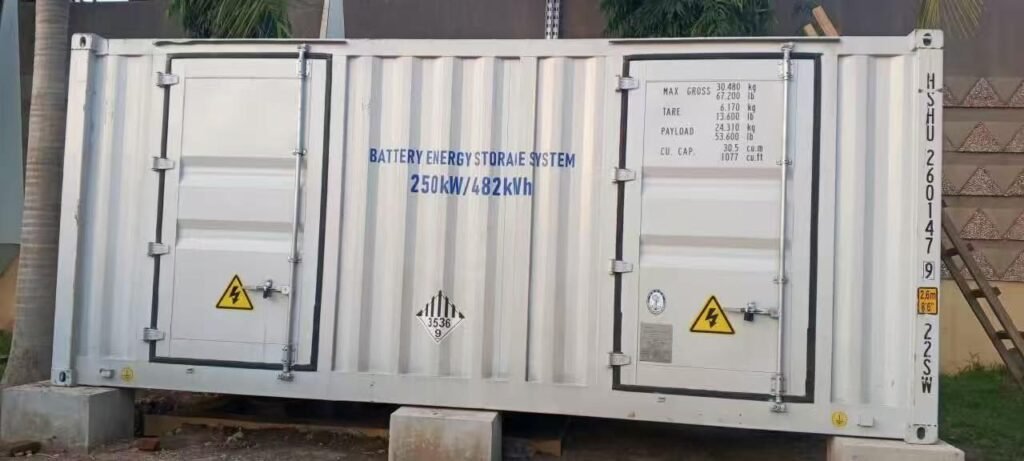
Dezelfde bewijs- en acceptatievragen kunnen worden gebruikt bij het beoordelen van HMX's Philippines solar-storage project; catalogusinformatie moet worden afgestemd op de gecontroleerde offerte en tekeningen.
De technische vergelijking moet ook worden getoetst aan Philippines DOE 2026 own-use solar update. The Philippines DOE links simplified own-use solar rules with national renewable-power targets of 35% by 2030 and 50% by 2040, while retaining technical safeguards.
Project controls
De commerciële offerte moet haar aannames, uitsluitingen en meetgrens vermelden. Kopers kunnen systemen dan op dezelfde basis vergelijken en latere ontwerpwijzigingen onder documentbeheer houden.
| Operating state | Control priority | Customer rule |
|---|---|---|
| Normal solar day | Serve loads, charge battery, limit curtailment | Run flexible loads in solar hours |
| Evening | Serve selected loads from battery | Avoid unnecessary high-power loads |
| Low state of charge | Shed managed loads or start generator | Preserve critical reserve |
| Extended cloud | Coordinate PV, battery and generator | Use agreed fuel-versus-autonomy plan |
| Maintenance | Provide temporary supply or planned outage | Communicate service window |
Actiepunten voor het projectteam
- Use separate weekday, weekend and seasonal load profiles where the business changes.
- Check motor and compressor starting power, not only daily kWh.
- Define generator auto-start, warm-up, loading and stop rules.
- Train the customer on load priorities and alarm response.
Voor specificatie- en acceptatiewerk, IEA Southeast Asia Energy Outlook 2026 provides an independent reference. IEA reports that Southeast Asian energy investment exceeded USD 100 billion in 2025, while grid and storage investment still needs to catch up with generation growth.
Off-grid pain points hidden by daily averages
These are the practical objections and failure modes most likely to stop approval, delay commissioning or create an avoidable service call for Philippines, Cambodia, island and rural markets.
- Cloudy-day sequences are replaced with one average solar day.
- Load growth and customer behavior erode the planned reserve.
- Generator start, minimum run and battery recharge logic are not tested together.
Vragen die de koper vóór goedkeuring moet stellen
- Which loads can be shed before the battery reaches its minimum reserve?
- How many low-solar days must the system ride through?
- What manual recovery path remains if automatic generator start fails?
Design around the worst energy sequence the owner will accept
Start with a time-based load model and classify essential, deferrable and shed loads. Daily kWh alone cannot show the evening peak, motor starts or the period when PV and demand do not overlap. Interview the operator about seasonal business activity and expected growth, then state which future loads are inside or outside the design.
Een gerelateerde HMX-referentie is het home battery storage range. Gebruik dit als kader voor het volgende leveranciersgesprek en leg projectspecifieke afwijkingen vast voordat u bestelt.
Use a location-specific solar model, but test several consecutive low-production days rather than only an annual average. Include PV temperature effects, inverter limits, battery charge power and system losses. If a generator is available, model start threshold, minimum run time, loading range, fuel constraints and the energy needed to restore reserve while serving the site.
Vóór design freeze moet het projectteam IEC 63056:2020 toepassingsgebied. IEC 63056 voegt veiligheidseisen toe voor secundaire lithiumcellen en batterijen die worden gebruikt in elektrische energieopslagsystemen tot 1.500 V DC nominaal.
Define what the controls do when energy becomes scarce. The sequence may shed flexible loads, start a generator, lower an operating target or preserve energy for controls and communications. Test failed generator start and low state of charge during commissioning. The operator should receive a simple daily energy budget and escalation procedure.
Hoe dit toe te passen op een lopend project
- Build hourly load profiles for normal, growth and critical-operation cases.
- Model low-solar sequences with realistic conversion and auxiliary losses.
- Coordinate battery reserve, load shedding and generator operation.
- Test low-energy states and train the operator on recovery.
Houd de berekening reproduceerbaar
Bewaar het ruwe meter- of belastingbestand, het opschoningslogboek, de tarief- of bedrijfsregels, de modelversie en elke aanname die locatiedata omzet in vermogen en energie. De eigenaar moet het basisscenario opnieuw kunnen uitvoeren wanneer productie, tarieven, belastingen of reservebeleid veranderen, in plaats van het oorspronkelijke resultaat als permanent te behandelen.
Kopers die de initiële scope definiëren, kunnen deze vereisten vergelijken met HMX's residential solar procurement guide. De pagina is een product- of projectreferentie; definitieve geschiktheid vereist nog steeds een schriftelijke projectspecificatie.
- Ruwe en opgeschoonde tijdreeksgegevens met gedocumenteerde tijdzone en interval.
- Basis-, groei- en stressscenario's met invoer voor verliezen, reserve en degradatie.
- Geselecteerde regelsetpoints en de reden waarom afgewezen alternatieven niet zijn gekozen.
- Een inbedrijfstellingsregistratie die het model verbindt met het gemeten gedrag op locatie.
Geef bij de overdracht de eigenaar de modelinvoer en een update-trigger. Een materiële wijziging in tarief, belasting, productie, weer of reserve moet leiden tot een gecontroleerde heruitvoering in plaats van een niet-onderbouwde belofte dat de oorspronkelijke besparing of looptijd nog steeds van toepassing is.
Field Note
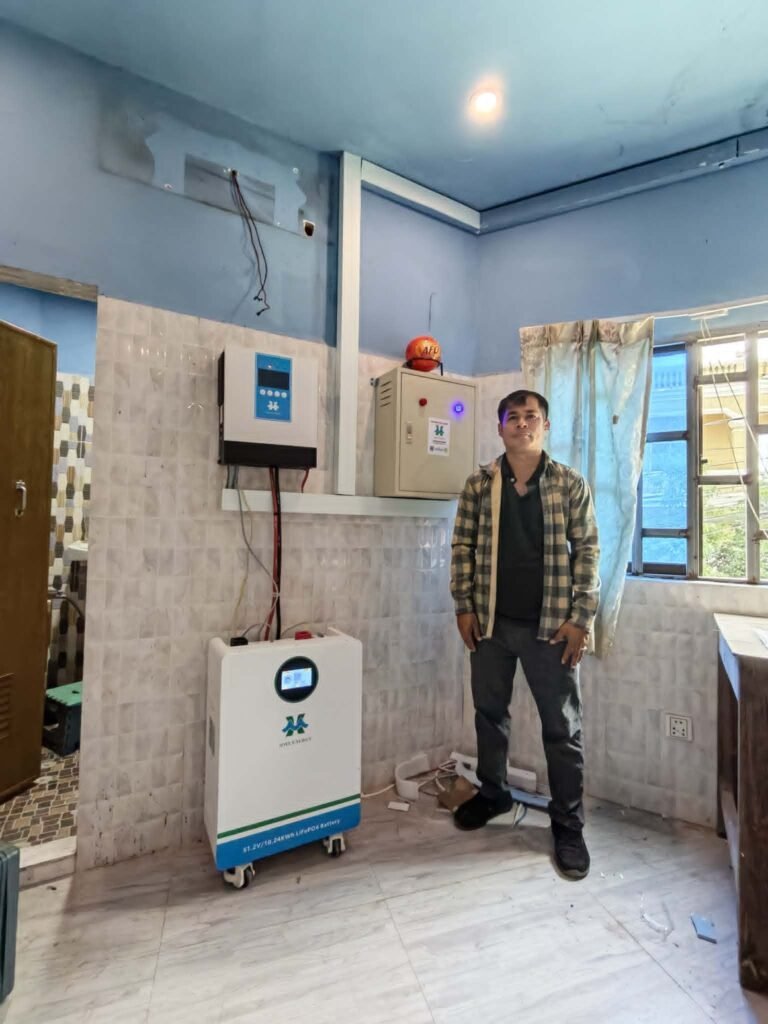
The best field design is one the local team can operate and service. Include training, spares, labels and a clear escalation path in the supply scope.