
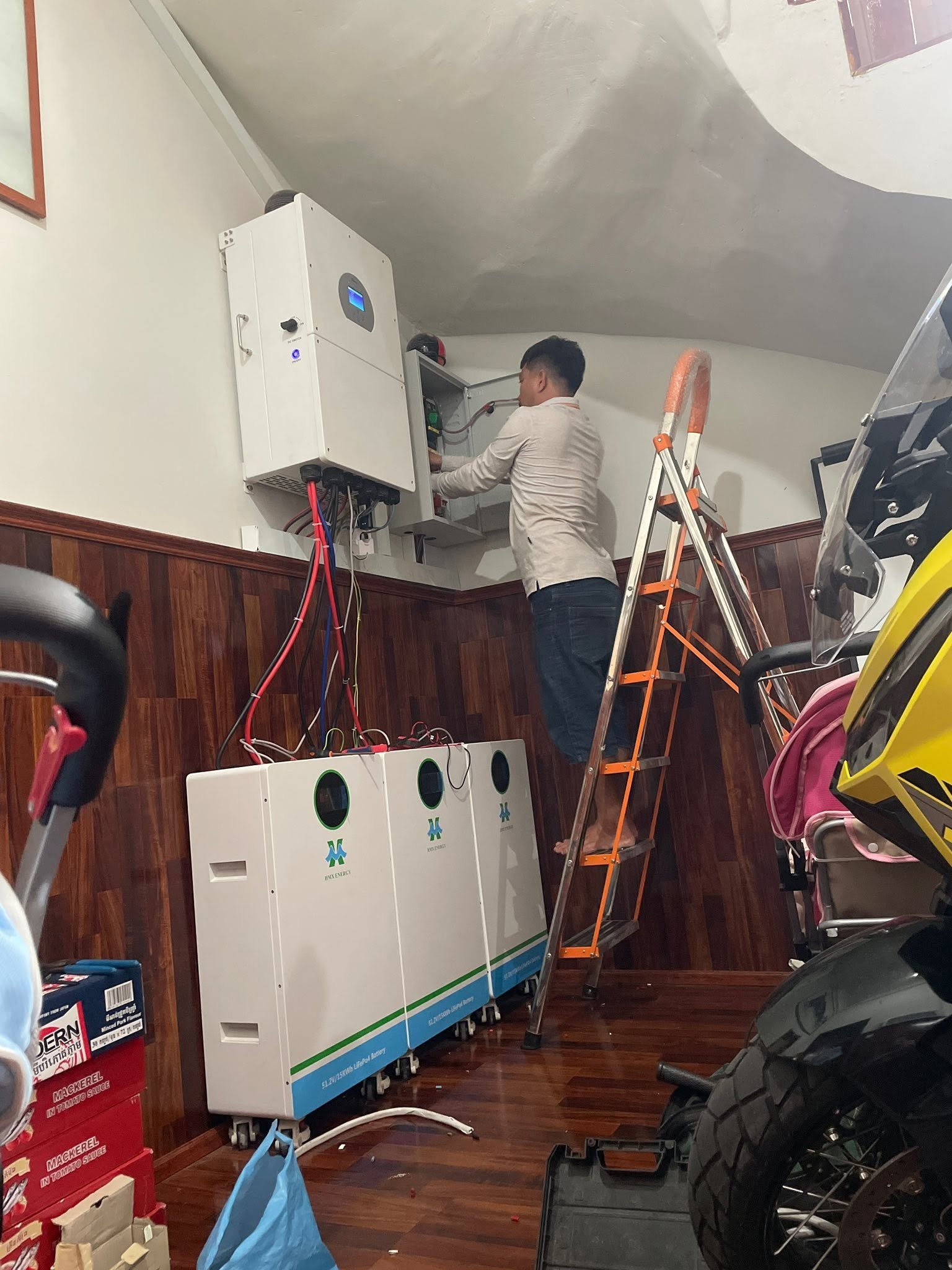
Uma estratégia de peças sobressalentes do BESS é um plano específico do projeto para identificar componentes cuja falha pode reduzir ou interromper o serviço contratado, decidir o que deve ser mantido local ou regionalmente, preservar a compatibilidade de hardware e firmware, atribuir propriedade e reposição, e comprovar que uma substituição retorna o sistema a uma configuração aprovada. Comprar uma caixa indiferenciada de peças não é o mesmo que planejar a restauração.
O problema é mais visível após uma falha. Um ventilador com defeito, fonte de alimentação de controle, switch de rede ou placa de controle do PCS pode ser barato em comparação com o sistema de baterias, mas a interrupção pode continuar enquanto a revisão correta é identificada, enviada, liberada pela alfândega, instalada e testada. A exposição comercial vem de todo o caminho de restauração, não apenas do preço do componente.
Resposta direta: classificar peças sobressalentes por consequência de serviço e caminho de restauração. Manter localmente os itens que podem criar tempo de inatividade desproporcional, reter registros validados de revisão e configuração, definir quem é responsável e repõe cada item, e testar o processo de substituição antes que as equipes de garantia e serviço sejam separadas.
Data de revisão da pesquisa: 19 de novembro de 2026. Este guia é destinado a proprietários de ativos C&I, gerentes de projetos EPC, desenvolvedores, distribuidores e equipes de O&M que operam além das fronteiras ou longe do fornecedor de equipamentos. Não publica taxas de falha do HMX, prazos de entrega de componentes, quantidades de estoque recomendadas ou garantias de resposta de serviço. Esses valores exigem a lista final de materiais, localização do projeto, arquitetura, modelo de serviço e evidência escrita do fornecedor.
Comece pela Consequência do Serviço, Não pelo Custo do Componente
Um módulo de bateria caro não é automaticamente a peça sobressalente mais urgente. Um componente de menor custo pode ser mais crítico se criar uma falha de modo comum, tiver um longo processo de identificação ou configuração, ou impedir que todos os módulos saudáveis operem. Comece pelo serviço contratado e pela arquitetura, depois rastreie o equipamento cuja perda pode interromper esse serviço.
O limite do sistema estabelecido para um garantia de disponibilidade do BESS é o ponto de partida correto. Marque os racks de baterias, camadas do BMS, blocos do PCS, transformador, painéis de manobra, alimentações auxiliares, gestão térmica, detecção de fogo e gás, controlador de site, medidores, proteção, comunicações e dependências de serviço remoto. Para cada item, pergunte se o sistema para, reduz capacidade, transfere para um caminho de backup ou continua com monitoramento reduzido.
| Fator de criticidade | Pergunta do comprador | Efeito na decisão de peças sobressalentes |
|---|---|---|
| Consequência do serviço | A falha interrompe toda a planta, um bloco ou uma função não crítica? | Define a prioridade comercial e o caminho de restauração aceitável |
| Redundância | O caminho de backup é independente e testado sob a carga exigida? | Pode reduzir a necessidade imediata de estoque, mas não elimina a necessidade de reparo |
| Detecção de falha | A falha pode ser isolada remotamente sem substituir peças por tentativa? | Determina as ferramentas de diagnóstico e a competência técnica necessárias |
| Caminho de aquisição | O item é padrão, controlado pelo fornecedor, programado ou feito sob encomenda? | Altera se o estoque local, regional ou do fornecedor é credível |
| Compatibilidade | Uma substituição atual pode funcionar com o hardware e firmware instalados? | Requer substitutos aprovados, controle de revisão e evidência de teste |
| Sensibilidade ao armazenamento | O item tem prazo de validade, estado de carga ou controles ambientais? | Adiciona requisitos de inspeção, condicionamento e rotação |
| Risco de instalação | O item pode ser substituído com segurança pela equipe local? | Vincula o estoque a ferramentas, autorização e instruções de trabalho |
| Comprovação de retorno ao serviço | Qual teste confirma a função contratada após a substituição? | Impede que uma peça sobressalente instalada seja tratada como um reparo concluído |
A avaliação de cadeia de suprimentos do BESS de 2025 do Departamento de Energia dos EUA anúncio de avaliação da cadeia de suprimentos do BESS descreve uma abordagem de sistema-de-sistemas que avalia consequências em nível de componente juntamente com efeitos operacionais e de segurança mais amplos. Uma estratégia de peças sobressalentes do projeto usa a mesma lógica em nível de site: priorizar componentes pelo que sua perda faz ao serviço, não por uma lista genérica copiada de outro projeto.
Separar Estoque Local, Regional e Mantido pelo Fornecedor
Nem toda peça sobressalente pertence à planta. O estoque local é justificado quando um item tem alta consequência de interrupção, pode ser substituído por uma equipe autorizada do site e pode ser armazenado corretamente. O estoque regional pode ser apropriado quando vários projetos compartilham um item compatível e o transporte é previsível. O estoque mantido pelo fornecedor pode cobrir conjuntos caros ou raramente necessários, mas somente se o contrato identificar a localização, reserva, autoridade de despacho e evidência de que o item permanece disponível para este projeto.
“Disponível na fábrica” não é um plano de restauração. A fábrica ainda pode precisar confirmar o número de série, construir ou programar o item, obter documentos de exportação, organizar transporte de mercadorias perigosas, desembaraçar na alfândega de destino e enviar um técnico qualificado. Registre cada etapa e sua parte responsável. Um prazo de courier cotado cobre apenas uma parte do caminho.
O Escritório de Segurança Cibernética, Segurança Energética e Resposta a Emergências do DOE e o Laboratório Nacional de Idaho emitiram um detalhado relatório da cadeia de suprimentos de armazenamento de baterias em 2025. Ele enfatiza a avaliação de componentes de ponta a ponta e a priorização baseada em consequências. Um proprietário de site não deve transformar essa análise de nível nacional em um número de prazo de entrega sem suporte; a ação de aquisição útil é mapear o componente real, fornecedor, país, fonte alternativa e etapas logísticas para o projeto selecionado.
A Compatibilidade Faz Parte da Peça Sobressalente, Não é uma Tarefa de Engenharia Posterior

Um número de peça sozinho pode não estabelecer compatibilidade. Placas de controle podem exigir um ramo específico de firmware, arquivo de parâmetros, licença ou perfil de comunicação. Ventiladores e bombas podem corresponder mecanicamente, mas diferir em classificação elétrica, sinal de feedback ou curva de controle. Módulos de bateria podem exigir limites na variação de produção, correspondência de tensão ou SOC, e etapas de comissionamento aprovadas pelo fornecedor. Relés de proteção e medidores podem precisar de configurações específicas do projeto e registros de calibração.
Crie um registro de compatibilidade as-built na entrega. Ele deve conectar o número de série instalado ao número de peça do fabricante, revisão de hardware, firmware, configurações aprovadas, conector ou chicote, requisitos de segurança cibernética, substitutos aprovados e teste de retorno ao serviço. Quando o fornecedor alterar um item, exija um aviso de alteração de engenharia que declare a compatibilidade retroativa e quaisquer restrições.
Capacity augmentation introduces another compatibility boundary. The lifecycle questions in our BESS capacity augmentation guide also apply to stored replacement modules: future hardware may not be a drop-in substitute for equipment purchased years earlier. The project should distinguish operational spares intended for prompt repair from planned augmentation or replacement capacity that requires a separate design review.
| Spare-register field | Por que isso importa | Control evidence |
|---|---|---|
| Equipment and service tag | Connects stock to the affected system function | Single-line diagram and equipment hierarchy |
| Manufacturer part number and description | Prevents ambiguous warehouse descriptions | Approved bill of materials |
| Hardware revision and serial range | Identifies physical compatibility | Supplier compatibility statement |
| Firmware, settings and licence | Allows the installed item to communicate and operate correctly | Controlled image, checksum and parameter backup |
| Approved substitute | Provides a managed path when the original item is obsolete | Engineering change notice and verification result |
| Storage requirement | Preserves condition while the item waits | Temperature, humidity, SOC or preservation instruction |
| Inspection and rotation date | Prevents silent deterioration or expired calibration | Warehouse inspection record |
| Installation authorization | Confirms who may perform the work safely | Training, procedure and required tooling |
| Return-to-service test | Confirms the fault is corrected without creating a new one | Approved functional test and signed result |
| Replenishment trigger | Restores readiness after stock is consumed | Purchase responsibility and escalation path |
Design the Stock around Diagnosis and Safe Replacement
Holding a part does not reduce downtime if the team cannot identify the failed item. The diagnostic package may include wiring diagrams, alarm definitions, trend access, test points, service software, communication adapters, approved test equipment and escalation support. Protect service credentials and tools under the project’s cybersecurity policy rather than leaving them with one technician.
Event evidence should be captured before components are swapped. The sequence in our guia de triagem de alarmes do BESS helps separate the initiating fault from subsequent protection actions. Replacing the component named by the final alarm without preserving the sequence can consume the spare and leave the real cause in place.
Define safe isolation, stored-energy controls, lifting needs, electrostatic precautions, torque requirements and post-work inspection for every field-replaceable item. Some assemblies should remain supplier-service items even when a spare is held onsite. The stock location does not grant authorization to open or modify equipment.
Treat Storage Conditions as a Maintenance Duty
Spares can degrade while waiting. Electronics can suffer from moisture, contamination or electrostatic damage. Seals, filters and fire-system consumables may have inspection or shelf-life requirements. Calibrated instruments can expire. Battery-related stock may require controlled state of charge, voltage checks, temperature limits or periodic conditioning defined by the manufacturer.
Do not invent a universal storage interval. Obtain the preservation instructions for each part and include them in the computerized maintenance management system or another controlled register. Record receiving condition, packaging, location, environmental checks, inspection dates and any movement. First-in, first-out is not automatically appropriate when revisions differ; compatibility and condition take priority over receipt date.
The International Energy Agency Photovoltaic Power Systems Programme’s 2022 PV O&M guidelines are not a BESS performance standard, but their contract-governance principles are useful: define responsibility for storage, replenishment and stock management, address warranty for replaced components, and resolve transfer of title. BESS buyers should apply those questions using the selected battery and equipment manufacturers’ own preservation instructions.
Assign Ownership, Title and Replenishment in the Contract
Clarify who buys the initial stock, who owns it, who insures it, who can authorize use, who performs inventory checks and who replenishes it after use. Supplier-owned consignment stock can reduce upfront owner cost, but the agreement must prevent removal or reassignment without replacement. Owner-owned stock needs access controls and a process that keeps supplier configuration records current.
Define what happens when a defective component is replaced under warranty. Does the supplier consume the owner’s spare and replace it, or ship a separate warranty item? Who owns the removed part, and who pays for diagnostic return? If a spare is used for a non-warranty event, which price and approval apply? These questions are easier to settle before the first failure.
The DOE Federal Energy Management Program’s 2025 customizable lithium-ion BESS technical specifications provide a current procurement framework intended to be edited for the agency and project. The same approach is appropriate here: the spare schedule must be tailored to the final architecture, use case and service agreement rather than copied unchanged from a generic template.
Test the Restoration Path before Handover
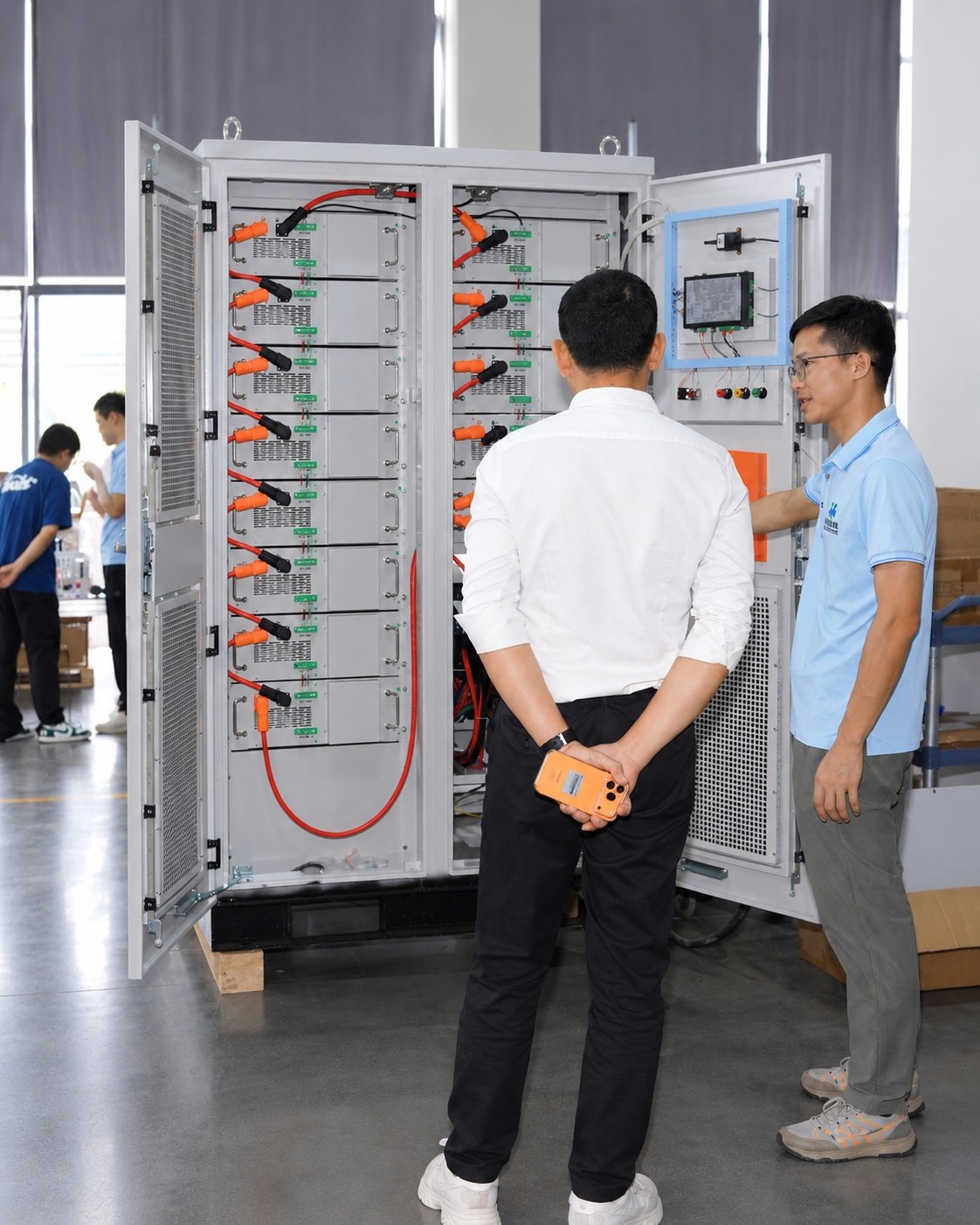
Use FAT and SAT to verify more than the presence of boxes. Select representative field-replaceable items and walk through identification, isolation, removal, installation, configuration and return-to-service testing. A full live replacement may not be safe or practical for every assembly, but the project can still verify access, tools, lifting points, configuration backups, procedures and responsibility.
Connect the exercise to the BESS FAT witness and fault-injection plan. Confirm that the alarm and event records identify the correct failure domain, that a healthy redundant block continues as designed, and that the replacement does not erase evidence needed for root-cause analysis. Record the as-left firmware, settings and functional result.
A receiving inspection should confirm packaging, quantity, model, revision, condition and documentation. For programmed equipment, compare the controlled file or checksum. For instruments, verify calibration. For battery-related stock, follow supplier instructions for safe receipt and preservation. Quarantine any item that cannot be matched to the approved register.
Use Field Evidence to Adjust the Stock
The initial spare list is a controlled hypothesis. Review it after commissioning, recurring alarms, service campaigns, supplier notices, firmware changes and actual replacement events. Track demand, but do not rank criticality only by how often an item is consumed. A rarely used common-mode component can remain more important than a frequently replaced non-critical filter.
A joint Sandia and NREL PV-plus-storage O&M study used 14 interviews and questionnaires representing 51.1 MW and 64.1 MWh. The authors identified poor vendor reliability and parts availability among ongoing challenges. That sample does not establish a universal BESS failure rate, but it supports a disciplined review of actual site evidence, service performance and parts logistics rather than assuming the commissioning list will remain adequate for the full project life.
Record each use of a spare: fault cause, removed part identity, replacement identity, work duration, delay stages, tests, warranty disposition and replenishment date. Separate active repair time from waiting time. That distinction shows whether the next improvement belongs in diagnostics, technician training, warehouse stock, customs preparation, supplier allocation or design redundancy.
Budget Stock without Inventing a Universal Quantity
A fixed percentage of project value is not a reliable spare-parts budget. Two systems with the same power and energy rating can have different block sizes, component commonality, local service coverage and customs exposure. Build the budget from the criticality register and several restoration scenarios. For each candidate item, compare the cost of holding usable stock with the service consequence and credible waiting path if no stock is held.
The comparison should include more than purchase price. Consider controlled storage, inspections, insurance, calibration, conditioning, software maintenance and the risk that an item becomes incompatible before it is used. Against that cost, consider lost service, temporary operating restrictions, technician remobilization, expedited transport and the possibility that a minor fault prevents acceptance of another project milestone. Use project financial data rather than a generic cost-of-downtime claim.
Pooling can be efficient when multiple sites use a genuinely common and transportable component. Verify that the pool is reserved, quantities reflect simultaneous-event risk, each site can access it contractually, and the part revisions remain compatible. A supplier’s worldwide inventory is not equivalent to a regional pool unless allocation and dispatch rights are defined.
Use sensitivity analysis where lead time is uncertain. The project can compare local stock, regional stock and supplier dispatch under several documented logistics assumptions without presenting any one assumption as a fact. Record the source and date of quotations because routes, customs requirements and supplier capacity can change. The approved quantity should be a traceable commercial decision, not an unexplained integer in a tender schedule.
Plan for Obsolescence before the Warranty Ends
Control equipment and communications hardware can change faster than the planned life of the battery asset. Require notice of end-of-sale, end-of-support, security-support termination and any change that removes backward compatibility. The notice period should be linked to the time needed for engineering review, a last-time buy or an approved migration, rather than described only as “reasonable notice.”
An approved substitute needs more than the same connector. Review electrical characteristics, communication behaviour, environmental rating, protection interaction, firmware support, cybersecurity implications and the tests needed at plant level. Preserve the previous configuration and rollback method when software or settings must change. If the substitute changes the operating envelope or certification basis, route it through formal design and compliance review.
Decide who pays when a supplier-initiated obsolescence makes owner stock unusable. The answer may differ during warranty, a long-term service agreement and owner-operated life. Address unused stock, licence transfer, data migration, training and disposal. Without this allocation, the owner can pay twice: first for a recommended spare and later for the redesign required when that spare is no longer supported.
Build the RFQ around Deliverables, Not a Fixed Quantity List
| Entregável da RFQ | Supplier response should include | Evidência de aceitação |
|---|---|---|
| Criticality assessment | Failure domain, service effect, redundancy and diagnostic path | Reviewed system architecture and consequence matrix |
| Recommended initial stock | Item, quantity basis, location and reason | Approved spare schedule tied to the final bill of materials |
| Compatibility schedule | Part numbers, revisions, firmware, settings and substitutes | As-built register and controlled files |
| Logistics map | Stock location, release authority, transport stages and customs documents | Named process with responsible parties |
| Preservation plan | Packaging, environment, inspection, SOC or conditioning requirements | Manufacturer instructions and maintenance tasks |
| Replacement procedure | Isolation, tooling, skills, configuration and safety controls | Approved work instruction and training record |
| Return-to-service test | Functional checks for each field-replaceable class | Witnessed representative exercise |
| Replenishment and obsolescence | Trigger, price basis, notice, end-of-sale and approved-substitute process | Contract clause and change-control workflow |
| Warranty interface | Ownership of consumed stock and defective returns | Unambiguous warranty and title schedule |
| Periodic review | Data, frequency, participants and approval authority | O&M meeting and register revision process |
When shortlisting a sistema de armazenamento de energia comercial e industrial, compare the spare strategy alongside the equipment architecture and service offer. A lower initial stock cost can conceal a longer restoration path, while a larger list can include parts that the local team is not authorized or equipped to replace. Ask suppliers to explain the service consequence addressed by every item.
The Procurement Decision
A credible BESS spare parts strategy lets the owner answer five questions before a failure: which service is at risk, which compatible item is needed, where that item is held, who can install it, and what test proves restoration. If any answer depends on an informal promise, the outage exposure remains unresolved.
Approve the spare schedule only after the final architecture and bill of materials are controlled. Keep it live through inspections, configuration changes, warranty events and field evidence. The objective is not to maximize warehouse inventory. It is to remove avoidable waiting time without creating unsafe work, obsolete stock or unverified substitutions.