
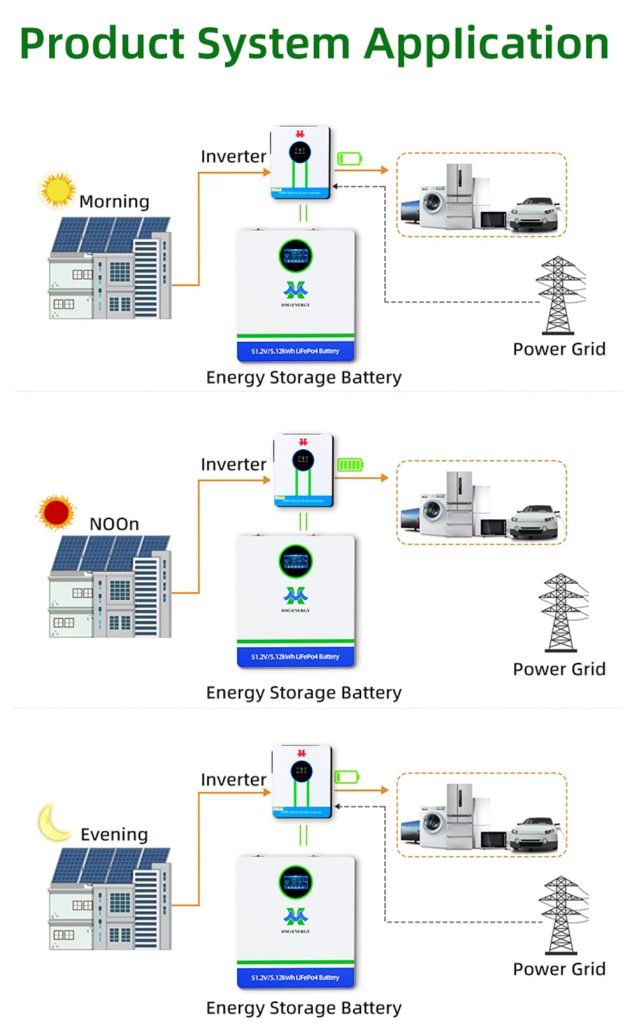
全球对 住宅太阳能系统 的需求已从独立光伏(PV)发电转向全面集成、电池支撑的一体化能源解决方案。房主不再寻求简单的并网太阳能板;他们期望获得能够提供无缝断电保护、夜间削峰填谷以及智能电网交互的混合储能系统。.
对于区域太阳能分销商、设备OEM和系统集成商而言,这一市场转型既带来了显著的商业机遇,也伴随着复杂的技术挑战。供应住宅太阳能系统需要在高电池循环寿命、严格的区域消防安全规范、闭环逆变器通信以及具有竞争力的批发利润之间取得平衡。选择错误的制造供应商可能导致高保修索赔率、现场互操作性故障,以及因未经认证的电池运输备案而造成的昂贵物流延误。.
本采购指南为可再生能源硬件采购方提供了一个以工程学为基础的框架,用以评估、采购和部署商业级住宅太阳能设备产品线。.
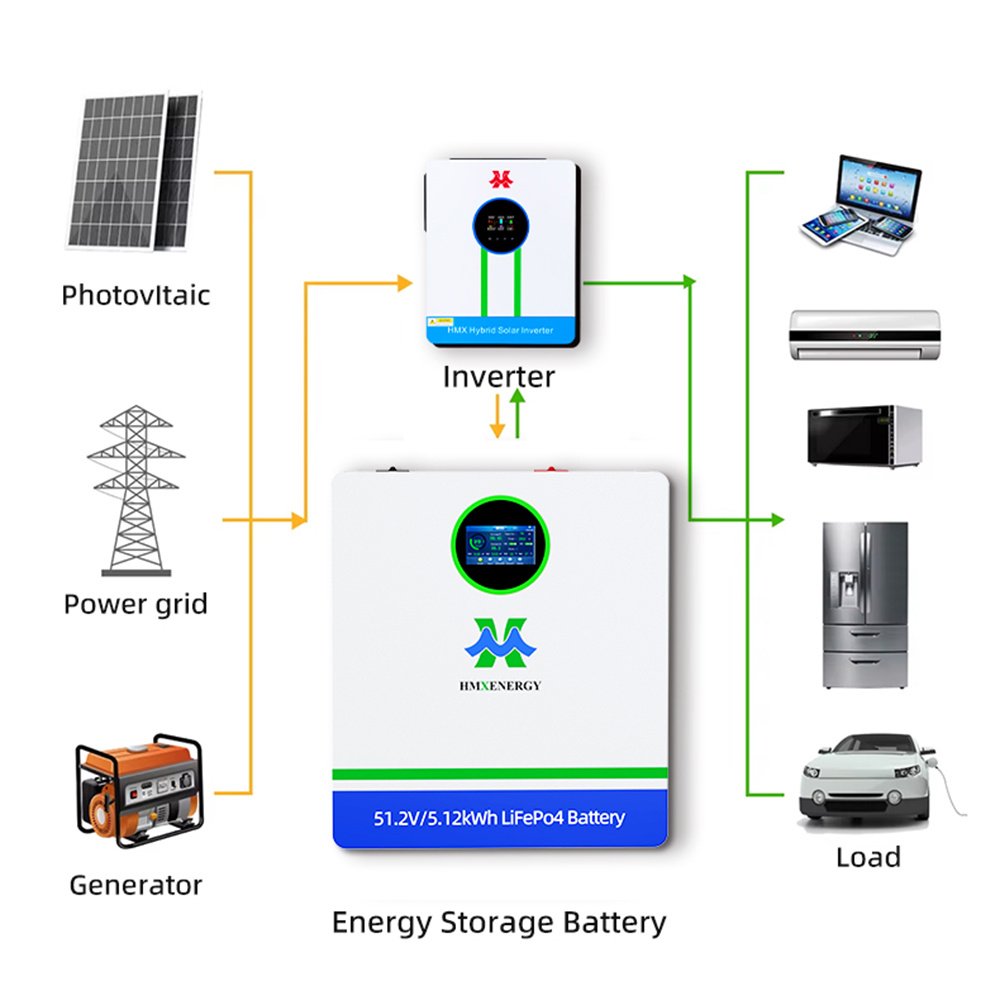
现代住宅太阳能系统的核心架构
一套完整、高可靠性的住宅太阳能系统由四个核心硬件子系统组成,它们以同步平衡的方式协同运行:
- 太阳能光伏(PV)阵列:将太阳辐照转换为直流(DC)电能。.
- 混合或离网太阳能逆变器:将来自光伏组件和电池组的直流电转换为家用负载所需的交流电(AC),同时管理双向能量流动。.
- 锂电池储能系统(BESS):储存多余的光伏发电量,用于夜间自发自用或应急备用。.
- 电池管理系统(BMS):监测电芯电压、均衡荷电状态(SoC)、管理热参数并执行电气保护限值。.
[光伏阵列(DC)] ► [混合逆变器] ◄ ► [磷酸铁锂储能系统(DC)]
交流主配电箱及家庭负载 ◄ ► 公用电网
低压(48V)与高压(100V–500V)系统对比
在构建分销产品目录或指定OEM硬件产品线时,设备采购方必须根据目标安装场景在低压与高压电池架构之间做出选择。.
| 技术参数 | 低压(48V / 51.2V标称) | 高压(100V – 500V DC) |
|---|---|---|
| 典型容量范围 | 每组堆叠5 kWh – 30 kWh | 每塔10 kWh – 80 kWh以上 |
| 逆变器效率 | 92% – 95%(DC-DC转换损耗较高) | 96% – 98.5%(与光伏母线电压更匹配) |
| 布线及导体规格 | 需要粗规格线缆(AWG 2/0至4/0)以承载大电流 | 线缆规格更细;铜材成本更低 |
| 安全性与安装复杂度 | 触摸电压更安全(< 60V DC);适合DIY/安装人员操作 | 需要持证的高压直流技术人员 |
| 最佳适用目标细分市场 | 存量住宅改造、离网小屋、预算型储能 | 全屋备用电源、高端新建住宅 |
与垂直整合制造商合作,例如 HMX Energy工厂直供住宅太阳能BESS系统 使分销商能够在统一的OEM/ODM品牌下,同时提供48V低压服务器机架式电池模块和可堆叠高压住宅储能塔。.
BMS与逆变器协议互操作性的关键问题
太阳能设备分销商报告的最常见运营挑战之一,是第三方锂电池组与混合太阳能逆变器之间的协议不兼容。当电池管理系统(BMS)无法与逆变器的功率调节单元建立闭环通信时,系统将默认采用基于电压的开环充电模式。开环充电会降低荷电状态计算精度,加速电芯老化,并导致过早的高压断开跳闸。.
关键要点:闭环CANbus和RS485协议匹配使电池BMS能够基于温度和内部电芯健康状况,实时向混合逆变器动态下发最大充/放电电流限值(CCL/DCL)。.
通信协议匹配矩阵
为确保现场无缝性能,分销商应确认OEM电池硬件原生支持其区域市场中使用的主要逆变器协议:
- CANbus(控制器局域网):高速差分信号传输(通常为250 kbps或500 kbps)。高端混合逆变器(如Sol-Ark、Victron、Deye、Megarevo)的首选协议。.
- RS485 / Modbus RTU:采用主从架构的串行通信标准。广泛用于遥测数据记录和辅助BMS配置。.
Factory-direct OEM suppliers equipped with in-house firmware engineering teams can pre-flash multi-protocol firmware onto battery control boards, allowing field installers to select inverter communication profiles via a dip switch or LCD menu.
Mandatory Safety & Compliance Standards (UL 9540, UL 1973, UN 38.3)
Regulatory authorities having jurisdiction (AHJs) across North America and Europe enforce strict safety listings for stationary battery installations. Navigating these building and fire codes is critical for distributors to avoid inventory impoundment or unpermittable hardware lines.
UL 9540 (Complete System) UL 1973 Battery UL 1741 PCS UL 9540A (Thermal Fire Test)
Understanding the Safety Standard Hierarchy
- UL 1973 (Stationary Battery Safety): Evaluates the mechanical, electrical, and environmental integrity of individual battery modules and packs. According to the UL 1973 stationary battery safety listing, passing UL 1973 confirms cell-level reliability but does not automatically authorize installation as a complete energy storage system.
- UL 9540 (System-Level Energy Storage Safety): Assesses the combined safety of the battery pack, hybrid inverter, enclosure, and firmware protection algorithms as an integrated unit. The National Electrical Code (NEC) and International Fire Code (IFC) mandate that residential energy storage equipment meet UL 9540 energy storage system safety standards for utility grid interconnection.
- UL 9540A (Thermal Runaway Fire Test): Evaluates fire propagation behavior at the cell, module, and unit levels. Reviewing UL 9540A thermal runaway propagation testing documentation allows fire officials to determine permissible indoor, garage, or exterior wall clearance distances under NFPA 855 guidelines.
- UN 38.3 (Lithium Transportation Safety): Mandatory international standard covering altitude simulation, thermal testing, vibration, shock, external short circuit, and impact. UN 38.3 certification is legally required for Class 9 Dangerous Goods sea and air freight logistics.
UL 1973 (Battery Pack) + UL 1741 (Inverter) ► UL 9540 System Listing ► Approved for Installation
专业提示: Verify that your OEM partner maintains active test reports from Nationally Recognized Testing Laboratories (NRTLs) such as Intertek (ETL), TÜV Rheinland, or UL Solutions rather than unverified self-declarations.
Distributors evaluating wholesale hardware offerings can inspect the certified lithium battery storage and inverter catalog to review pre-certified BESS equipment engineered for North American and European grid interconnection.
Evaluating Vertically Integrated Manufacturing vs. Tier-2 Assembly
The long-term profitability of a solar equipment distribution business depends on product yield rates and cell quality consistency. Tier-2 assembly vendors often procure surplus or non-graded lithium cells from secondary markets, leading to cell imbalance, rapid capacity fade, and high field replacement overhead.
Quality Control Milestones in Tier-1 Manufacturing
When conducting factory audits or reviewing supplier capability reports, distributors should verify the following automated production capabilities:
- Automated Cell Sorting & Impedance Matching: High-precision capacity, internal resistance (IR), and voltage sorting to within 0.01 mm terminal tolerances and strict milliohm thresholds.
- Automated SMT & Robotic Welding: Laser-welded busbars and Surface Mount Technology (SMT) circuit assembly to ensure low contact resistance and mechanical shock absorption.
- Electroluminescence (EL) & Flash Testing: Optical inspection of solar module cells and digital testing of lithium pack discharge curves under full C-rate thermal loads.
- ISO9001:2015 Manufacturing Systems: Standardized quality management yielding automated production pass rates exceeding 99.99%.
Automated Cell Sorting (IR & Voltage) ► Laser-Welded Busbars ► Full C-Rate Load Testing ► 99.99% Pass Rate
Margin Protection & Direct Engineering Support
Working directly with a vertically integrated manufacturer eliminates tier-2 middleman markups (typically 15% to 30%), securing healthy gross margins for regional resellers. Furthermore, direct factory partnerships grant access to dedicated R&D engineering teams—such as technical specialists with experience from industry leaders like Huawei and BYD—ensuring direct assistance for custom BMS protocol engineering, white-label chassis modification, and firmware debugging.
Distributors looking to establish private-label equipment lines can explore the OEM/ODM distributor partnership program for factory-direct hardware customization and priority production allocation.
The 8-Point B2B Hardware Procurement Checklist for Solar Distributors
Before issuing purchase orders for residential solar equipment, procurement managers should evaluate prospective suppliers against this structured 8-point checklist:
| Step | Procurement Check | Verification Standard | Target Requirement |
|---|---|---|---|
| 1 | Battery Cell Chemistry | Cell Data Sheet / Material Safety Data | LiFePO4(磷酸铁锂)具有高热稳定性 |
| 2 | 循环寿命预期 | 加速寿命测试曲线 | 在25°C、80%放电深度条件下,循环寿命≥6,000次 |
| 3 | 系统安全认证 | NRTL证书(ETL、TÜV、UL) | ANSI/CAN/UL 9540系统认证及UL 1973模组认证 |
| 4 | 热测试合规性 | UL 9540A测试摘要 | 提供电芯及模组级别热失控非蔓延数据,供消防部门参考 |
| 5 | 逆变器协议兼容性 | BMS固件协议列表 | 原生CANbus/RS485自动匹配主流区域逆变器品牌 |
| 6 | 电网规范与并网要求 | 公用事业合规文件 | 符合以下标准: NEC及国际消防规范标准 以及IEEE 1547 |
| 7 | 物流与危险品运输 | UN 38.3及MSDS文件 | 第9类危险品包装及UN 38.3运输安全认证通过 |
| 8 | 工厂质量保证 | ISO审核与工厂良品率 | ISO9001认证制造,经核实缺陷率≤0.01% |
审查公司 垂直一体化太阳能制造能力 可为技术采购方提供对自动化生产线、质量控制基准及国际认证资质的深入了解。.
太阳能设备分销商常见问题解答(FAQ)
对于住宅储能系统,UL 1973与UL 9540在实际应用中有何区别?
UL 1973认证单个固定式电池组及模组的安全性。UL 9540是全面的系统级认证,将电池组、混合逆变器、BMS固件及防护外壳作为整体进行评估。北美地区的建筑检查机构和当地公用事业部门要求获得UL 9540认证方可批准并网。.
是否可以为专有混合逆变器烧录定制BMS协议?
可以。拥有专职固件工程团队的垂直一体化OEM制造商可编写定制CANbus或RS485协议驱动程序,以建立自有品牌电池硬件与专有逆变器控制单元之间的闭环通信。.
在住宅应用中,LiFePO4电化学体系与NMC相比如何?
磷酸铁锂(LiFePO4)相比镍钴锰(NMC)具有更优异的热稳定性和化学稳定性,热失控风险显著更低,循环寿命更长(6,000次以上)。虽然NMC能量密度略高,但LiFePO4是固定式住宅储能系统的行业标准。.
运输锂电池组需要哪些运输文件?
国际海运和空运法规将锂电池组归类为第9类危险品。托运人必须提供UN 38.3测试报告、材料安全数据表(MSDS)及UN认证的危险品包装文件,方可顺利通关,避免物流延误。.
可再生能源分销商的战略硬件采购
随着全球能源转型政策推动住宅太阳能系统的普及,设备分销商和OEM集成商必须与能够大规模交付经认证、高可靠性硬件的制造合作伙伴保持一致。结合工程级BMS协议兼容性、UL 9540安全认证及工厂直供价格体系,分销商可在保护运营利润率的同时抢占不断增长的市场份额。.
如需技术规格、OEM定制品牌或批量定价咨询,, 请联系HMX Energy太阳能工程师 讨论针对您市场定制的电池储能及逆变器制造解决方案。.