
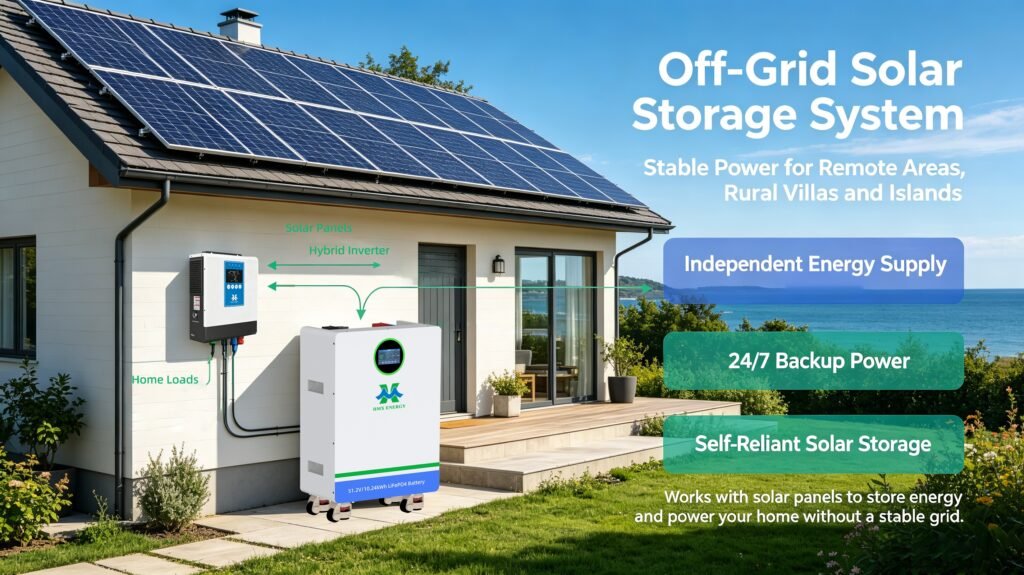
A customer reports that the battery stopped supplying the house while its screen still showed charge remaining. Another says the percentage jumped upward even though very little energy entered the pack. Both complaints deserve investigation, but neither proves that the cells have lost capacity. The problem may involve SOC estimation, measurement, communications or a genuine cell-level limit.
LiFePO4 state of charge, or SOC, is an estimate of remaining charge relative to a defined capacity. It is not a direct meter reading of usable AC energy. Before changing backup reserves or accepting a warranty diagnosis, compare the estimator’s history with current measurements, cell conditions and the reason the system actually stopped.
Why pack voltage is a poor referee in the middle of the range
Analog Devices’ 2019 LFP fuel-gauging technical article explains the relatively flat voltage profile and hysteresis that complicate SOC estimation. The method remains relevant, but its specific test results are not a current performance guarantee for another battery. Do not turn a supplier’s example accuracy into an HMX specification.
A flat profile means that noticeably different charge states can produce similar voltages under suitable conditions. In service, terminal voltage also changes with load, temperature and recent charging or discharging. A voltage reading taken during a load step is not equivalent to a rested open-circuit measurement. A generic voltage-to-percentage chart cannot resolve all of those differences.
在比较 home battery storage systems, ask which SOC value the inverter uses: the battery BMS estimate, a separate monitor or an inverter-side estimate. If the app, battery display and inverter show different values, identify their sources and update times before deciding which one is incorrect.
Coulomb counting can accumulate error
Many estimators track current flowing into and out of the battery and relate the accumulated charge to an assumed or learned capacity. Measurement offset, missed current paths, incorrect capacity configuration and an uncertain starting point can affect the result. These errors are not all solved by buying a monitor with more digits on its display.
A monitor can also count the wrong boundary accurately. If a load or charger bypasses an external shunt, the monitor does not observe the complete battery current. An installer should verify the approved measurement arrangement without improvising connections. Preserve the original configuration and logs before changing them, so the evidence needed for diagnosis is not lost.
该 SmartShunt operating manual describes its current integration and synchronisation process. It is a useful concrete example of an estimator that needs a valid reference condition. It does not establish how another manufacturer’s BMS calculates SOC, and its example charging settings should not be copied to a different pack.
| Customer observation | Possible issue to investigate | Evidence that helps distinguish it |
|---|---|---|
| Percentage gradually diverges over partial cycles | Measurement error or missing estimator reference | Current history, capacity configuration and synchronisation record |
| Percentage changes suddenly without matching energy flow | Estimator reset, correction or data-source change | Reset events, source identifier and timestamped charge history |
| Discharge stops above the configured reserve | Cell, temperature, current or inverter limit | First protection event and cell-level readings |
| Battery and inverter percentages disagree | Different estimators, stale data or communications interpretation | Simultaneous local readings and protocol definitions |
| Runtime falls at a similar starting percentage | Changed load, temperature, usable capacity or operating limits | Measured output energy under comparable conditions |
Synchronisation should follow the battery’s method
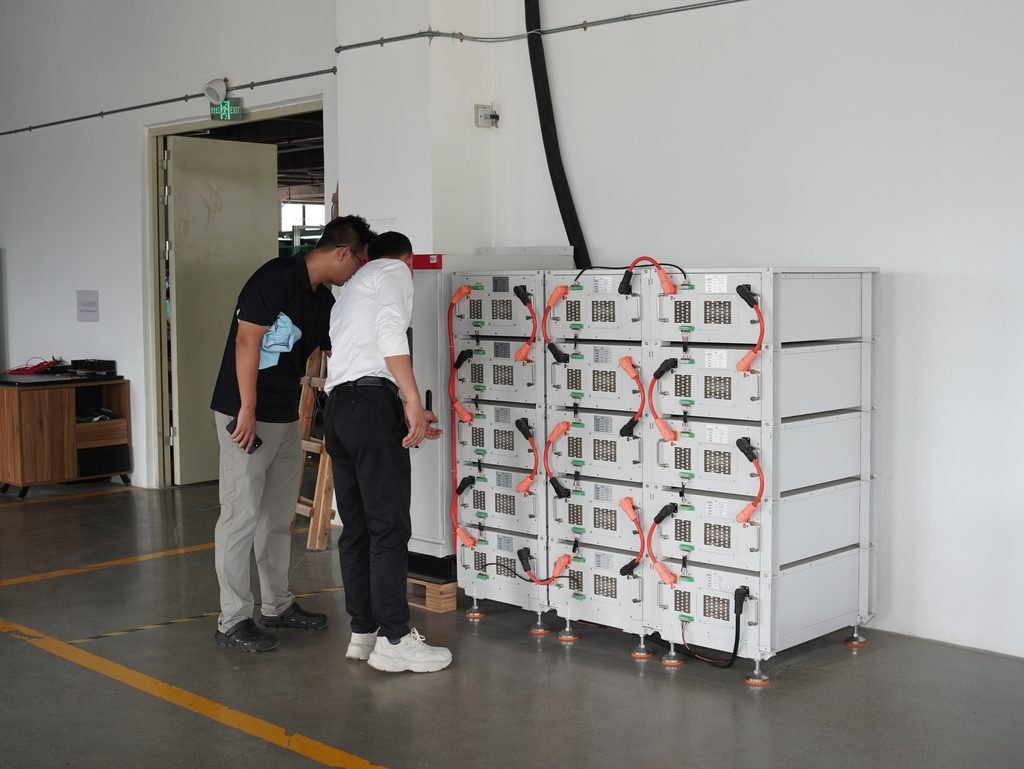
Some external monitors recognise a fully charged reference using a combination of voltage, current and elapsed time. Others use model-based corrections and learned parameters. Ask the battery supplier to explain the approved calibration or learning process, its conditions and the implications of a firmware update or power interruption.
Victron的 SmartShunt troubleshooting guidance notes that fluctuating solar charging can cause premature synchronisation when its settings are unsuitable. That illustrates an important diagnostic distinction: the estimator may declare a reference condition before the intended condition has been achieved. The remedy must follow the applicable product documentation.
Do not force the display to “full” merely to make the customer’s app look correct. Likewise, do not repeatedly run a pack to protective shutdown as an informal calibration experiment. A supplier-approved process should respect the battery’s operating limits and explain which records confirm that the reference is valid.
A limiting cell can end discharge before the percentage reaches reserve
Pack-level SOC and cell-level protection answer different questions. The SOC estimate describes remaining charge according to its model. A cell voltage, temperature or current limit determines whether the next operating action is permitted. One limiting condition can stop discharge while the displayed SOC still appears comfortable.
For a wall-mounted home storage battery, request the available cell minimum and maximum readings, relevant temperatures and first trip reason when investigating an early shutdown. The listed energy capacity alone cannot tell you whether a particular shutdown was caused by estimation drift, load demand or a battery limit.
Ask whether the event occurred during a sudden load increase or near the end of an extended discharge. Retain inverter input voltage, battery current and the BMS discharge permission at the event. Those signals help the support team avoid replacing a battery when the immediate problem is elsewhere in the system.
| 记录 | What to include | 买方为何需要这些信息 |
|---|---|---|
| Estimator identity | Device, firmware, data source and capacity basis | Prevents comparison of unrelated percentages |
| Reference history | Approved learning or synchronisation events | Shows whether corrections have a valid basis |
| Current measurement | Direction, measurement boundary and diagnostic checks | Identifies missing or incorrect charge accounting |
| Shutdown trace | Cell conditions, current, voltage and first limit event | Separates estimation from protection |
| Runtime evaluation | Actual loads, temperature, reserve and measured energy | Supports a like-for-like service comparison |
Questions installers hear from customers
Does an SOC jump mean the battery gained energy?
Not necessarily. The estimator may have corrected its reference or restarted with a different initial value. Compare the change with measured charging and the device event record. A percentage correction is not the same event as physical charging.
Can a larger battery fix an inaccurate percentage?
Additional storage may provide more energy, but it does not correct an invalid measurement boundary or estimator configuration. Resolve the cause before expanding. For off-grid duty, revisit the actual loads and reserves using our off-grid battery sizing guide, then verify the proposed expansion’s approved integration.
Should we promise runtime from the displayed SOC?
Only with clear conditions and suitable evidence. Runtime also depends on the changing load, conversion losses, temperature and active limits. Explain the reserve policy to the customer and support it with a controlled acceptance record rather than a screenshot of the starting percentage.