
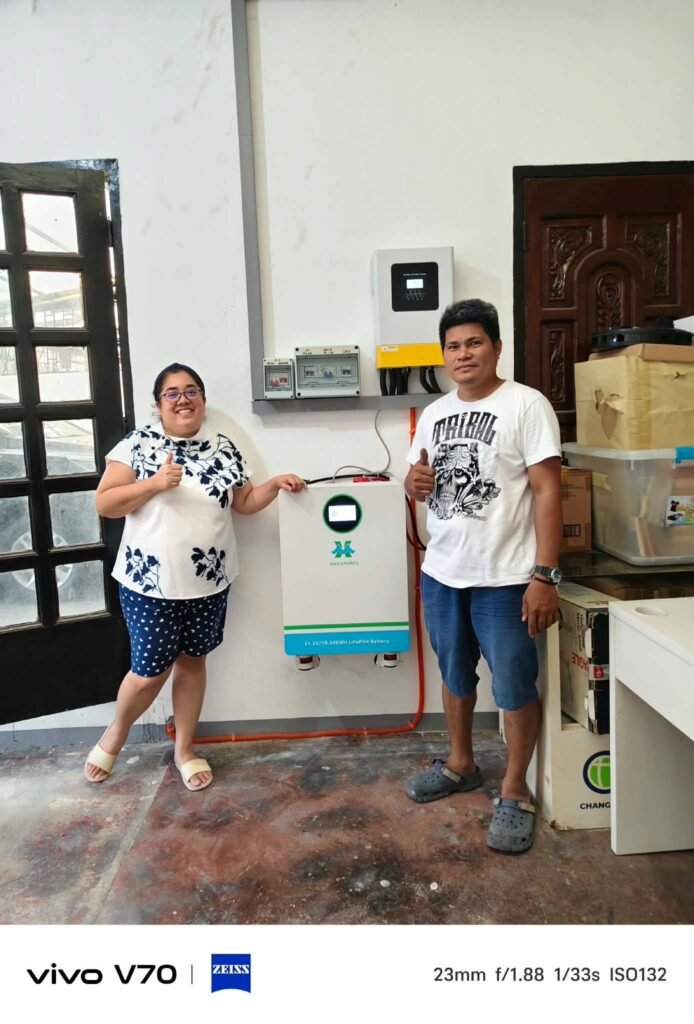
The Philippines DOE updated the path for own-use solar in 2026 and continues to stress technical safeguards. For buyers, the opportunity is clear, but the project still needs a correct load study, distribution-utility coordination and an agreed operating mode for the battery.
Island and weak-grid sites also need a different design from a grid-connected system intended mainly for bill management.
The same evidence and acceptance questions can be used when assessing HMX’s Philippines solar-storage project; catalogue information should be reconciled with the controlled quotation and drawings.
Philippines projects need local evidence, not generic runtime
These are the practical objections and failure modes most likely to stop approval, delay commissioning or create an avoidable service call for Philippines distributors, installers, SMEs and project owners.
- Distribution-utility coordination begins after equipment selection.
- Grid-connected, backup and off-grid modes are mixed in one quotation.
- Heat, humidity, salt or flood exposure is omitted from siting.
Questions the buyer should ask before approval
- Which distribution utility and approval path apply?
- What measured loads define backup duration?
- Who provides local commissioning, spares and customer training?
For remote or weak-grid projects, pair the local approval review with the tropical off-grid battery sizing method, which tests night load, consecutive low-solar days, generator policy and recovery reserve.
Direct answer: Classify the project as grid-connected self-use, backup-capable, off-grid or hybrid with a generator. Confirm the approval path and metering arrangement with the local distribution utility before equipment release.
Research review date: 4 October 2026. Quantitative statements are tied to the linked source and should be rechecked if procurement occurs later.
A separate Philippines Department of Energy 2026 ESS policy update applies to prospective variable-renewable power plants of at least 10 MW: Department Circular DC2026-02-0008 requires ESS capacity of at least 20% of installed plant capacity, subject to system studies and technical requirements. This is not a blanket sizing rule for small own-use systems, but it matters to utility-scale procurement.
For current market and policy context, review Philippines DOE 2026 own-use solar update. The Philippines DOE links simplified own-use solar rules with national renewable-power targets of 35% by 2030 and 50% by 2040, while retaining technical safeguards.
Build a Philippine load and service-connection case
For Philippines distributors, installers, SMEs and project owners, the first task is to turn the intended service into measurable inputs and acceptance limits. The following table keeps the decision tied to evidence instead of a broad product label.
| Project input | Philippines-specific question | Design output |
|---|---|---|
| Service connection | Utility, phase, voltage and available capacity | Interconnection scope |
| Load profile | Cooling, business and evening loads | PV, inverter and battery size |
| Outage requirement | Critical circuits and target hours | Backup architecture |
| Site exposure | Heat, humidity, salt, rain and flood risk | Enclosure and siting |
| Local support | Installer, spares and response time | Service plan |
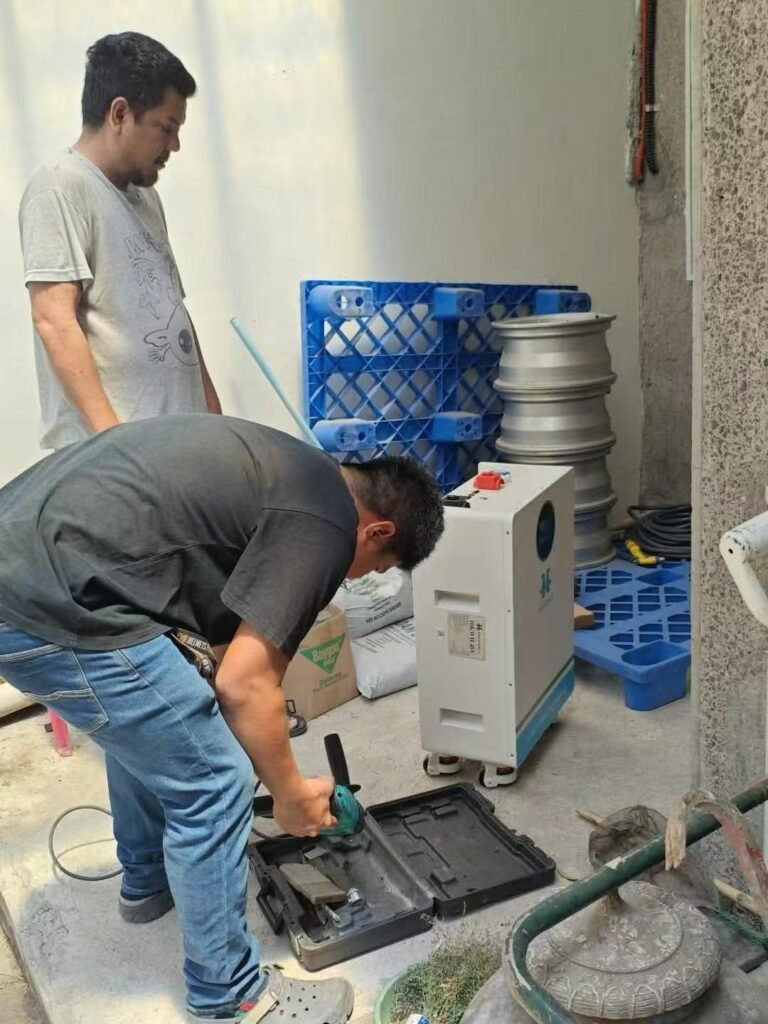
A related HMX reference is the home battery storage range. Use it to frame the next supplier discussion, then record project-specific deviations before ordering.
The technical comparison should also be checked against IEA Southeast Asia Energy Outlook 2026. IEA reports that Southeast Asian energy investment exceeded USD 100 billion in 2025, while grid and storage investment still needs to catch up with generation growth.
Translate DOE and utility requirements into the RFQ
The commercial offer should state its assumptions, exclusions and measurement boundary. Buyers can then compare systems on the same basis and keep later design changes under document control.
| Commercial claim | Evidence required | Safe wording |
|---|---|---|
| Bill savings | Actual tariff and interval model | Scenario, not guarantee |
| Backup duration | Measured load and usable-energy assumptions | Conditional runtime |
| Product compatibility | Named inverter, battery and firmware | Tested combination |
| Compliance | Applicable certificates and local approvals | Scope-specific statement |
| Installation quality | Drawings, test sheets and photos | Project record |
Action points for the project team
- Use the current DOE and distribution-utility documents for the selected project type.
- Separate PV production modelling from battery outage modelling.
- Plan corrosion control and water exposure for coastal or flood-prone sites.
- Require local commissioning records and customer operating training.
For specification and acceptance work, ASEAN electrical-safety assessment for PV and BESS provides an independent reference. The ASEAN Centre for Energy finds uneven adoption and enforcement of PV and BESS safety standards across the region and recommends closer alignment with international standards.
Build the project around the local service connection
Record the distribution utility, service voltage and phase, available capacity, metering, export intent and current approval route. Classify the system as grid-connected self-use, backup-capable, off-grid or hybrid with a generator. This decision affects protection, transfer equipment, operating controls and which documents must be agreed locally.
Buyers defining the initial scope can compare these requirements with HMX’s solar inverter range. The page is a product or project reference; final suitability still requires a written project specification.
Use interval or time-based loads for cooling, refrigeration, business operation and evening demand. Model PV production separately from outage requirements, then coordinate inverter power, battery usable energy and reserve. For islands or weak-grid sites, include frequency and voltage behaviour, generator operation and the ability to support starting loads.
Before design freeze, the project team should review NREL PVWatts Calculator. PVWatts estimates grid-connected PV energy production from location and system inputs. It is useful for the PV side of a study, but it does not replace interval-load and outage analysis for battery sizing.
The site survey should cover heat, humidity, salt, rain, drainage, flooding, access and security. The commercial scope needs named responsibility for utility coordination, installation, commissioning, spares, remote support and customer training. Savings and runtime should remain conditional on the tariff, measured load and agreed operating assumptions.
How to apply this on a live project
- Confirm project class and distribution-utility interface.
- Model PV, normal load and outage load with local conditions.
- Specify environmental protection and service access.
- Complete local commissioning, training and approval records.
Maintain an evidence register, not a certificate folder
For every legal, standard or authority requirement, record the applicable edition, responsible party, evidence reference, model or site scope, reviewer and current status. This exposes gaps between product testing, complete-system approval and installation obligations before they become shipment or energisation delays.
For a concrete equipment-level review, apply the checks above to the residential solar procurement guide and request confirmation for the intended site conditions and operating mode.
- Dated applicability matrix with effective dates and local reviewers.
- Model, rating, factory and configuration cross-check for each certificate or report.
- Authority comments, approved responses and superseded-document history.
- Final drawings, tests, emergency information, training and operating responsibilities.
Schedule formal reviews at design freeze, pre-shipment and pre-energisation. Each review should confirm current editions, unresolved authority comments and configuration changes, with a named owner and due date for every gap. Preserve superseded evidence so the project can explain what changed and why.
Field Note
The best field design is one the local team can operate and service. Include training, spares, labels and a clear escalation path in the supply scope.