
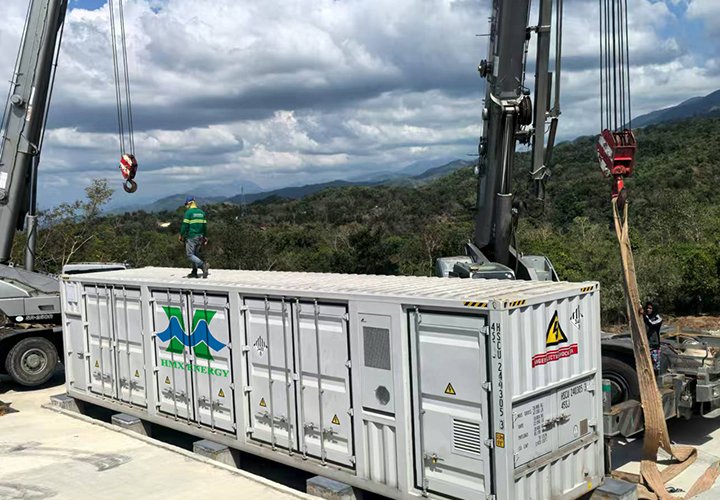
ASEAN markets do not apply one uniform BESS approval process. The ASEAN Centre for Energy has documented uneven adoption and enforcement of PV and BESS safety standards across member states. A regional product catalogue therefore needs country-specific project controls.
An EPC tender should identify the destination country, authority, grid interface and site fire strategy before it asks suppliers to confirm compliance.
The same evidence and acceptance questions can be used when assessing HMX’s commercial and industrial energy storage range; catalogue information should be reconciled with the controlled quotation and drawings.
A regional tender still needs country-specific gates. The Malaysia BESS safety procurement guide provides one worked example of turning a national authority pathway into document, design and energisation checks.
Direct answer: Maintain a country compliance matrix that names the legal source, edition, project reviewer and evidence owner. Do not copy one country’s approval statement into another market.
Research review date: 30 September 2026. Quantitative statements are tied to the linked source and should be rechecked if procurement occurs later.
Before design freeze, the project team should review ASEAN electrical-safety assessment for PV and BESS. The ASEAN Centre for Energy finds uneven adoption and enforcement of PV and BESS safety standards across the region and recommends closer alignment with international standards.
Name the country, authority and grid interface
For ASEAN developers, EPCs and regional distributors, the first task is to turn the intended service into measurable inputs and acceptance limits. The following table keeps the decision tied to evidence instead of a broad product label.
| Tender topic | Regional question | Required response |
|---|---|---|
| Electrical safety | Which national rules and adopted standards apply? | Clause-based compliance matrix |
| Battery safety | Which cell, module and battery reports cover the model? | Certificates and report scope |
| Fire safety | Which authority reviews layout and response? | Site fire strategy |
| Grid connection | Which utility and grid code apply? | Interconnection study inputs |
| Environmental exposure | Heat, humidity, salt, flood and altitude? | Derating and enclosure design |

A related HMX reference is the Malaysia factory storage project. Use it to frame the next supplier discussion, then record project-specific deviations before ordering.
For the final evidence review, use IEA Southeast Asia Energy Outlook 2026 as a source check. IEA reports that Southeast Asian energy investment exceeded USD 100 billion in 2025, while grid and storage investment still needs to catch up with generation growth.
Regional catalogues meet country-specific rules
These are the practical objections and failure modes most likely to stop approval, delay commissioning or create an avoidable service call for ASEAN developers, EPCs and regional distributors.
- One country certificate pack is reused across ASEAN markets.
- Utility settings and fire review responsibilities remain generic.
- Critical emergency documents are not available in the project language.
Questions the buyer should ask before approval
- Which national rule and adopted standard edition applies?
- Who owns authority comments and regulatory revisions?
- Does every certificate match the shipped model and configuration?
Use one regional tender with country-specific evidence
The commercial offer should state its assumptions, exclusions and measurement boundary. Buyers can then compare systems on the same basis and keep later design changes under document control.
| Review gate | Buyer team | Supplier deliverable |
|---|---|---|
| Concept | Owner, utility and local engineer | Preliminary architecture |
| Design freeze | EPC and authority reviewers | Approved drawings and document register |
| Pre-shipment | Quality and logistics teams | FAT, certificates and shipping file |
| Site acceptance | EPC, owner and utility as required | SAT and protection results |
| Operations handover | Operator and service provider | Training, spares and emergency plan |
Action points for the project team
- Translate critical safety and emergency documents where the local project requires it.
- Check certificate scope against the shipped configuration.
- Keep local utility settings out of generic factory defaults.
- Assign one document owner for regulatory revisions during the project.
For current market and policy context, review Malaysia Energy Commission BESS Safety Guidelines. Malaysia’s Energy Commission published its BESS safety guideline on 22 May 2026. Project teams should use the issued document and local authority process, not an older tender template.
Create one regional process with country-specific evidence
Use a common tender framework for electrical safety, battery evidence, fire design, grid connection, environment and commissioning, but create a separate applicability sheet for each country. Name the authority, utility, adopted standards, language needs and project reviewers. A regional brochure cannot substitute for this local map.
Buyers defining the initial scope can compare these requirements with HMX’s Philippines solar-storage project. The page is a product or project reference; final suitability still requires a written project specification.
Require suppliers to identify the model and configuration covered by every certificate or report. Check editions, test laboratories, manufacturing sites and ratings. Utility protection settings, emergency interfaces and installation requirements should be project deliverables rather than generic factory defaults copied between countries.
The technical comparison should also be checked against IEC 63056:2020 scope. IEC 63056 adds safety requirements for secondary lithium cells and batteries used in electrical energy storage systems up to 1,500 V DC nominal.
Control regulatory changes through a document owner and dated register. Critical labels, emergency instructions and training may require local language or locally recognised personnel. Before shipment, close evidence needed for import or design approval; before energisation, close site tests, authority observations, training and operating procedures.
A practical decision sequence
- Issue a country applicability and authority matrix.
- Match product evidence to the shipped configuration.
- Localise grid, fire, environmental and language requirements.
- Use separate pre-shipment and pre-energisation release gates.
Maintain an evidence register, not a certificate folder
For every legal, standard or authority requirement, record the applicable edition, responsible party, evidence reference, model or site scope, reviewer and current status. This exposes gaps between product testing, complete-system approval and installation obligations before they become shipment or energisation delays.
For a concrete equipment-level review, apply the checks above to the 125kW/261kWh liquid-cooled system and request confirmation for the intended site conditions and operating mode.
- Dated applicability matrix with effective dates and local reviewers.
- Model, rating, factory and configuration cross-check for each certificate or report.
- Authority comments, approved responses and superseded-document history.
- Final drawings, tests, emergency information, training and operating responsibilities.
Schedule formal reviews at design freeze, pre-shipment and pre-energisation. Each review should confirm current editions, unresolved authority comments and configuration changes, with a named owner and due date for every gap. Preserve superseded evidence so the project can explain what changed and why.
Compliance Boundary
Compliance is configuration- and destination-specific. Keep legal, certification, installation and transport obligations in separate lines of the evidence matrix.