

BESS capacity augmentation is the planned addition or replacement of battery capacity when the installed system can no longer deliver the usable energy required by its contract or operating duty. A credible plan defines the energy obligation, measurement point, test method, trigger, compatible hardware and commercial responsibility before the original system is ordered. It is not a fixed percentage added after a fixed number of years.
This matters to industrial asset owners, EPCs, developers and distributors because battery ageing does not occur independently of dispatch, temperature, state-of-charge limits, auxiliary loads and downtime. A system can remain operational while failing the duration needed for peak shaving, backup or another contracted service. Buyers comparing a commercial and industrial energy storage system should therefore ask how the usable-energy obligation will be maintained, measured and funded throughout the planned service period.
Direct answer: procure augmentation as a controlled lifecycle process. Start with a project-specific usable-energy requirement, preserve repeatable baseline test data, define the trigger and decision rights, reserve physical and electrical interfaces, and price the possible interventions in the financial model.
Research review date: 17 November 2026. This article uses current public guidance but does not assign a degradation rate, augmentation year or product life to an HMX system. Those values require the selected configuration, operating profile, environmental conditions and controlled supplier documentation.
Define the Capacity Obligation Before Discussing Augmentation
The phrase “maintain capacity” is incomplete. A project may be concerned with DC battery energy, AC discharge energy at the point of connection, discharge duration at a specified power, or energy available after reserves and auxiliary consumption. These quantities are related, but they are not interchangeable. If the EPC guarantee and the operator’s KPI use different boundaries, the augmentation decision can become a contract dispute rather than an engineering action.
| Term to define | Buyer question | Evidence to retain |
|---|---|---|
| Rated battery energy | Is this gross DC nameplate energy or an available operating window? | Approved battery schedule, configuration and revision |
| Usable system energy | At which AC or DC meter, power level, temperature and SOC endpoints? | Guarantee schedule and reference test procedure |
| Required duration | Must the system sustain a fixed MW level, a load profile or essential loads? | Dispatch requirement and acceptance trace |
| Operating reserve | Is backup or grid-service reserve excluded from normal dispatch? | EMS settings and operating policy |
| Auxiliary energy | Are HVAC, controls, pumps and standby loads inside the energy boundary? | Single-line diagram, meter map and auxiliary-load record |
| Availability | Can an energy test be passed while modules or PCS blocks remain unavailable? | Availability definition, alarms and maintenance record |
The U.S. Department of Energy’s BESS evaluation method describes performance assessment using actual charge and discharge meter data and long-term time series. The practical lesson for procurement is that the owner needs access to the data and meter definitions that will later support an augmentation decision. A dashboard value alone is not an auditable energy guarantee.
Energy fade is not merely a renamed capacity percentage
In August 2026, Sandia National Laboratories summarized research showing that capacity loss and energy loss are not equivalent ageing metrics. The researchers reported that treating them as equivalent could introduce up to a 15% error in system-lifetime prediction in the cases studied. The useful procurement point is not to apply that percentage to a quotation. It is to request an energy-based degradation basis when the project obligation is measured in delivered energy. See Sandia’s 2026 energy-fade research summary for the scope and underlying paper.
Choose the Lifecycle Strategy, Not Just the Initial Oversize
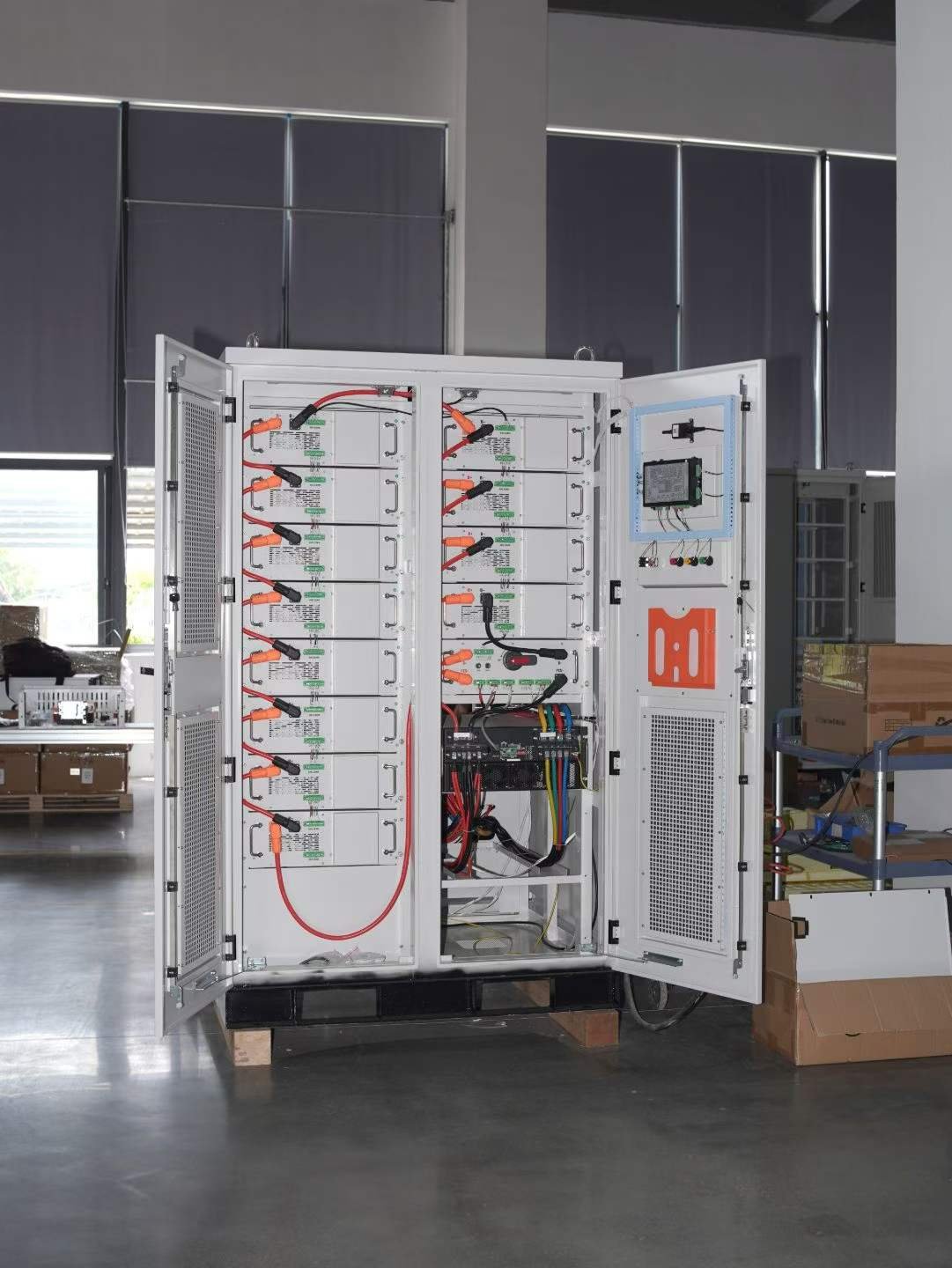
There are several legitimate strategies. An owner may install extra energy on day one, add compatible capacity later, accept a declining duration, replace selected battery blocks, or revise dispatch to protect a higher-priority service. None is automatically cheapest. The decision depends on capital timing, space, controls, warranty, import logistics, safety approvals, future component availability and the value of the lost service.
| Strategy | Where it can fit | Main procurement risk | Question for the financial model |
|---|---|---|---|
| Day-one oversizing | Space and capital are available; later shutdown is difficult | Unused capacity can still age and may change the operating window | What service does the extra energy preserve, and from which year? |
| Planned future addition | Modular architecture and defined expansion space are available | Future racks, BMS versions, DC protection or software may not be compatible | Who carries price, compatibility and installation risk? |
| Selective replacement | Weak blocks can be isolated and replaced under an approved procedure | Mixing ages or revisions can complicate balancing and warranty responsibility | What test identifies the replaceable unit? |
| Accept controlled decline | The business case tolerates shorter duration later in life | Revenue or backup duty may quietly fall below the original need | What is the minimum economic service threshold? |
| Dispatch adaptation | Some services can be reprioritized without breaching obligations | Reduced depth or power may protect energy but weaken project value | Which service is curtailed first, and who approves it? |
The DOE’s 2022 Grid Energy Storage Technology Cost and Performance Assessment explicitly includes augmentation, replacement and decommissioning in its cost methodology. Its model is not a quotation for a specific project, but it supports an important commercial rule: lifecycle interventions belong in the investment model from the start. Omitting them can make two offers with different long-term obligations appear falsely comparable.
Warranty language must then be separated from the owner’s service target. The first limit reached may be calendar time, energy throughput, operating conditions or retained-energy criteria. The existing guide to BESS warranty years versus throughput explains why a long headline term does not by itself fund the capacity needed for the project duty.
Build a Repeatable Trigger from Baseline and Reference Tests
An augmentation trigger should be measured, not guessed from age. Establish a commissioning baseline using the same meter boundary, power level, SOC endpoints, rest conditions, temperature treatment and auxiliary-load convention that will be used later. Preserve raw time-series data, not only a signed summary. Repeat the test at defined intervals and after events that may materially affect performance.
Sandia’s Electrical Energy Storage Data Submission Guidelines recommends continuous SOH tracking and periodic reference performance tests under strict protocols, including charge/discharge energy and ambient-temperature information so that HVAC impacts can be interpreted. For buyers, this supports four requirements: data ownership, synchronized meters, a controlled procedure and a clear method for normalizing or recording test conditions.
The test should also distinguish a genuine energy shortfall from temporary derating, unavailable modules, SOC-estimation error, calibration drift or restricted EMS settings. The HMX article on a repeatable battery SOH capacity acceptance test provides a practical framework for separating the reported SOH value from measured delivered energy.
A controlled decision sequence
- Confirm the current service obligation and the meter boundary.
- Check data quality, unavailable equipment, alarms, firmware and active limits.
- Run the approved reference energy test under documented conditions.
- Compare the result with the contractual trigger and uncertainty allowance.
- Test operational remedies before adding hardware where appropriate.
- Review the selected augmentation against DC protection, BMS, PCS, EMS, thermal and structural limits.
- Approve the intervention, test scope, outage window and updated warranty allocation.
- Commission the augmented configuration and establish a new controlled baseline.
Reserve the Interfaces Before the Expansion Space Is Needed
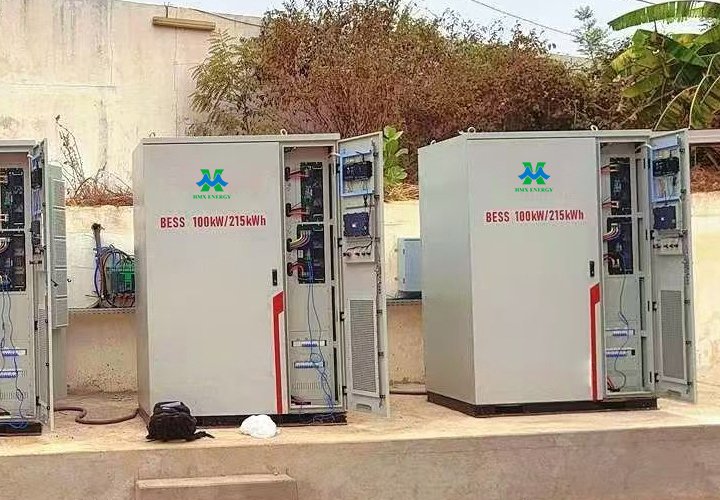
A promise that the system is “expandable” is not enough. The EPC should identify the physical space, foundation load, access route, fire separation, cable routes, spare switchgear positions, DC and AC protection limits, transformer capacity, communication addressing, EMS licenses and cyber-access process for a future intervention. The design should also state whether capacity can be added while other blocks remain in service.
Compatibility is configuration-specific. Adding new cells or racks to an older DC bus can introduce different resistance, voltage behaviour, BMS firmware and balancing characteristics. Request a controlled compatibility matrix and written approval for the intended combination. If exact future compatibility cannot be promised, the commercial model should carry an alternative such as a separately controlled block, a replacement allowance or a declining-service case.
Project photographs and ratings can help frame the discussion, but they do not prove that another site has the reserved interfaces required for augmentation. Use relevant project references to identify system scales and applications, then request the drawings, test boundary and expansion assumptions for the specific quotation.
If the BESS must support a weak grid or islanded network, future energy and current headroom also affect control performance. Treat that as a separate study using the grid-forming versus grid-following BESS procurement test, then reconcile its reserve assumptions with the capacity-maintenance plan.
Put These Items in the RFQ and Contract
| RFQ item | Minimum requested response | Release evidence |
|---|---|---|
| Service obligation | Required AC usable energy, power, duration, reserve and measurement point | Guarantee schedule aligned with the single-line diagram |
| Degradation basis | Model assumptions for temperature, SOC window, power, cycles and calendar use | Controlled curve or model revision and stated exclusions |
| Test protocol | Baseline and periodic reference test with instruments and tolerances | Commissioning record and raw data format |
| Trigger and remedy | Threshold, confirmation process, decision owner and permitted remedies | Contract clause and responsibility matrix |
| Expansion design | Reserved space, interfaces, protection limits and compatibility method | Approved drawings and interface schedule |
| Lifecycle budget | Owner, vendor and EPC cost responsibilities under defined scenarios | Financial-model assumptions and priced options |
| Post-work acceptance | Tests required after addition, replacement or control changes | Updated baseline, settings, asset register and warranty record |
For an upcoming project, send the operating profile, service priority, project life, environmental conditions and intended measurement boundary with the RFQ. HMX can then discuss product and project requirements through the energy storage quotation contact page. Final degradation, warranty and augmentation commitments should appear in the controlled quotation and contract rather than being inferred from this general guide.
Closing Rule
Do not buy a future augmentation percentage without defining the service it protects. Buy a measurable lifecycle plan: one energy boundary, one repeatable test, one decision process, compatible interfaces and a budgeted set of remedies. That gives the owner a defensible response when performance changes and prevents the project from relying on a nominal capacity number that no longer represents the duty at the point of connection.