
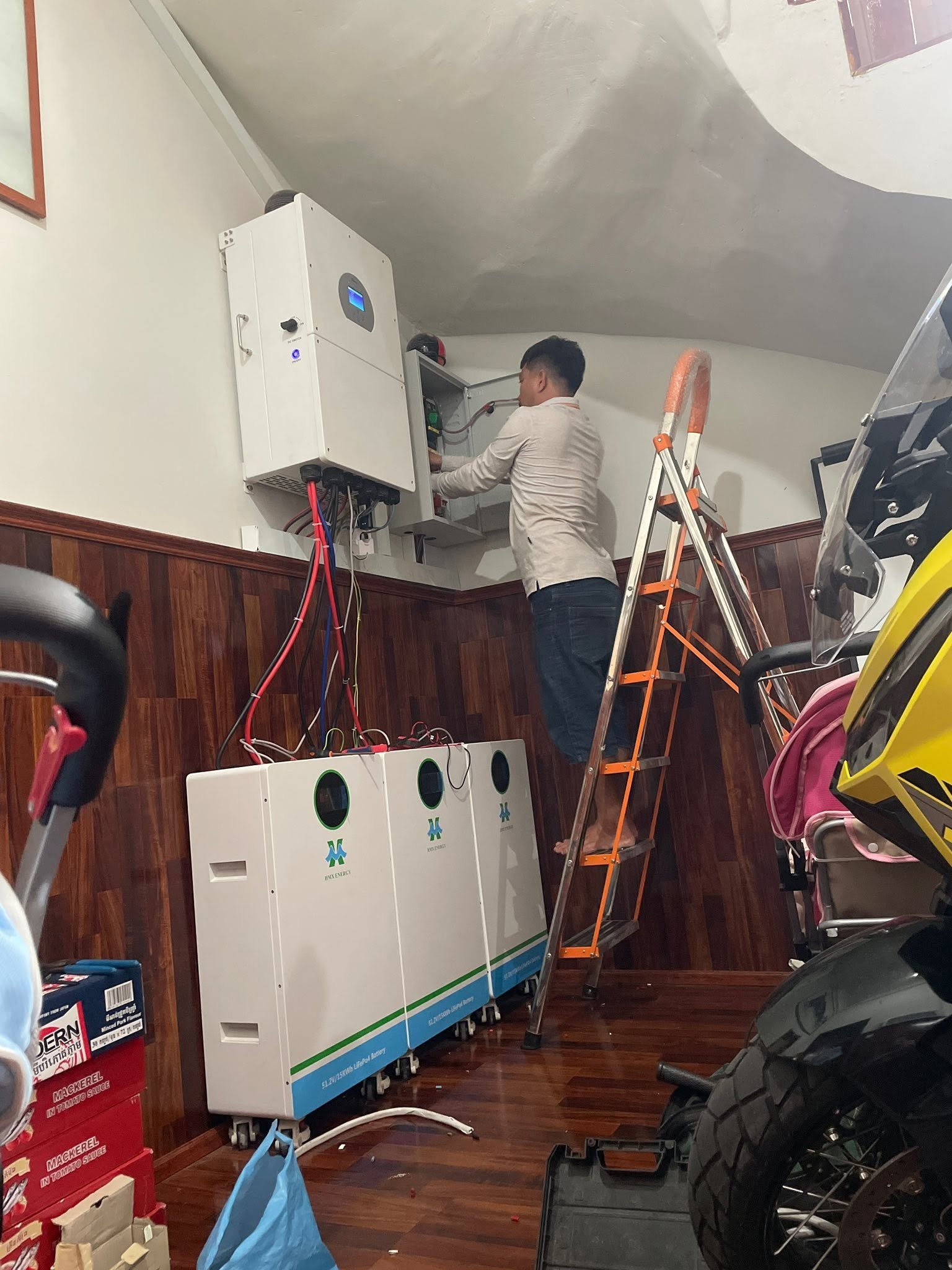
Eine BESS-Ersatzteilstrategie ist ein projektspezifischer Plan zur Identifizierung von Komponenten, deren Ausfall die vertraglich vereinbarte Leistung beeinträchtigen oder unterbrechen kann, zur Entscheidung, was lokal oder regional vorgehalten werden muss, zur Sicherstellung der Hardware- und Firmware-Kompatibilität, zur Zuweisung von Verantwortlichkeiten und Nachbestellung sowie zum Nachweis, dass ein Austausch das System in einen genehmigten Konfigurationszustand zurückversetzt. Der Kauf einer undifferenzierten Kiste mit Teilen ist nicht dasselbe wie die Planung der Wiederherstellung.
Das Problem wird nach einem Fehler am deutlichsten sichtbar. Ein ausgefallener Lüfter, ein Steuerungsnetzteil, ein Netzwerk-Switch oder eine PCS-Steuerplatine mögen im Vergleich zum Batteriesystem kostengünstig sein, doch der Stillstand kann andauern, während die korrekte Revision identifiziert, versandt, durch den Zoll abgefertigt, installiert und getestet wird. Die kommerzielle Exposition ergibt sich aus dem gesamten Wiederherstellungspfad, nicht nur aus dem Komponentenpreis.
Direkte Antwort: Ersatzteile nach Servicefolge und Wiederherstellungspfad klassifizieren. Positionen, die unverhältnismäßige Ausfallzeiten verursachen können, lokal vorhalten, validierte Revisions- und Konfigurationsaufzeichnungen führen, festlegen, wer jede Position besitzt und nachbestellt, und den Austauschprozess testen, bevor Garantie- und Serviceteams getrennt werden.
Überprüfungsdatum der Recherche: 19. November 2026. Dieser Leitfaden richtet sich an C&I-Anlagenbetreiber, EPC-Projektmanager, Entwickler, Distributoren und O&M-Teams, die grenzüberschreitend oder weit entfernt vom Gerätehersteller tätig sind. Er veröffentlicht keine HMX-Ausfallraten, Komponenten-Lieferzeiten, empfohlenen Lagerbestandsmengen oder Service-Reaktionsgarantien. Diese Werte erfordern die endgültige Stückliste, den Projektstandort, die Architektur, das Servicemodell und schriftliche Lieferantennachweise.
Beginnen Sie mit der Servicefolge, nicht mit den Komponentenkosten
Ein teures Batteriemodul ist nicht automatisch das dringendste Ersatzteil. Eine kostengünstigere Komponente kann kritischer sein, wenn sie einen Common-Mode-Ausfall verursacht, einen langen Identifikations- oder Konfigurationsprozess erfordert oder den Betrieb aller gesunden Module verhindert. Beginnen Sie mit der vertraglich vereinbarten Leistung und Architektur und verfolgen Sie dann die Geräte, deren Verlust diese Leistung unterbrechen kann.
Die Systemgrenze, die für eine BESS-Verfügbarkeitsgarantie festgelegt wurde, ist der richtige Ausgangspunkt. Kennzeichnen Sie die Batterieracks, BMS-Ebenen, PCS-Blöcke, Transformatoren, Schaltanlagen, Hilfsversorgungen, Wärmemanagement, Brand- und Gasdetektion, Standortcontroller, Zähler, Schutz, Kommunikation und Remote-Service-Abhängigkeiten. Fragen Sie für jede Position, ob das System stoppt, abregelt, auf einen Backup-Pfad umschaltet oder mit reduzierter Überwachung weiterläuft.
| Kritikalitätsfaktor | Käuferfrage | Auswirkung auf die Ersatzteilentscheidung |
|---|---|---|
| Servicefolge | Stoppt der Ausfall die gesamte Anlage, einen Block oder eine nicht kritische Funktion? | Legt die geschäftliche Priorität und den akzeptablen Wiederherstellungspfad fest |
| Redundanz | Ist der Backup-Pfad unabhängig und unter der erforderlichen Belastung getestet? | Kann den unmittelbaren Lagerbedarf reduzieren, beseitigt aber nicht den Reparaturbedarf |
| Fehlererkennung | Kann der Fehler remote isoliert werden, ohne Teile durch Ausprobieren zu ersetzen? | Bestimmt die erforderlichen Diagnosewerkzeuge und die Technikerkompetenz |
| Beschaffungsweg | Ist die Position Standard, lieferantengesteuert, programmiert oder auf Bestellung gefertigt? | Ändert, ob lokaler, regionaler oder lieferantenseitiger Lagerbestand glaubwürdig ist |
| Kompatibilität | Kann ein aktueller Ersatz mit der installierten Hardware und Firmware funktionieren? | Erfordert genehmigte Substitute, Revisionskontrolle und Testnachweise |
| Lagerempfindlichkeit | Hat die Position eine Haltbarkeitsdauer, Ladezustands- oder Umgebungsanforderungen? | Fügt Inspektions-, Konditionierungs- und Rotationsanforderungen hinzu |
| Installationsrisiko | Kann die Position sicher vom lokalen Team ausgetauscht werden? | Verknüpft den Lagerbestand mit Werkzeugen, Berechtigungen und Arbeitsanweisungen |
| Wiederinbetriebnahmebachweis | Welcher Test bestätigt die vertraglich vereinbarte Funktion nach dem Austausch? | Verhindert, dass ein installiertes Ersatzteil als abgeschlossene Reparatur behandelt wird |
Die Ankündigung der Lieferkettenbewertung für BESS des U.S. Department of Energy aus dem Jahr 2025 beschreibt einen System-of-Systems-Ansatz, der komponentenbezogene Folgen neben breiteren operativen und sicherheitsrelevanten Auswirkungen bewertet. Eine projektbezogene Ersatzteilstrategie verwendet dieselbe Logik auf Standortebene: Priorisieren Sie Komponenten danach, was ihr Verlust für die Leistung bedeutet, nicht nach einer generischen Liste, die von einem anderen Projekt kopiert wurde. Trennen Sie lokale, regionale und lieferantenseitig vorgehaltene Bestände.
Nicht jedes Ersatzteil gehört in die Anlage. Lokaler Bestand ist gerechtfertigt, wenn eine Position hohe Ausfallfolgen hat, von einem autorisierten Standortteam ausgetauscht werden kann und korrekt gelagert werden kann. Regionaler Bestand kann angemessen sein, wenn mehrere Projekte eine kompatible Position teilen und der Transport planbar ist. Lieferantenseitiger Bestand kann teure oder selten benötigte Baugruppen abdecken, aber nur, wenn der Vertrag den Standort, die Reservierung, die Versandberechtigung und den Nachweis identifiziert, dass die Position für dieses Projekt verfügbar bleibt.
„Ab Werk verfügbar" ist kein Wiederherstellungsplan. Das Werk muss möglicherweise noch die Seriennummer bestätigen, die Position bauen oder programmieren, Ausfuhrdokumente beschaffen, Gefahrguttransport organisieren, den Bestimmungszoll abfertigen und einen qualifizierten Techniker entsenden. Zeichnen Sie jede Stufe und ihre verantwortliche Partei auf. Eine angegebene Kurierzeit deckt nur einen Teil des Weges ab.
“Das DOE Office of Cybersecurity, Energy Security, and Emergency Response und das Idaho National Laboratory haben 2025 einen detaillierten.
Batteriespeicher-Lieferkettenbericht veröffentlicht. Er betont die End-to-End-Komponentenbewertung und die folgenbasierte Priorisierung. Ein Standortbetreiber sollte diese Analyse auf nationaler Ebene nicht in eine ungestützte Lieferzeitzahl umwandeln; die nützliche Beschaffungsmaßnahme besteht darin, die tatsächliche Komponente, den Lieferanten, das Land, die alternative Quelle und die Logistikschritte für das ausgewählte Design abzubilden. Kompatibilität ist Teil des Ersatzteils, keine spätere Ingenieuraufgabe.
Das Ersatzteilregister muss Modell, Revision, Firmware, Konfiguration und Nachweise genehmigter Substitute führen.

A part number alone may not establish compatibility. Control boards can require a particular firmware branch, parameter file, licence or communication profile. Fans and pumps may match mechanically but differ in electrical rating, feedback signal or control curve. Battery modules can require limits on production variation, voltage or SOC matching, and supplier-approved commissioning steps. Protection relays and meters may need project-specific settings and calibration records.
Create an as-built compatibility record at handover. It should connect the installed serial number to manufacturer part number, hardware revision, firmware, approved settings, connector or harness, cybersecurity requirements, approved substitutes and return-to-service test. When the supplier changes an item, require an engineering change notice that states backward compatibility and any restrictions.
Capacity augmentation introduces another compatibility boundary. The lifecycle questions in our BESS capacity augmentation guide also apply to stored replacement modules: future hardware may not be a drop-in substitute for equipment purchased years earlier. The project should distinguish operational spares intended for prompt repair from planned augmentation or replacement capacity that requires a separate design review.
| Spare-register field | Warum er wichtig ist | Control evidence |
|---|---|---|
| Equipment and service tag | Connects stock to the affected system function | Single-line diagram and equipment hierarchy |
| Manufacturer part number and description | Prevents ambiguous warehouse descriptions | Approved bill of materials |
| Hardware revision and serial range | Identifies physical compatibility | Supplier compatibility statement |
| Firmware, settings and licence | Allows the installed item to communicate and operate correctly | Controlled image, checksum and parameter backup |
| Approved substitute | Provides a managed path when the original item is obsolete | Engineering change notice and verification result |
| Storage requirement | Preserves condition while the item waits | Temperature, humidity, SOC or preservation instruction |
| Inspection and rotation date | Prevents silent deterioration or expired calibration | Warehouse inspection record |
| Installation authorization | Confirms who may perform the work safely | Training, procedure and required tooling |
| Return-to-service test | Confirms the fault is corrected without creating a new one | Approved functional test and signed result |
| Replenishment trigger | Restores readiness after stock is consumed | Purchase responsibility and escalation path |
Design the Stock around Diagnosis and Safe Replacement
Holding a part does not reduce downtime if the team cannot identify the failed item. The diagnostic package may include wiring diagrams, alarm definitions, trend access, test points, service software, communication adapters, approved test equipment and escalation support. Protect service credentials and tools under the project’s cybersecurity policy rather than leaving them with one technician.
Event evidence should be captured before components are swapped. The sequence in our BESS-Alarm-Triage-Leitfaden helps separate the initiating fault from subsequent protection actions. Replacing the component named by the final alarm without preserving the sequence can consume the spare and leave the real cause in place.
Define safe isolation, stored-energy controls, lifting needs, electrostatic precautions, torque requirements and post-work inspection for every field-replaceable item. Some assemblies should remain supplier-service items even when a spare is held onsite. The stock location does not grant authorization to open or modify equipment.
Treat Storage Conditions as a Maintenance Duty
Spares can degrade while waiting. Electronics can suffer from moisture, contamination or electrostatic damage. Seals, filters and fire-system consumables may have inspection or shelf-life requirements. Calibrated instruments can expire. Battery-related stock may require controlled state of charge, voltage checks, temperature limits or periodic conditioning defined by the manufacturer.
Do not invent a universal storage interval. Obtain the preservation instructions for each part and include them in the computerized maintenance management system or another controlled register. Record receiving condition, packaging, location, environmental checks, inspection dates and any movement. First-in, first-out is not automatically appropriate when revisions differ; compatibility and condition take priority over receipt date.
The International Energy Agency Photovoltaic Power Systems Programme’s 2022 PV O&M guidelines are not a BESS performance standard, but their contract-governance principles are useful: define responsibility for storage, replenishment and stock management, address warranty for replaced components, and resolve transfer of title. BESS buyers should apply those questions using the selected battery and equipment manufacturers’ own preservation instructions.
Assign Ownership, Title and Replenishment in the Contract
Clarify who buys the initial stock, who owns it, who insures it, who can authorize use, who performs inventory checks and who replenishes it after use. Supplier-owned consignment stock can reduce upfront owner cost, but the agreement must prevent removal or reassignment without replacement. Owner-owned stock needs access controls and a process that keeps supplier configuration records current.
Define what happens when a defective component is replaced under warranty. Does the supplier consume the owner’s spare and replace it, or ship a separate warranty item? Who owns the removed part, and who pays for diagnostic return? If a spare is used for a non-warranty event, which price and approval apply? These questions are easier to settle before the first failure.
The DOE Federal Energy Management Program’s 2025 customizable lithium-ion BESS technical specifications provide a current procurement framework intended to be edited for the agency and project. The same approach is appropriate here: the spare schedule must be tailored to the final architecture, use case and service agreement rather than copied unchanged from a generic template.
Test the Restoration Path before Handover
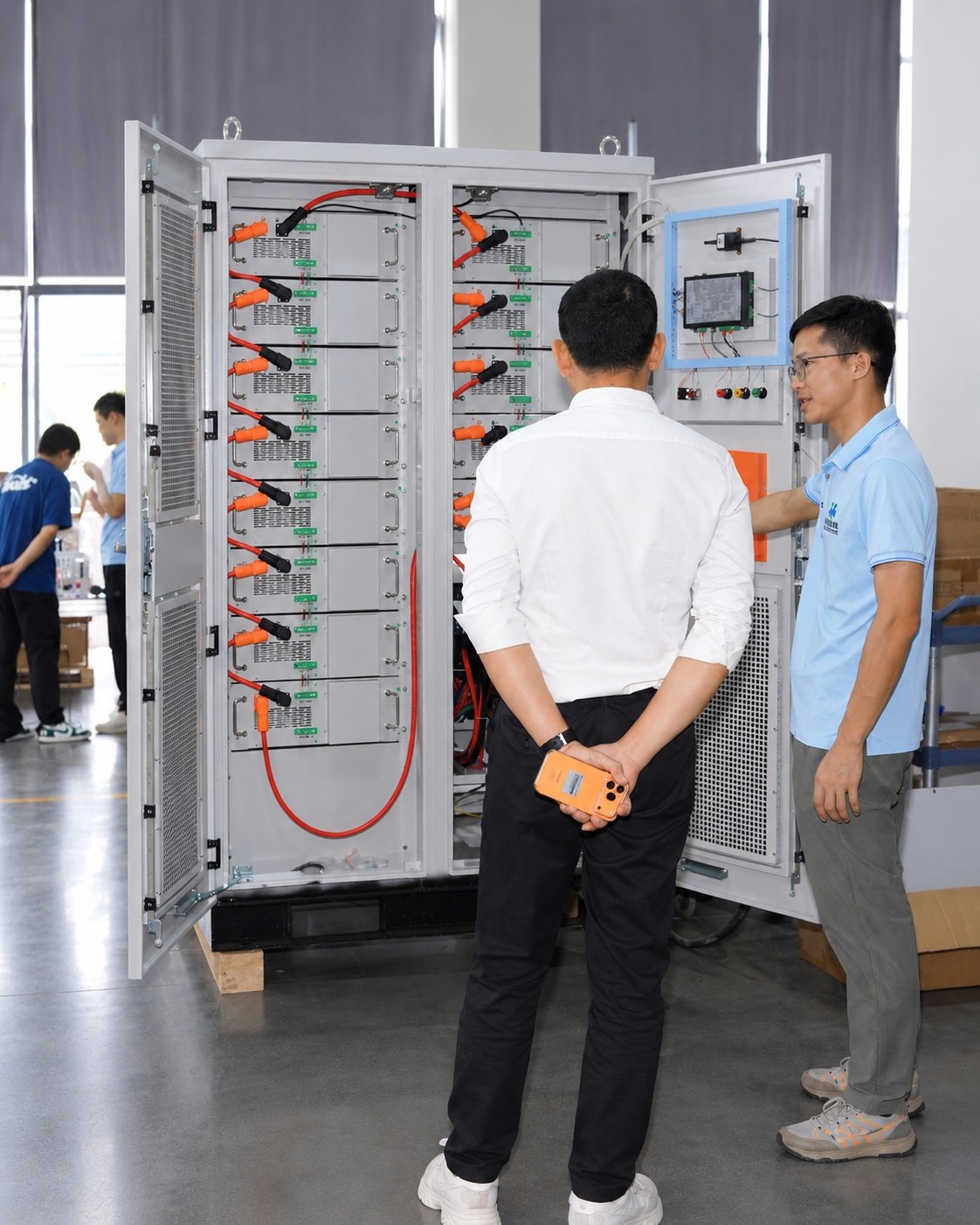
Use FAT and SAT to verify more than the presence of boxes. Select representative field-replaceable items and walk through identification, isolation, removal, installation, configuration and return-to-service testing. A full live replacement may not be safe or practical for every assembly, but the project can still verify access, tools, lifting points, configuration backups, procedures and responsibility.
Connect the exercise to the BESS FAT witness and fault-injection plan. Confirm that the alarm and event records identify the correct failure domain, that a healthy redundant block continues as designed, and that the replacement does not erase evidence needed for root-cause analysis. Record the as-left firmware, settings and functional result.
A receiving inspection should confirm packaging, quantity, model, revision, condition and documentation. For programmed equipment, compare the controlled file or checksum. For instruments, verify calibration. For battery-related stock, follow supplier instructions for safe receipt and preservation. Quarantine any item that cannot be matched to the approved register.
Use Field Evidence to Adjust the Stock
The initial spare list is a controlled hypothesis. Review it after commissioning, recurring alarms, service campaigns, supplier notices, firmware changes and actual replacement events. Track demand, but do not rank criticality only by how often an item is consumed. A rarely used common-mode component can remain more important than a frequently replaced non-critical filter.
A joint Sandia and NREL PV-plus-storage O&M study used 14 interviews and questionnaires representing 51.1 MW and 64.1 MWh. The authors identified poor vendor reliability and parts availability among ongoing challenges. That sample does not establish a universal BESS failure rate, but it supports a disciplined review of actual site evidence, service performance and parts logistics rather than assuming the commissioning list will remain adequate for the full project life.
Record each use of a spare: fault cause, removed part identity, replacement identity, work duration, delay stages, tests, warranty disposition and replenishment date. Separate active repair time from waiting time. That distinction shows whether the next improvement belongs in diagnostics, technician training, warehouse stock, customs preparation, supplier allocation or design redundancy.
Budget Stock without Inventing a Universal Quantity
A fixed percentage of project value is not a reliable spare-parts budget. Two systems with the same power and energy rating can have different block sizes, component commonality, local service coverage and customs exposure. Build the budget from the criticality register and several restoration scenarios. For each candidate item, compare the cost of holding usable stock with the service consequence and credible waiting path if no stock is held.
The comparison should include more than purchase price. Consider controlled storage, inspections, insurance, calibration, conditioning, software maintenance and the risk that an item becomes incompatible before it is used. Against that cost, consider lost service, temporary operating restrictions, technician remobilization, expedited transport and the possibility that a minor fault prevents acceptance of another project milestone. Use project financial data rather than a generic cost-of-downtime claim.
Pooling can be efficient when multiple sites use a genuinely common and transportable component. Verify that the pool is reserved, quantities reflect simultaneous-event risk, each site can access it contractually, and the part revisions remain compatible. A supplier’s worldwide inventory is not equivalent to a regional pool unless allocation and dispatch rights are defined.
Use sensitivity analysis where lead time is uncertain. The project can compare local stock, regional stock and supplier dispatch under several documented logistics assumptions without presenting any one assumption as a fact. Record the source and date of quotations because routes, customs requirements and supplier capacity can change. The approved quantity should be a traceable commercial decision, not an unexplained integer in a tender schedule.
Plan for Obsolescence before the Warranty Ends
Control equipment and communications hardware can change faster than the planned life of the battery asset. Require notice of end-of-sale, end-of-support, security-support termination and any change that removes backward compatibility. The notice period should be linked to the time needed for engineering review, a last-time buy or an approved migration, rather than described only as “reasonable notice.”
An approved substitute needs more than the same connector. Review electrical characteristics, communication behaviour, environmental rating, protection interaction, firmware support, cybersecurity implications and the tests needed at plant level. Preserve the previous configuration and rollback method when software or settings must change. If the substitute changes the operating envelope or certification basis, route it through formal design and compliance review.
Decide who pays when a supplier-initiated obsolescence makes owner stock unusable. The answer may differ during warranty, a long-term service agreement and owner-operated life. Address unused stock, licence transfer, data migration, training and disposal. Without this allocation, the owner can pay twice: first for a recommended spare and later for the redesign required when that spare is no longer supported.
Build the RFQ around Deliverables, Not a Fixed Quantity List
| RFQ-Leistung | Supplier response should include | Abnahmenachweis |
|---|---|---|
| Criticality assessment | Failure domain, service effect, redundancy and diagnostic path | Reviewed system architecture and consequence matrix |
| Recommended initial stock | Item, quantity basis, location and reason | Approved spare schedule tied to the final bill of materials |
| Compatibility schedule | Part numbers, revisions, firmware, settings and substitutes | As-built register and controlled files |
| Logistics map | Stock location, release authority, transport stages and customs documents | Named process with responsible parties |
| Preservation plan | Packaging, environment, inspection, SOC or conditioning requirements | Manufacturer instructions and maintenance tasks |
| Replacement procedure | Isolation, tooling, skills, configuration and safety controls | Approved work instruction and training record |
| Return-to-service test | Functional checks for each field-replaceable class | Witnessed representative exercise |
| Replenishment and obsolescence | Trigger, price basis, notice, end-of-sale and approved-substitute process | Contract clause and change-control workflow |
| Warranty interface | Ownership of consumed stock and defective returns | Unambiguous warranty and title schedule |
| Periodic review | Data, frequency, participants and approval authority | O&M meeting and register revision process |
When shortlisting a kommerzielles und industrielles Energiespeichersystem, compare the spare strategy alongside the equipment architecture and service offer. A lower initial stock cost can conceal a longer restoration path, while a larger list can include parts that the local team is not authorized or equipped to replace. Ask suppliers to explain the service consequence addressed by every item.
The Procurement Decision
A credible BESS spare parts strategy lets the owner answer five questions before a failure: which service is at risk, which compatible item is needed, where that item is held, who can install it, and what test proves restoration. If any answer depends on an informal promise, the outage exposure remains unresolved.
Approve the spare schedule only after the final architecture and bill of materials are controlled. Keep it live through inspections, configuration changes, warranty events and field evidence. The objective is not to maximize warehouse inventory. It is to remove avoidable waiting time without creating unsafe work, obsolete stock or unverified substitutions.