
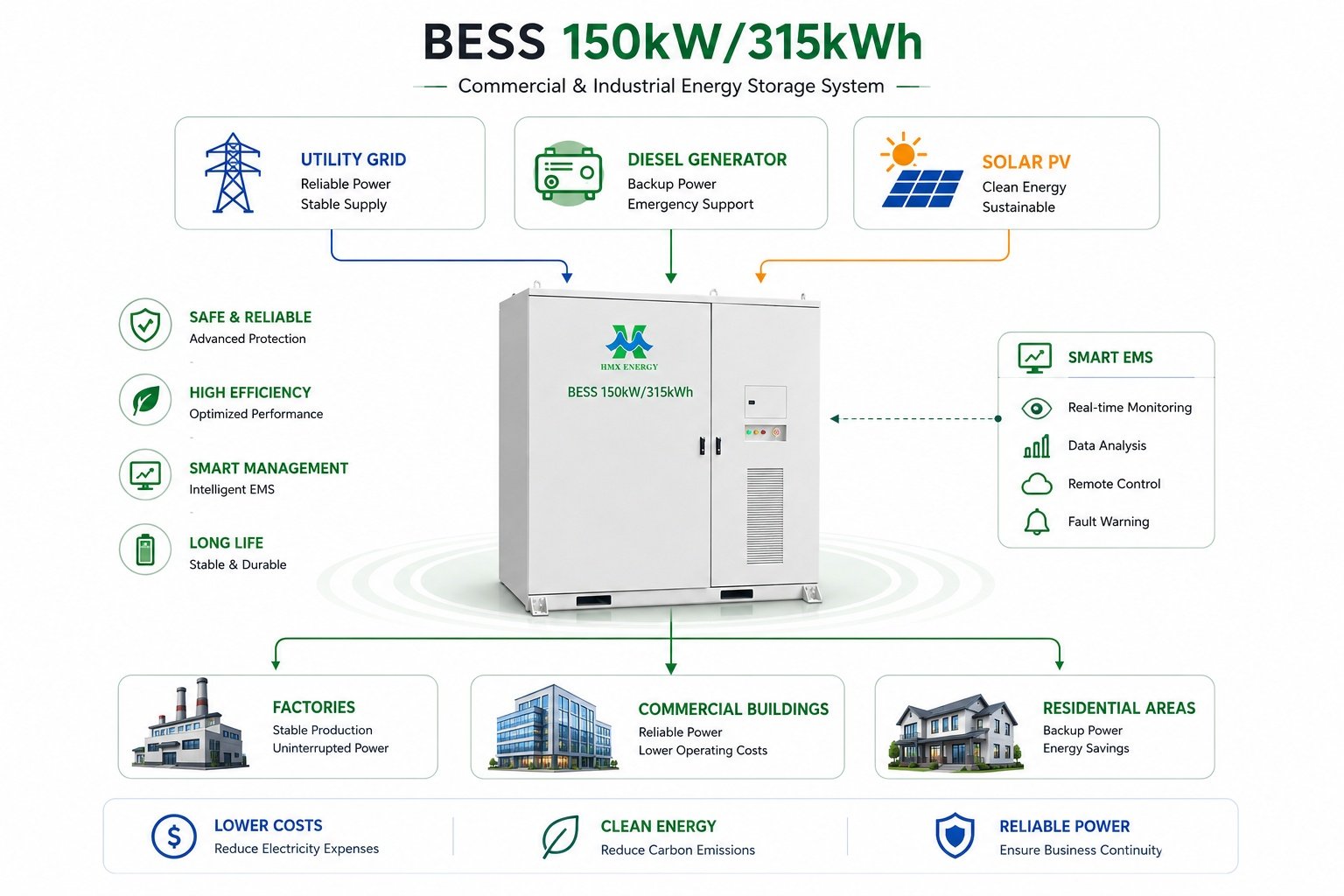
Een BESS kan vraagpiekkosten verlagen, energie verschuiven, back-upreserve behouden, zonne-energie absorberen, een netsetpoint volgen en frequentie- of reactieve ondersteuning leveren. Het kan niet tegelijkertijd de volledige batterij aan al die doelstellingen beloven. Wanneer het contract geen prioriteit definieert, verschijnt het conflict later als gemiste besparingen, uitgeputte back-upreserve, geweigerde dispatch of versnelde cyclisatie.
Een professionele dispatchspecificatie begint daarom met rechten en beperkingen, niet met een optimalisatieslogan. Zij benoemt welke dienst welk vermogen en welke energie mag gebruiken, onder welke voorwaarden, voor hoe lang, en welke doelstelling wijkt wanneer limieten botsen. Zij definieert ook de telemetrie en tests die nodig zijn om aan te tonen dat het geïnstalleerde EMS dat beleid volgt.
Scheid verplichtingen van economische voorkeuren
Lijst elke dienst op en classificeer deze. Veiligheid en apparatuurbescherming zijn niet-onderhandelbare beperkingen. Netcode-respons, gecontracteerde reserve en aansluitlimieten kunnen verplicht zijn. Back-upreserve is een veerkrachtvereiste van de eigenaar. Vraagpiekbeheer, energie-arbitrage en zelfconsumptie van hernieuwbare energie zijn economische doelstellingen. Deze classificatie voorkomt dat een laagwaardig prijssignaal een kritieke reserve of netinstructie overschrijft.
Definieer de dienst op de juiste grens. Een pieklimiet op locatie kan worden gemeten op het punt van gemeenschappelijke aansluiting, terwijl een marktdispatch wordt gemeten door een inkomstenmeter en een back-upverplichting wordt uitgedrukt op de bus van de beschermde belasting. Verliezen, hulpverbruik en transformatorlimieten betekenen dat hetzelfde PCS-commando niet op elk punt dezelfde waarde oplevert.
De checklist voor interconnectie van gedistribueerde energie van het Amerikaanse Ministerie van Energie definities van netdiensten onderscheid diensten op basis van respons- en prestatiekenmerken. Gebruik de toepasselijke marktregels voor het project, maar hanteer dezelfde discipline: noem een functie niet “reserve” of “frequentiedienst” zonder activering, duur, nauwkeurigheid, herstel en beschikbaarheid te specificeren.
| Doelstelling | Verbruikte resource | Op te lossen conflict | Benodigd bewijs |
|---|---|---|---|
| Back-upveerkracht | Gereserveerde SOC en ontlaadvermogen | Economische ontlading vóór uitval | Reservetarget, belasting en autonomiebasis |
| Demand-charge control | Ontlaadvermogen/energie tijdens pieken | Onbekende piekduur en later netberoep | Forecastregel, drempel en herstel |
| Energie-arbitrage | Cyclusenergie en laadgelegenheid | Reserve, degradatie en aansluitlimieten | Prijsbron en cycluskostenbeperking |
| PV-zelfconsumptie | Laadruimte bij zonnepiek | Batterij al vol door een andere dienst | PV-forecast en curtailmentprioriteit |
| Frequentierespons | Op-/neerwaarts vermogen en SOC-ruimte | Basisdispatch op vermogens-/SOC-grens | Droop, deadband, duur en herstel |
| Contingencyreserve | Vastgelegd vermogen en leverbare energie | Gelijktijdig economisch schema | Activerings- en handhavingsregels |
| Reactieve-/spanningsondersteuning | PCS-stroom-/MVA-ruimte | Hoog actief-vermogensdispatch | P-Q-capabiliteit en prioriteitsinstelling |
Bouw één beperkingenstapel voordat omzet wordt geoptimaliseerd
De controller moet limieten in een gedefinieerde volgorde evalueren: veiligheidsafschakelingen, BMS-laad-/ontlaadlimieten, PCS- en transformatorcapaciteit, aansluitlimieten, verplichte netrespons, contractuele reserves, veerkrachtreserve van de eigenaar, garantiebedrijfsbereik en vervolgens economische doelstellingen. Een lagere laag mag alleen optimaliseren binnen de ruimte die hogere lagen laten.
Representeer vermogen en energie afzonderlijk. Een batterij kan voldoende SOC hebben om een dienst vol te houden, maar onvoldoende PCS-ruimte omdat zij al een ander setpoint volgt. Zij kan gedurende enkele minuten volledig ontlaadvermogen hebben, maar onvoldoende energie voor de vereiste duur. Geef aan of verplichtingen vast, inspanningsgebonden of onderbreekbaar zijn en wat er gebeurt wanneer de capaciteit onder de verplichting zakt.
Neem AC-verliezen, hulpverbruik, temperatuurderating, niet-beschikbare blokken en reactieve stroom mee. Gebruik het BESS-kwaliteitsacceptatieproces voor vermogen om P-Q-capabiliteit te bevestigen op het punt waar de dienst wordt gemeten. Een dispatchmodel dat naamplaatvermogen kW bij elke arbeidsfactor veronderstelt, kan de installatie overcommitteren.
De checklist voor interconnectie van gedistribueerde energie van het Amerikaanse Ministerie van Energie BESS-inkoopchecklist biedt een vroegtijdig projectkader voor het definiëren van opslagvereisten en verantwoordelijkheden. Voeg het dispatchspecifieke validatieprincipe toe: vergelijk doelvermogen met geleverd vermogen en leg de beperking bloot die een eventueel verschil veroorzaakte.
Reserveer SOC met een beleid, niet alleen met een vast getal
Een vast minimum-SOC is eenvoudig, maar kan te weinig energie behouden voor een langdurige uitval of te veel waarde verloren laten gaan op dagen met laag risico. Definieer of back-upreserve vast, tijdsafhankelijk, weersafhankelijk, op belastingforecast gebaseerd of gekoppeld aan netbetrouwbaarheid is. Vermeld de beschermde belasting, vereiste autonomie, forecastperiode, toegestane ontlaaddiepte en hersteldeadline.
Zet back-upenergie om naar een bruikbare AC-grootheid. Houd rekening met batterijbeschikbaarheid, DC-naar-AC-rendement, hulpverbruik, PCS- en transformatorverliezen, temperatuur en een conservatieve onzekerheidsmarge goedgekeurd door de eigenaar. Claim geen back-upduur op basis van naamplaatenergie alleen. Herbereken de reserve naarmate de gemeten capaciteit gedurende de levensduur verandert.
Define emergency override. The owner may allow a grid event to use protected reserve, may prohibit it, or may require explicit authorization. The contract should identify which party carries the resilience consequence and how the event is reported. A market optimizer should never infer that permission from a high price.
Allocate Headroom for Fast and Slow Services
Fast frequency or regulation services need upward and downward power headroom around a base point. Energy arbitrage or peak shaving sets that base point. If the economic schedule drives the PCS to rated discharge, no upward response remains; if the battery is full, no downward charging response remains. Reserve separate power headroom and manage SOC toward a band that supports both directions.
The IEA’s Electricity 2026 flexibility analysis describes batteries providing balancing, grid support, capacity and energy shifting. Actual products differ by system operator. Configure response, telemetry and settlement from the binding rulebook; a generic “ancillary service ready” mode does not establish performance.
For slower capacity or contingency obligations, reserve deliverable energy for the required sustainment period and anticipated activation state. Include recharge restrictions after activation. One service may allow recovery immediately while another requires continued readiness. The scheduler must know whether committed headroom is available to other services before and after an event.
IEA’s May 2026 analysis of battery storage’s expanding system role reports strong 2025 deployment and a shift toward energy shifting alongside continued grid services. The commercial implication is not simply “stack more revenue.” Projects need longer-horizon energy scheduling while preserving the fast response promised to the network.
| Dispatch layer | Typical priority | Controller action | Reason code example |
|---|---|---|---|
| Safety/protection | Highest | Block, limit, isolate or trip | BMS_TEMP_LIMIT |
| Connection limit | Mandatory | Clamp import/export at PCC | POI_EXPORT_LIMIT |
| Grid-code dynamic response | Mandatory during event | Allocate current by approved priority | VOLTAGE_SUPPORT |
| Contracted reserve | Reserved headroom | Protect power and energy commitment | RESERVE_COMMITMENT |
| Back-upreserve | Owner-defined | Maintain usable energy floor | BACKUP_SOC_FLOOR |
| Peak/energy optimization | Economic | Dispatch within remaining limits | PRICE_DISPATCH |
| Herstel | Policy-dependent | Restore SOC and headroom gradually | POST_EVENT_RECOVERY |
Prevent Two Controllers from Optimizing the Same Asset
A site EMS, vendor cloud, utility master, aggregator and local PCS controller may all be able to send setpoints. Define one authority state machine. Only one source should own each command at a time, while higher-priority safety and grid functions retain their approved local action. Show current authority, requested setpoint, effective setpoint and limiting reason.
De BESS SCADA signal-list guide provides the required command, quality and feedback fields. Add service identifiers and correlation IDs so the operator can trace a plant response to the instruction that caused it. Store both rejected and accepted commands; settlement disputes often depend on whether a request was invalid, late, outside capability or overridden by a higher priority.
Define communications-loss behavior for each service. The BESS communication-loss fallback plan should state which last valid setpoints can persist, when the plant ramps to a safe local target and whether reserve or backup logic continues. An optimizer must not keep an old high-power command indefinitely because its price feed froze.
Make Degradation a Constraint with Auditable Inputs
Dispatch affects cycle depth, average SOC, charge/discharge rate, temperature and time at high SOC. The commercial model should identify which of those inputs the warranty controls, how throughput or equivalent cycles are counted, and how the EMS enforces limits. Avoid an invented currency-per-cycle number unless it comes from an approved degradation model and current commercial assumptions.
Set a change process for the degradation cost or constraint. Cell ageing, capacity tests, tariff changes and service prices can alter the optimum. Record model version, input source, approval and effective date. The operator should see when a dispatch was limited by warranty or health, rather than attributing the shortfall to plant failure.
Gebruik de BESS cell-imbalance acceptance method to distinguish normal balancing from evidence of a weak module. Dispatch should not hide a persistent imbalance by continually narrowing power; it should create a maintenance action and preserve the underlying data.
Test Conflicts, Not Only Individual Services
Factory and site tests often prove peak shaving, grid response and backup mode separately. The priority logic is tested only when requests collide. Create scenarios with high price plus low backup SOC, peak demand plus reserve activation, full battery plus downward regulation, high reactive demand plus active dispatch, and a communications failure during a grid call.
For each test, define starting SOC, available blocks, temperature, P-Q state, service commitments, command sources, event time and expected priority. Measure requested and effective setpoints, delivered power at the correct meter, SOC, reason codes, alarm, recovery and settlement record. Test boundary values and simultaneous triggers to expose race conditions.
The DOE explanation of solar integration and storage functions illustrates the range from smoothing and shifting to resilience. A project acceptance test must turn those broad functions into its own numeric requirements; the source is context, not a substitute for site criteria.
Write the Commercial and Technical Rules Together
Control Forecast Error and Post-Event Recovery
Peak-load, PV and price optimization depend on forecasts that will be wrong to some degree. Define the forecast source, refresh interval, horizon and fallback. Measure error by service and time of day rather than quoting one annual average. The dispatch policy should reserve uncertainty headroom or become more conservative when data quality falls, without pretending that a forecast is a guaranteed operating condition.
Demand-charge control requires special treatment because the final billing peak may occur later than the event the battery first covers. Specify how the controller allocates finite energy across a long or repeated peak, whether it uses a target threshold, and how it responds when demand rises faster than forecast. Record the counterfactual site load and the battery contribution so savings can be audited.
PV charging also needs headroom planning. If the battery charges from low-price grid energy before solar production arrives, it may force renewable curtailment or export. State the relative value of avoided curtailment, tariff arbitrage and backup reserve, and define how forecast confidence affects the charge target. A controller should expose why it left the battery partly empty rather than appearing to miss an opportunity.
After reserve activation or an outage, several services may request immediate SOC recovery. An aggressive charge can create a new site peak, breach an import limit or remove downward regulation headroom. Define a recovery priority, maximum ramp, price or demand constraint, deadline and operator override. The controller should estimate the time to restore each commitment and alarm when the deadline is no longer achievable.
Recovery is also a thermal event. Repeated high-power discharge and recharge can meet a market schedule while pushing cells or PCS cooling toward limits. Use current BMS and PCS capability, not a fixed nameplate command. When thermal headroom declines, reduce the effective setpoint with a coded reason and update the next-service availability instead of waiting for a protective trip.
Validate forecasts and recovery through historical replay before commissioning. Feed representative load, PV, price and service signals into the EMS; include missing data, forecast bias, extreme days and repeated activations. Compare service performance, reserve violations, cycling and constraint reasons. Then repeat selected scenarios in FAT and site testing with real controller interfaces.
Identify who may commit the battery to each service, who bears imbalance or non-performance cost, who controls reserve release, and how lost savings are treated when a mandatory service has priority. Align these rights with the technical authority matrix. A commercial agreement cannot promise a dispatch right the EMS is designed to reject.
Define the performance baseline and exclusions. Record meter source, time interval, energy losses, availability, curtailment, grid instructions, force majeure and maintenance. Use the commerciële BESS-inkoopchecklist to connect dispatch requirements with warranties, metering, commissioning and data ownership.
| Acceptatiepoort | Oplevering | Acceptatievoorwaarde |
|---|---|---|
| Service definition | Boundary, response, duration, accuracy and recovery | No undefined service promise |
| Priority policy | Constraint stack and conflict matrix | Owner/network/commercial approval |
| Capability calculation | Power, energy, SOC and P-Q headroom | Traceable inputs and reason codes |
| Control authority | Source ownership and override state machine | No competing master command |
| Fabriekstest | Simulated conflicts, limits and communication loss | Effective setpoint matches policy |
| Locatietest | Metered multi-service scenarios | Delivered response and recovery verified |
| Oplevering | Algorithms, settings, reports and training | Owner can audit dispatch decisions |
| Wijzigingsbeheer | Tariff, service, warranty and firmware impact review | Regression test before release |
A strong BESS dispatch design does not claim that every value stream can run simultaneously. It reserves power and energy for obligations, protects safety and warranty limits, exposes the constraint behind every reduced command, and tests the moments when services conflict. That makes savings, resilience and grid performance measurable rather than competing promises.