
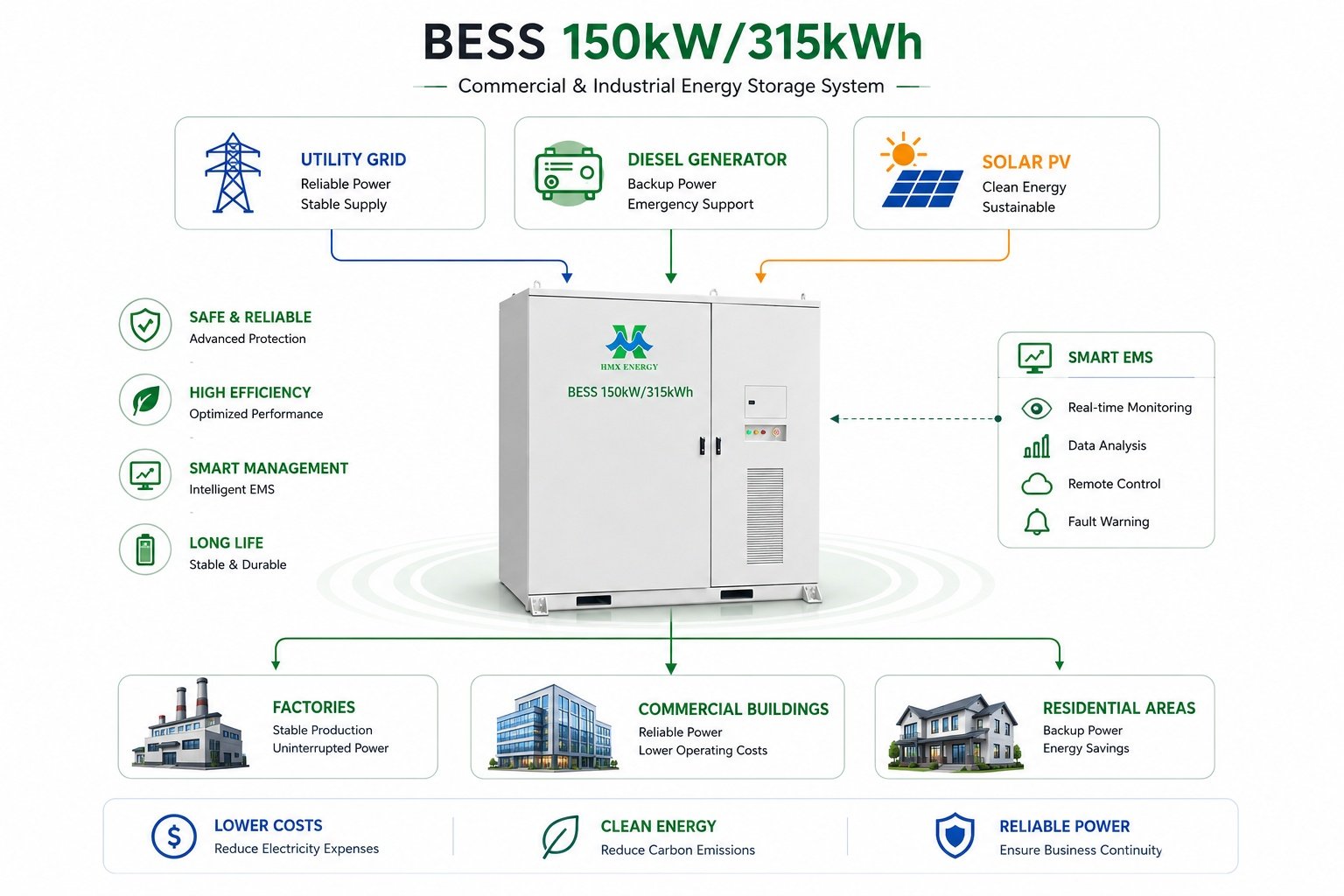
A BESS can reduce demand charges, shift energy, preserve backup reserve, absorb solar, follow a grid setpoint and provide frequency or reactive support. It cannot promise the full battery to all of those objectives at the same time. When the contract does not define priority, the conflict appears later as missed savings, depleted backup reserve, rejected dispatch or accelerated cycling.
A professional dispatch specification therefore starts with rights and constraints, not an optimization slogan. It names which service may use which power and energy, under what conditions, for how long, and which objective yields when limits collide. It also defines the telemetry and tests needed to prove that the installed EMS follows that policy.
Separate Obligations from Economic Preferences
List every service and classify it. Safety and equipment protection are non-negotiable constraints. Grid-code response, contracted reserve and connection limits may be mandatory. Backup reserve is an owner resilience requirement. Demand-charge management, energy arbitrage and renewable self-consumption are economic objectives. This classification prevents a low-value price signal from overriding a critical reserve or network instruction.
Define the service at the correct boundary. A site peak limit may be measured at the point of common coupling while a market dispatch is measured by a revenue meter and a backup obligation is expressed at the protected-load bus. Losses, auxiliary demand and transformer limits mean the same PCS command does not produce the same value at each point.
The US Department of Energy’s grid-services definitions distinguish services by response and performance attributes. Use the applicable market rules for the project, but adopt the same discipline: do not call a function “reserve” or “frequency service” without specifying activation, duration, accuracy, recovery and availability.
| Objective | Resource consumed | Conflict to resolve | Evidence needed |
|---|---|---|---|
| Backup resilience | Reserved SOC and discharge power | Economic discharge before outage | Reserve target, load and autonomy basis |
| Demand-charge control | Discharge power/energy during peaks | Unknown peak length and later grid call | Forecast rule, threshold and recovery |
| Energy arbitrage | Cycle energy and charge opportunity | Reserve, degradation and connection limits | Price source and cycle-cost constraint |
| PV self-consumption | Charge headroom at solar peak | Battery already full from another service | PV forecast and curtailment priority |
| Frequency response | Up/down power and SOC headroom | Base dispatch at power/SOC boundary | Droop, deadband, duration and recovery |
| Contingency reserve | Committed power and deliverable energy | Simultaneous economic schedule | Activation and sustainment rules |
| Reactive/voltage support | PCS current/MVA headroom | High active-power dispatch | P-Q capability and priority setting |
Build One Constraint Stack before Optimizing Revenue
The controller should evaluate limits in a defined order: safety trips, BMS charge/discharge limits, PCS and transformer capability, connection limits, mandatory grid response, contractual reserves, owner resilience reserve, warranty operating envelope and then economic objectives. A lower layer may optimize only within the headroom left by higher layers.
Represent power and energy separately. A battery may have enough SOC to sustain a service but insufficient PCS headroom because it is already following another setpoint. It may have full discharge power for a few minutes but insufficient energy for the required duration. State whether commitments are firm, best effort or interruptible and what happens when capability falls below the commitment.
Include AC losses, auxiliaries, temperature derating, unavailable blocks and reactive current. Use the BESS power-quality acceptance process to confirm P-Q capability at the point where the service is measured. A dispatch model that assumes nameplate kW at every power factor can overcommit the plant.
The US Department of Energy’s BESS procurement checklist provides an early-project framework for defining storage requirements and responsibilities. Add the dispatch-specific validation principle: compare target power with delivered power and expose the constraint that caused any difference.
Reserve SOC with a Policy, Not a Fixed Number Alone
A fixed minimum SOC is simple, but it may preserve too little energy for a long outage or strand too much value on low-risk days. Define whether backup reserve is fixed, time dependent, weather dependent, load-forecast based or linked to grid reliability. State the protected load, required autonomy, forecast horizon, allowable depth of discharge and recovery deadline.
Convert backup energy to a usable AC quantity. Account for battery availability, DC-to-AC efficiency, auxiliaries, PCS and transformer losses, temperature and a conservative uncertainty margin approved by the owner. Do not claim a backup duration from nameplate energy alone. Recalculate the reserve as measured capacity changes over life.
Define emergency override. The owner may allow a grid event to use protected reserve, may prohibit it, or may require explicit authorization. The contract should identify which party carries the resilience consequence and how the event is reported. A market optimizer should never infer that permission from a high price.
Allocate Headroom for Fast and Slow Services
Fast frequency or regulation services need upward and downward power headroom around a base point. Energy arbitrage or peak shaving sets that base point. If the economic schedule drives the PCS to rated discharge, no upward response remains; if the battery is full, no downward charging response remains. Reserve separate power headroom and manage SOC toward a band that supports both directions.
The IEA’s Electricity 2026 flexibility analysis describes batteries providing balancing, grid support, capacity and energy shifting. Actual products differ by system operator. Configure response, telemetry and settlement from the binding rulebook; a generic “ancillary service ready” mode does not establish performance.
For slower capacity or contingency obligations, reserve deliverable energy for the required sustainment period and anticipated activation state. Include recharge restrictions after activation. One service may allow recovery immediately while another requires continued readiness. The scheduler must know whether committed headroom is available to other services before and after an event.
IEA’s May 2026 analysis of battery storage’s expanding system role reports strong 2025 deployment and a shift toward energy shifting alongside continued grid services. The commercial implication is not simply “stack more revenue.” Projects need longer-horizon energy scheduling while preserving the fast response promised to the network.
| Dispatch layer | Typical priority | Controller action | Reason code example |
|---|---|---|---|
| Safety/protection | Highest | Block, limit, isolate or trip | BMS_TEMP_LIMIT |
| Connection limit | Mandatory | Clamp import/export at PCC | POI_EXPORT_LIMIT |
| Grid-code dynamic response | Mandatory during event | Allocate current by approved priority | VOLTAGE_SUPPORT |
| Contracted reserve | Reserved headroom | Protect power and energy commitment | RESERVE_COMMITMENT |
| Backup reserve | Owner-defined | Maintain usable energy floor | BACKUP_SOC_FLOOR |
| Peak/energy optimization | Economic | Dispatch within remaining limits | PRICE_DISPATCH |
| Recovery | Policy-dependent | Restore SOC and headroom gradually | POST_EVENT_RECOVERY |
Prevent Two Controllers from Optimizing the Same Asset
A site EMS, vendor cloud, utility master, aggregator and local PCS controller may all be able to send setpoints. Define one authority state machine. Only one source should own each command at a time, while higher-priority safety and grid functions retain their approved local action. Show current authority, requested setpoint, effective setpoint and limiting reason.
The BESS SCADA signal-list guide provides the required command, quality and feedback fields. Add service identifiers and correlation IDs so the operator can trace a plant response to the instruction that caused it. Store both rejected and accepted commands; settlement disputes often depend on whether a request was invalid, late, outside capability or overridden by a higher priority.
Define communications-loss behavior for each service. The BESS communication-loss fallback plan should state which last valid setpoints can persist, when the plant ramps to a safe local target and whether reserve or backup logic continues. An optimizer must not keep an old high-power command indefinitely because its price feed froze.
Make Degradation a Constraint with Auditable Inputs
Dispatch affects cycle depth, average SOC, charge/discharge rate, temperature and time at high SOC. The commercial model should identify which of those inputs the warranty controls, how throughput or equivalent cycles are counted, and how the EMS enforces limits. Avoid an invented currency-per-cycle number unless it comes from an approved degradation model and current commercial assumptions.
Set a change process for the degradation cost or constraint. Cell ageing, capacity tests, tariff changes and service prices can alter the optimum. Record model version, input source, approval and effective date. The operator should see when a dispatch was limited by warranty or health, rather than attributing the shortfall to plant failure.
Use the BESS cell-imbalance acceptance method to distinguish normal balancing from evidence of a weak module. Dispatch should not hide a persistent imbalance by continually narrowing power; it should create a maintenance action and preserve the underlying data.
Test Conflicts, Not Only Individual Services
Factory and site tests often prove peak shaving, grid response and backup mode separately. The priority logic is tested only when requests collide. Create scenarios with high price plus low backup SOC, peak demand plus reserve activation, full battery plus downward regulation, high reactive demand plus active dispatch, and a communications failure during a grid call.
For each test, define starting SOC, available blocks, temperature, P-Q state, service commitments, command sources, event time and expected priority. Measure requested and effective setpoints, delivered power at the correct meter, SOC, reason codes, alarm, recovery and settlement record. Test boundary values and simultaneous triggers to expose race conditions.
The DOE explanation of solar integration and storage functions illustrates the range from smoothing and shifting to resilience. A project acceptance test must turn those broad functions into its own numeric requirements; the source is context, not a substitute for site criteria.
Write the Commercial and Technical Rules Together
Control Forecast Error and Post-Event Recovery
Peak-load, PV and price optimization depend on forecasts that will be wrong to some degree. Define the forecast source, refresh interval, horizon and fallback. Measure error by service and time of day rather than quoting one annual average. The dispatch policy should reserve uncertainty headroom or become more conservative when data quality falls, without pretending that a forecast is a guaranteed operating condition.
Demand-charge control requires special treatment because the final billing peak may occur later than the event the battery first covers. Specify how the controller allocates finite energy across a long or repeated peak, whether it uses a target threshold, and how it responds when demand rises faster than forecast. Record the counterfactual site load and the battery contribution so savings can be audited.
PV charging also needs headroom planning. If the battery charges from low-price grid energy before solar production arrives, it may force renewable curtailment or export. State the relative value of avoided curtailment, tariff arbitrage and backup reserve, and define how forecast confidence affects the charge target. A controller should expose why it left the battery partly empty rather than appearing to miss an opportunity.
After reserve activation or an outage, several services may request immediate SOC recovery. An aggressive charge can create a new site peak, breach an import limit or remove downward regulation headroom. Define a recovery priority, maximum ramp, price or demand constraint, deadline and operator override. The controller should estimate the time to restore each commitment and alarm when the deadline is no longer achievable.
Recovery is also a thermal event. Repeated high-power discharge and recharge can meet a market schedule while pushing cells or PCS cooling toward limits. Use current BMS and PCS capability, not a fixed nameplate command. When thermal headroom declines, reduce the effective setpoint with a coded reason and update the next-service availability instead of waiting for a protective trip.
Validate forecasts and recovery through historical replay before commissioning. Feed representative load, PV, price and service signals into the EMS; include missing data, forecast bias, extreme days and repeated activations. Compare service performance, reserve violations, cycling and constraint reasons. Then repeat selected scenarios in FAT and site testing with real controller interfaces.
Identify who may commit the battery to each service, who bears imbalance or non-performance cost, who controls reserve release, and how lost savings are treated when a mandatory service has priority. Align these rights with the technical authority matrix. A commercial agreement cannot promise a dispatch right the EMS is designed to reject.
Define the performance baseline and exclusions. Record meter source, time interval, energy losses, availability, curtailment, grid instructions, force majeure and maintenance. Use the commercial BESS procurement checklist to connect dispatch requirements with warranties, metering, commissioning and data ownership.
| Acceptance gate | Deliverable | Pass condition |
|---|---|---|
| Service definition | Boundary, response, duration, accuracy and recovery | No undefined service promise |
| Priority policy | Constraint stack and conflict matrix | Owner/network/commercial approval |
| Capability calculation | Power, energy, SOC and P-Q headroom | Traceable inputs and reason codes |
| Control authority | Source ownership and override state machine | No competing master command |
| Factory test | Simulated conflicts, limits and communication loss | Effective setpoint matches policy |
| Site test | Metered multi-service scenarios | Delivered response and recovery verified |
| Handover | Algorithms, settings, reports and training | Owner can audit dispatch decisions |
| Change control | Tariff, service, warranty and firmware impact review | Regression test before release |
A strong BESS dispatch design does not claim that every value stream can run simultaneously. It reserves power and energy for obligations, protects safety and warranty limits, exposes the constraint behind every reduced command, and tests the moments when services conflict. That makes savings, resilience and grid performance measurable rather than competing promises.