
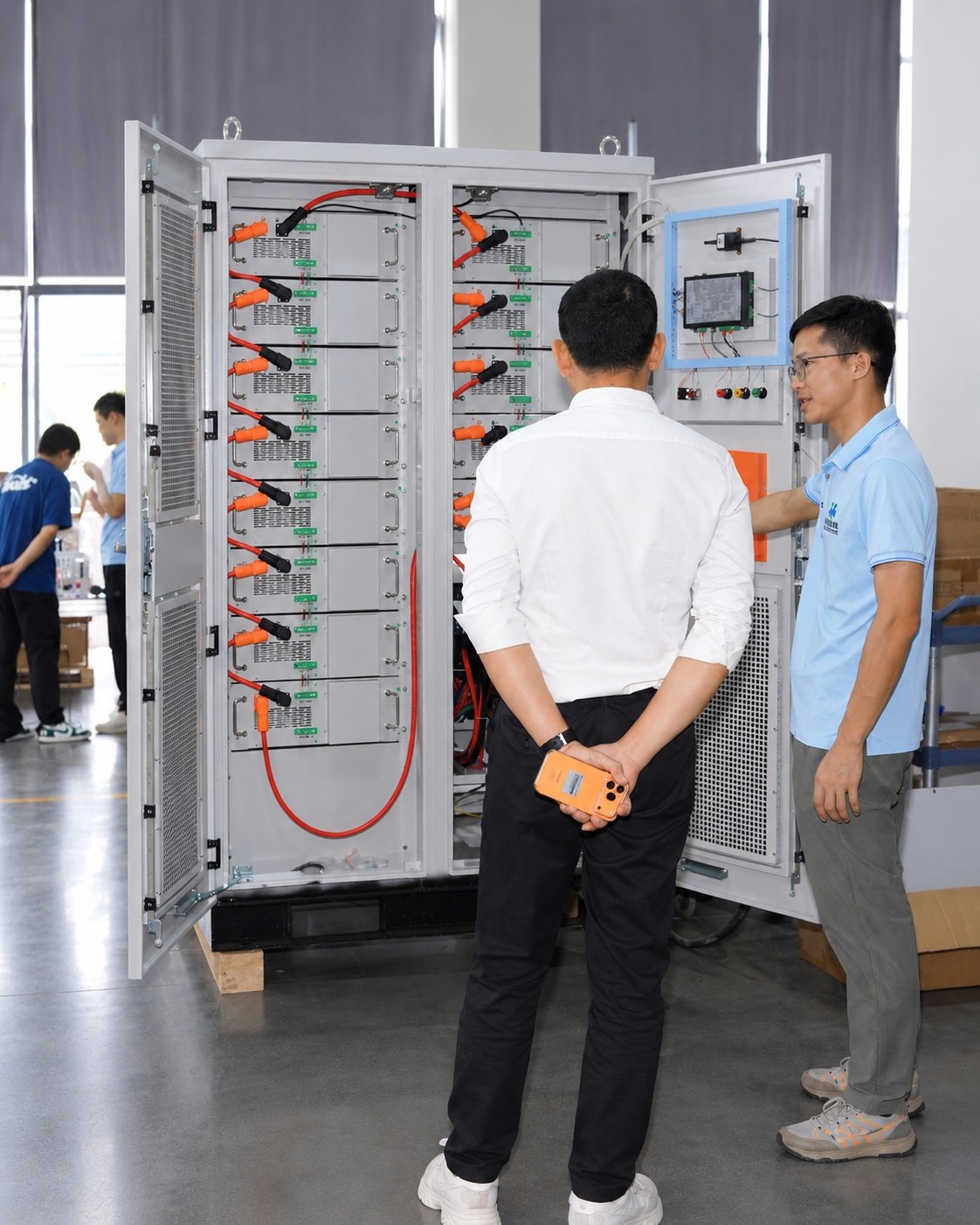
A battery warranty may restrict SOC window, temperature, charge and discharge rate, energy throughput, operating hours, starts, storage conditions and response to alarms. The contract can be precise while the operating data are not. If SOC is recalculated after a firmware update, timestamps drift, missing intervals are filled silently or block replacements are not mapped, neither party can prove compliance fairly.
The buyer therefore needs a warranty evidence system, not a monthly screenshot. It should preserve raw measurements, derived values, configuration history, exceptions and periodic performance tests in forms that both owner and supplier can reproduce. This guide shows how to specify that system before operations begin.
Translate Every Warranty Clause into a Measurable Rule
Create a clause-to-data matrix. For each limit, state the measured quantity, equipment boundary, sensor or calculation source, units, interval, aggregation, tolerance, permitted duration, excluded conditions and consequence. “Operate between 10% and 90% SOC” remains ambiguous until the parties define rack or plant SOC, sample rate, rounding, transient allowance and treatment of unavailable racks.
Distinguish continuous operating limits, transient limits, recommended ranges and conditions that void or reduce coverage. A warranty should not turn a one-sample communication glitch into a breach, and an audit should not average away a sustained temperature exceedance. Agree event thresholds, persistence, hysteresis and severity before data are collected.
Map the rule to the commercial BESS procurement package. The technical specification, warranty exhibit, EMS controls, O&M procedure and data-retention clause must use the same definitions. Conflicting SOC or throughput language across documents creates disputes that software cannot solve.
| Warranty term | Data definition | Audit question |
|---|---|---|
| SOC window | Authoritative SOC, scope, interval and persistence | How are transient and bad-quality values treated? |
| Temperature | Cell/module/ambient sensors and maxima/minima | Is the limit instantaneous, averaged or time-at-temperature? |
| C-rate/power | DC current or AC power, base capacity and direction | Does changing capacity alter the calculated rate? |
| Throughput | Charge/discharge energy, meter and loss boundary | Gross, net, AC or DC and how are resets prevented? |
| Cycles | Equivalent-full-cycle algorithm and depth treatment | Can both parties reproduce the count? |
| Availability/exclusions | State codes, planned work and external curtailment | Who approves an excluded interval? |
| Capacity guarantee | Test protocol, reference conditions and correction | Is comparison consistent over life? |
| Maintenance duties | Required action, alarm response and completion time | Is evidence tied to the affected serial numbers? |
Define the Authoritative SOC and Its Uncertainty
SOC is an estimate, not a directly measured fuel level. The BMS may combine coulomb counting, voltage, temperature, cell model and calibration events. Rack SOC values may be aggregated by capacity, energy or availability. The warranty should identify the authoritative algorithm and source device while giving the owner enough information to detect implausible behavior.
Record SOC alongside DC current, DC voltage, energy counters, cell-voltage extrema, temperature and contactor state. These supporting channels allow an audit to distinguish a real excursion from a reset, communication gap or estimation correction. Preserve the BMS quality flags and reset counters rather than exporting only a rounded percent.
Sandia’s electrical energy-storage data guidelines discuss SOC accuracy, SOH tracking, cell balancing, temperature and repeatable reference tests. Use the guidance to strengthen the data plan while keeping contractual definitions specific to the selected product and warranty.
Control recalibration. When the BMS corrects SOC at a full-charge or rest condition, record the pre- and post-correction values, trigger, algorithm version and affected scope. Do not rewrite historical SOC to make the trend smooth. The audit needs the values that the controller used at the time and the later correction as a separate event.
Use Meters and Counters with Known Boundaries
Specify whether throughput and efficiency are measured at cell DC, rack DC, PCS DC, PCS AC or point of connection. Auxiliary power and transformer losses can be material to AC results but irrelevant to a cell-throughput warranty. Use separate counters where commercial and battery boundaries differ, and name the authoritative one for each clause.
Energy counters should be monotonic, retained through restart and protected against unauthorized reset. Record rollover behavior, engineering units, resolution and device replacement. If a meter is replaced, close the old register, document the final value and serial number, then establish the new baseline without losing cumulative history.
The BESS meter and CT commissioning guide helps establish ratio, polarity, phase and time evidence. Extend that record to warranty counters. A one-percent scaling error can create a substantial apparent throughput difference over years of operation.
Preserve Raw Data, Quality and Configuration History
Set retention by evidence class. Keep high-resolution event files around limit excursions, lower-rate continuous trends for the warranty term plus claim period, and immutable configuration and maintenance logs for the asset life. Define sample rates, deadbands, compression and export formats. Aggregated monthly values cannot prove a short high-temperature event; high-speed data alone are impractical for a decade.
Every value needs timestamp and quality. Store good, stale, substituted, invalid, manually overridden and communication-lost status. If the historian interpolates for visualization, keep the raw missing interval and mark derived data. The audit algorithm should state whether it ignores, bounds or escalates missing data rather than treating absence as compliance.
Keep firmware, BMS parameter, EMS dispatch and sensor-calibration history. A change in SOC algorithm or capacity basis can alter apparent compliance without any physical change. Hash controlled files and link each effective period to serial-number ranges. At augmentation, maintain separate baselines for new and aged blocks unless the warranty explicitly defines a combined method.
| Evidence layer | Examples | Integrity control |
|---|---|---|
| Raw telemetry | SOC, voltage, current, temperature, status and quality | Time source, immutable ingestion and gap log |
| Derived metrics | Throughput, cycles, time outside limit and SOH | Versioned formula and reproducible inputs |
| Event data | Trips, alarms, resets and limit excursions | Pre/post window and source timestamp |
| Configuration | Firmware, settings, capacity basis and serial map | Approval, hash and effective dates |
| Maintenance | Alarm response, replacement and calibration | Work order tied to equipment identity |
| Performance tests | Stored energy, power and efficiency results | Controlled protocol and raw meter files |
| Exceptions | Grid event, force majeure or approved override | Named authority and time-bounded approval |
| Audit report | Clause result, uncertainty and open issue | Both parties retain source package |
Audit Cell Imbalance without Misclassifying Normal Balancing
Cell-voltage spread depends on SOC, current, temperature, measurement tolerance and balancing state. A single maximum spread does not prove a defective module. Record the operating condition and persistence, compare the same scope, and review repeated outlier identity. Use the BESS cell-imbalance acceptance method to separate normal balancing behavior from evidence requiring corrective action.
The warranty audit should flag when imbalance forces early charge or discharge cutoff and reduces usable energy. Preserve cell-level data around the cutoff and the BMS limit reason. A plant may appear to meet average SOC restrictions while one weak module determines the effective capacity and cycling stress of the entire string.
Verify Capacity with a Repeatable Reference Test
Define the reference performance test before the baseline is run. Specify initial conditioning, upper and lower SOC limits, charge procedure, rest, discharge power, ambient and equipment temperature, auxiliary treatment, meter boundary, unavailable equipment, termination criteria and correction method. Later tests must use the same protocol or document a qualified comparison.
The DOE BESS evaluation method uses actual metered charge and discharge data and discusses data limitations. It is a useful public reference for performance analysis, but the warranty test must follow the agreed contract and equipment conditions.
UL Solutions lists ESS capacity, cycling and performance testing services among its offerings. Independent witnessing or laboratory support can help when a guarantee is material, but impartiality and test scope must be agreed. Certification for safety does not automatically verify a project’s long-term capacity warranty.
Run the factory baseline and site baseline through the BESS FAT protocol and commissioning plan. Record the exact blocks included, calibration, software, environmental conditions and deviations. The first accepted baseline becomes the reference for later fade and claim analysis.
Distinguish Capacity Fade from Deliverable Energy Fade
Capacity in ampere-hours does not fully describe AC energy delivered. Voltage behavior, resistance, PCS cutoff and auxiliary load can change usable energy. Sandia’s August 2026 report on energy fade versus capacity fade explains why scaling cell ageing using energy can improve lifetime estimates. Buyers should define whether their guarantee concerns DC capacity, DC energy, AC usable energy or another metric.
Do not retroactively switch the metric when performance disappoints. If both capacity and energy matter, report both from the start with their measurement boundaries. Explain how temperature, rate, SOC limits and auxiliary consumption affect the result, and keep the guarantee calculation separate from diagnostic analyses.

Control Dispatch Exceptions and Warranty Overrides
Configure the BESS dispatch priority so warranty limits are enforced below safety and mandatory grid response but above discretionary economic dispatch, unless the contract says otherwise. When a higher-priority event overrides a warranty envelope, create a time-bounded exception record with source, authorization, operating data and recovery.
Define emergency use commercially. A grid or resilience event may justify deeper discharge or higher rate, but the parties must know whether it consumes a separate allowance, reduces future guarantee, requires inspection or remains fully covered. The EMS should log the service and reason, not simply record an SOC excursion with no context.
Issue a Periodic Audit Both Parties Can Reproduce
Define Evidence Handling before a Claim
The warranty exhibit should define notice deadlines, contacts, secure transfer methods and the evidence to preserve when a suspected breach appears. Freeze relevant telemetry, event files, configuration, work orders and dispatch records before troubleshooting changes the system. Record who collected each file, when, from which device and with which tool. File hashes help demonstrate that the package reviewed later is the package originally captured.
Give both parties reasonable access without giving uncontrolled write access to the operating system. The owner should be able to export its raw data and calculations; the supplier should be able to request defined diagnostic records and inspect affected equipment under site rules. Remote access sessions, commands and file transfers should be logged. Commercial confidentiality does not justify a result that cannot be reproduced.
Separate preservation from diagnosis. A technician may need to reset an alarm or replace a failed sensor to restore service, but first capture the original state where safe. If urgent safety work prevents full capture, document the condition, photos, people present, actions and missing evidence. Do not leave the audit to infer why an interval disappeared.
Set rules for data corrections. Scaling, clock or sensor errors sometimes require a corrected dataset. Keep the raw values, correction formula, approval, effective range and uncertainty. Never overwrite the source export. The audit report should distinguish measured, corrected, estimated and unavailable intervals, and show whether the conclusion changes under a conservative treatment.
Agree independent review triggers. Examples include capacity falling near the guarantee boundary, repeated SOC excursions with disputed cause, a material data gap, changed BMS algorithm, mixed replacement modules or disagreement over the reference test. The independent party’s competence, scope and access should be established in the contract rather than negotiated after the claim.
Define remedies separately from measurement. Repair, replacement, augmentation, payment and revised operating limits have different technical consequences. After a remedy, issue a new serial map and baseline where necessary, but retain the pre-remedy record. A settlement should not erase the historical data needed to manage the remaining fleet.
At an agreed interval, produce clause-level results, data completeness, configuration changes, exceptions, throughput, cycles, SOC and temperature distributions, alarm response, capacity tests and unresolved issues. Include raw-data references and calculation version. The supplier should have a defined review window; disputed items remain visible rather than being silently removed.
Sandia’s energy-storage safety and reliability program highlights the importance of long-term degradation understanding. The contractual audit puts that lifecycle perspective into practice by combining operating exposure, safety-relevant events, performance and maintenance evidence.
| Audit gate | Required output | Acceptance check |
|---|---|---|
| Contract alignment | Clause-to-data matrix and definitions | Owner/supplier agreement |
| Baseline | Serial map, configuration and reference test | Repeatable starting point |
| Continuous collection | Raw telemetry, quality, counters and events | Completeness and integrity monitored |
| Exception review | Authorized override and operating exposure | Commercial treatment assigned |
| Periodic test | Stored energy/capacity under controlled conditions | Comparable with baseline |
| Periodic audit | Clause results, uncertainty and open actions | Reproducible by both parties |
| Claim trigger | Notice, preservation and joint inspection | Evidence frozen before change |
| Replacement/augmentation | New serials, baselines and mixed-fleet method | Traceability maintained |
A fair warranty audit does not assume every outlier is abuse or every capacity loss is a defect. It preserves the data needed to tell the difference. When definitions, meters, algorithms, configurations and tests are controlled from day one, the owner can enforce the guarantee and the supplier can evaluate claims against evidence rather than incomplete screenshots.