
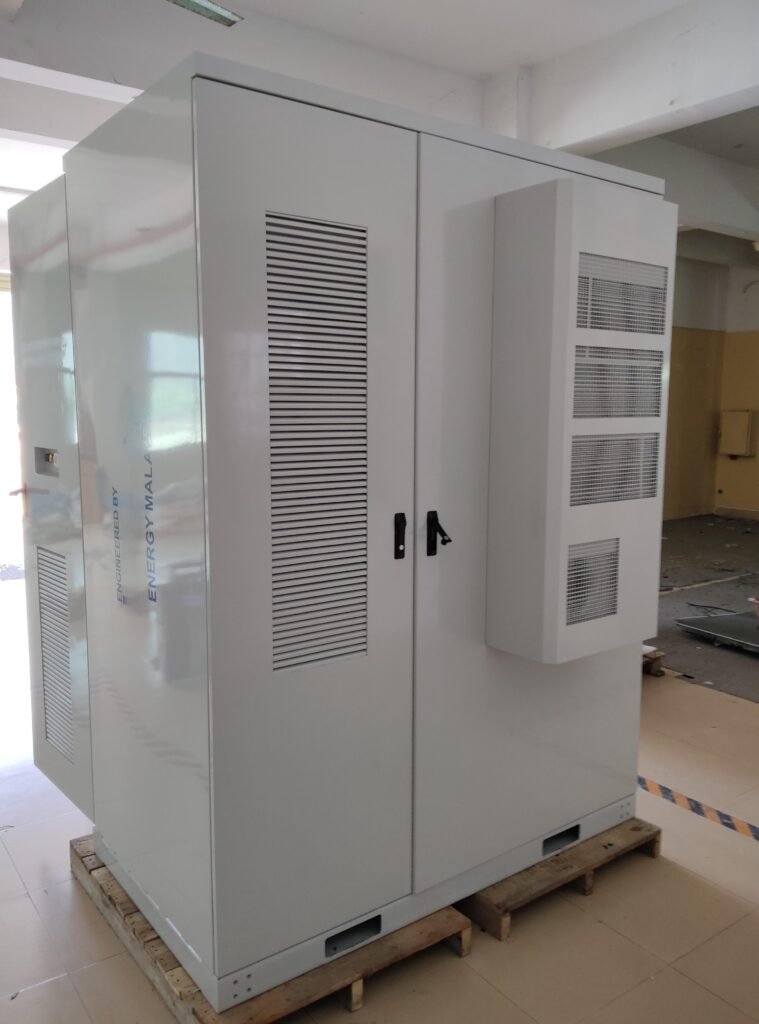
An export-limit setting is only as reliable as the measurement and control path behind it. A BESS may obey its own power command while the site exceeds a limit because PV output, building demand or another generator changed outside the controller’s view.
Buyers should specify export control at the agreed connection point, including failure behaviour. The essential question is what the complete site does when the meter stops updating, communications fail or the battery cannot absorb more energy.
The role assignments in the BMS, PCS and EMS interface guide provide a starting point. Export compliance requires a site-level owner for the complete loop, not an assumption that one cabinet can control every source.
Name the limit and the measurement point
Distinguish the utility’s permitted export capacity from the site’s chosen operating target. A commercial connection may have conditions involving total active power, phase behaviour, response or other requirements. Use the actual agreement and the locally adopted rules. There is no universal zero-export response time suitable for every country and installation.
The DOE distributed-energy interconnection checklist provides a structured way to organise utility discussions. Its value here is procedural: resolve permissions and required evidence before finalising equipment and control scope.
Mark the meter boundary on the single-line diagram. It must include the sources and loads that determine export across the reviewed point. A sensor on the battery feeder can measure storage operation but cannot alone describe the net exchange of a site with separate PV and changing building loads.
| Field | Required definition | Typical gap |
|---|---|---|
| Connection point | Physical boundary and included site equipment | Meter sees only one feeder |
| Permitted exchange | Import/export limits from the approved agreement | Operating preference is mistaken for utility approval |
| Measurement | Meter model, scaling, direction and update quality | Unverified polarity or stale data |
| Controlled equipment | PV, PCS and other relevant source interfaces | One source cannot receive curtailment commands |
| Response and failure state | Project-specific acceptance limits and fallback | Only normal operation is described |
| Recovery | Conditions and permissions for returning to dispatch | Automatic restart uses invalid data |
Review the battery-full condition before commissioning
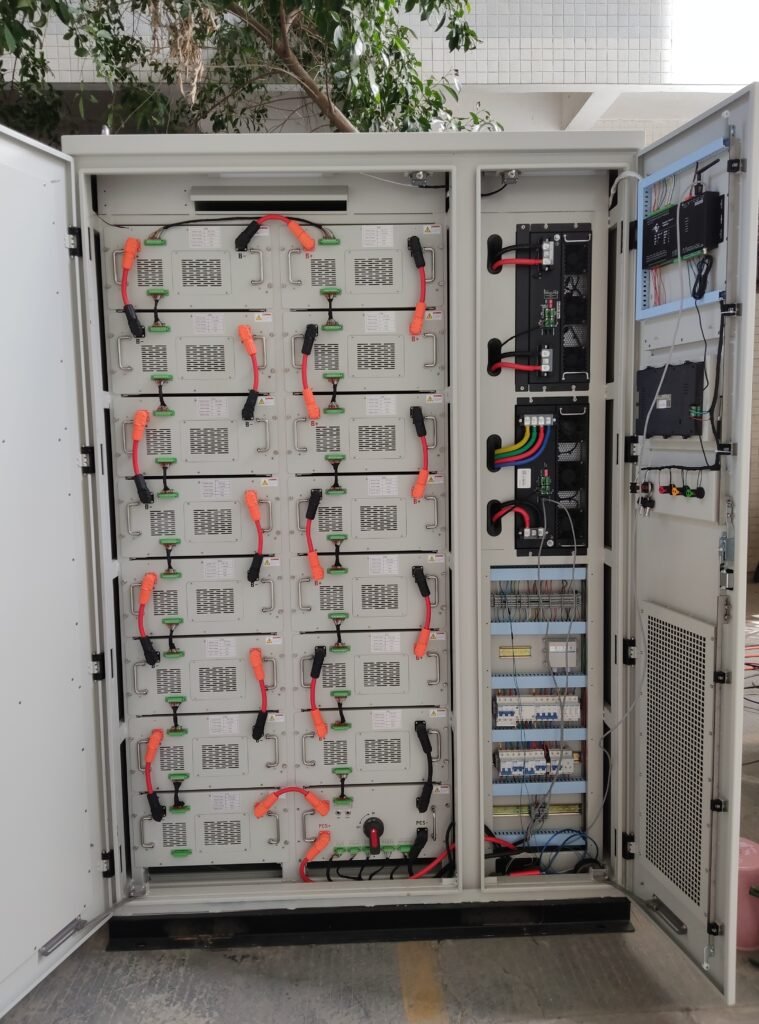
When the battery reaches its permitted upper state of charge, charging demand falls or stops. If PV production exceeds the remaining site load, the controller needs another approved action. Depending on the design, that may involve reducing PV output, restricting discharge or another specified measure.
Determine who commands that action and how the command is acknowledged. If PV and storage run independent export algorithms using the same meter, their control responses can interact. The integration team should demonstrate the coordinated design rather than assume that two individually compatible controllers form a stable site loop.
The SunSpec Modbus monitoring and control interface includes parameters relevant to power export limiting. This is a communications reference; implementation, equipment capability and local approval still need separate verification.
Battery operating limits remain authoritative. The site controller must not request charging beyond permitted current or temperature conditions merely to meet an export objective. Review what curtails generation when the battery refuses the command, and record that case in both factory simulation and site acceptance.
Define data quality as part of the control input
A repeated numeric reading may be valid, or it may be the last value received before a communication failure. The EMS needs an update timestamp or another reliable freshness indicator. Define the timeout from the approved control requirement and the actual device interface, not from the refresh rate of a cloud dashboard.
Before testing control behaviour, establish correct direction and phase association. Schneider Electric’s current-transformer guidance addresses polarity and qualified installation practice. A plausible total value does not prove the complete measurement chain.
Identify impossible or inconsistent states using the signals available in the installed system. A quality flag should trigger the agreed response and a recorded event. It should not silently substitute a value that allows operation outside the reviewed envelope.
| Test state | Observed signals | Acceptance evidence |
|---|---|---|
| Sudden reduction in building load | Connection power, source output and command response | Approved export response is maintained |
| Battery at upper operating limit | Charge acceptance and PV curtailment response | Generation has a defined control path |
| Connection-meter communication lost | Freshness, quality flag and fallback command | Safe state follows the approved design |
| PV control interface unavailable | Command acknowledgement and source output | Unavailable control is detected and handled |
| Controller reboot | Restored limits, valid measurements and permissions | No uncontrolled dispatch during recovery |
| Protection or isolation event | Operating mode and device status | Export logic is consistent with the new boundary |
Keep export control separate from outage protection
An export limiter manages permitted power exchange while a connection is operating. Anti-islanding, electrical protection and any intentional island design have their own requirements. Do not treat a zero-export preference as evidence that equipment is safe to operate during a utility outage.
The BESS backup and black-start guide distinguishes restart states and grid conditions. Export control must recognise those states and the change in physical boundary when the site islands or reconnects.
For a system selected from the HMX C&I storage range, include the approved meter, source interfaces, loss-of-data behaviour and site test responsibility in the quotation. A general statement that an EMS supports zero export is not enough to accept a particular multi-source site.
Commissioning sign-off should answer these points
- The metering boundary and signs match the approved drawing.
- The battery-full and source-control failure cases have recorded results.
- Limits and recovery permissions survive the tested restart conditions.
- The owner receives settings, trends, interface records and a change-control procedure.
Retest affected cases when a meter, source controller, firmware or connection agreement changes. This keeps the operating evidence aligned with the installed site. Technical references reviewed on 10 October 2026.