
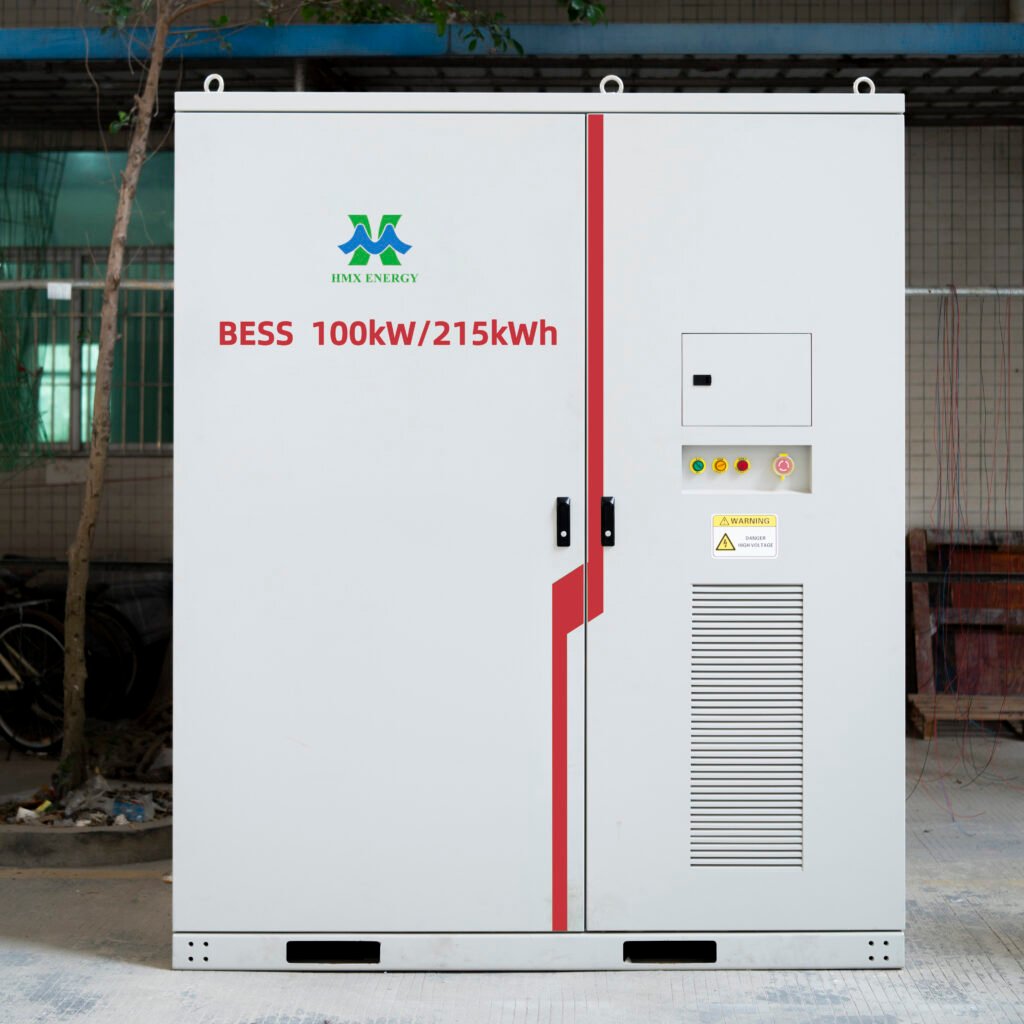
A 100kW/215kWh label describes nominal power and energy, not a guaranteed application result. The fit depends on usable state-of-charge range, conversion losses, ambient derating, response time and the load profile that the system must serve.
The same cabinet can be evaluated for peak shaving, solar self-consumption or limited backup, but each service uses a different sizing test.
Buyers defining the initial scope can compare these requirements with HMX’s 100kW/215kWh air-cooled system. The page is a product or project reference; final suitability still requires a written project specification.
The nameplate traps buyers should remove
These are the practical objections and failure modes most likely to stop approval, delay commissioning or create an avoidable service call for Commercial facilities, mini-grids and EPC firms.
- Nominal energy is presented as delivered AC energy.
- A two-hour ratio is treated as guaranteed runtime at every temperature and state of charge.
- Auxiliary loads, surge demand and backup reserve are missing from the load case.
Questions the buyer should ask before approval
- What usable energy is warranted at the stated operating conditions?
- Is 100kW continuous at the site temperature?
- How will delivered capacity be measured during acceptance?
Direct answer: Start with the service. For a 100kW power limit, 215kWh nominal energy implies a little over two hours at nameplate power before reserves, losses and operating limits are applied. Do not sell that arithmetic as guaranteed runtime.
Research review date: 30 September 2026. Quantitative statements are tied to the linked source and should be rechecked if procurement occurs later.
For current market and policy context, review U.S. DOE BESS procurement checklist. The U.S. Department of Energy checklist separates early project development, technical specifications and interconnection work for commercial lithium-ion systems.
Start with the operating case
For Commercial facilities, mini-grids and EPC firms, the first task is to turn the intended service into measurable inputs and acceptance limits. The following table keeps the decision tied to evidence instead of a broad product label.
| Service | Primary sizing variable | Data required |
|---|---|---|
| Peak shaving | kW above target and event duration | Interval load and tariff |
| PV shifting | Surplus PV energy by time | PV production and facility load |
| Backup | Critical-load kW and outage duration | Load schedule and outage target |
| Off-grid support | Energy balance and generator strategy | Daily load, PV resource and genset controls |
| Power quality support | Response and grid-code functions | Interconnection study |
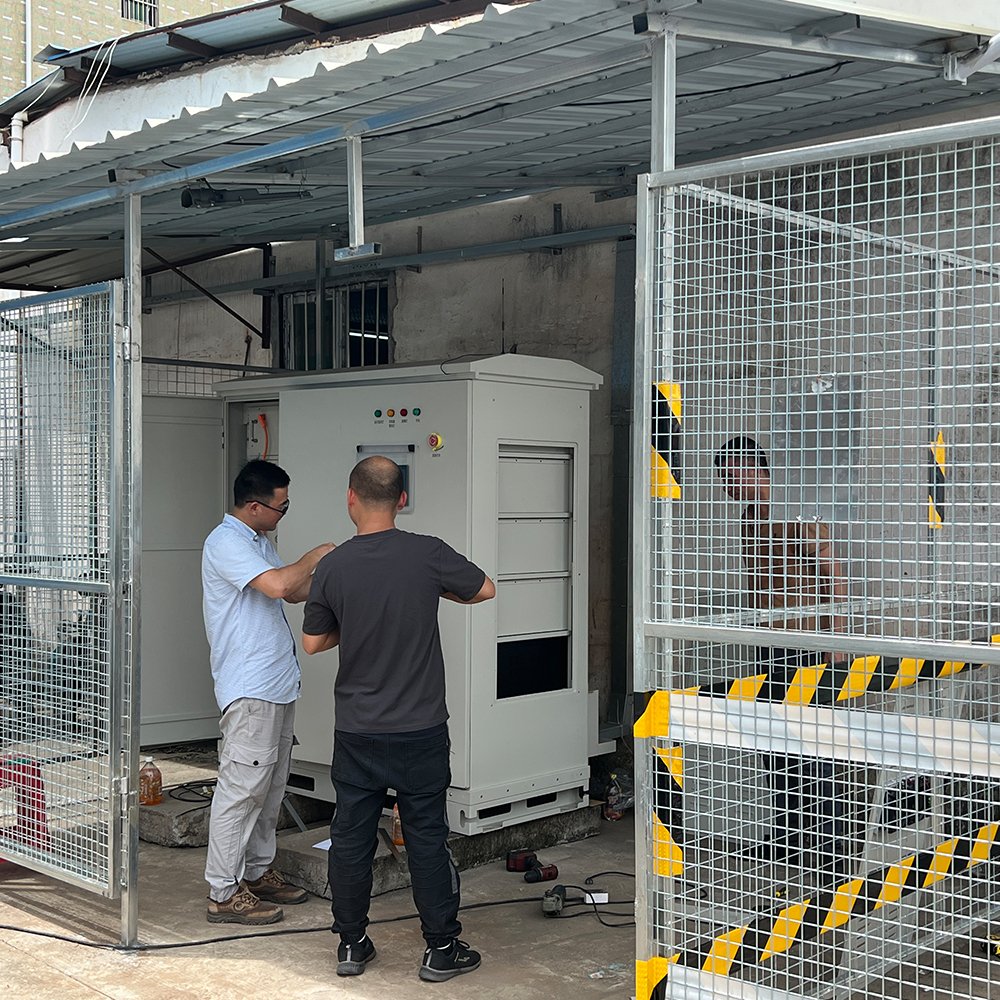
For a concrete equipment-level review, apply the checks above to the Mali 100kW/215kWh off-grid project and request confirmation for the intended site conditions and operating mode.
The technical comparison should also be checked against IEA Electricity 2026 flexibility analysis. The IEA identifies batteries as a versatile source of short-term power-system flexibility, but the required duration depends on the service being delivered.
Build a comparable technical offer
The commercial offer should state its assumptions, exclusions and measurement boundary. Buyers can then compare systems on the same basis and keep later design changes under document control.
| Check | Buyer question | Evidence |
|---|---|---|
| Usable energy | What state-of-charge window is guaranteed? | Capacity and warranty schedule |
| AC output | Is 100kW continuous at site temperature? | PCS curve and derating data |
| Auxiliaries | Are HVAC and controls included? | Energy-flow boundary |
| Expansion | Can cabinets operate in parallel? | Approved topology and control limits |
| Commissioning | How is delivered capacity measured? | SAT procedure |
Action points for the project team
- Separate nominal DC energy, usable DC energy and delivered AC energy in every calculation.
- Set a critical-load schedule rather than multiplying one peak value by outage hours.
- Confirm generator, PV and grid operating sequences for each mode transition.
- Record the exact cabinet configuration shown in certificates and test reports.
For specification and acceptance work, NREL PVWatts Calculator provides an independent reference. PVWatts estimates grid-connected PV energy production from location and system inputs. It is useful for the PV side of a study, but it does not replace interval-load and outage analysis for battery sizing.
Test the cabinet against three separate limits
Power, energy and control response answer different questions. The PCS must cover the instantaneous kW requirement, usable energy must cover the time integral of the event, and the EMS must act early enough to respect the grid or load limit. Passing one test does not imply the others will pass. Build separate worksheets and state the measurement boundary for each result.
The same evidence and acceptance questions can be used when assessing HMX’s commercial and industrial energy storage range; catalogue information should be reconciled with the controlled quotation and drawings.
For backup service, replace a single critical-load figure with a time-based load schedule. Include motor starts, cycling equipment, controls, cooling and battery auxiliaries. For PV shifting, align surplus generation with the facility load and permitted charge power. For off-grid use, add low-solar sequences and generator rules. These cases can produce different usable-energy requirements for the same nominal cabinet.
Before design freeze, the project team should review IEC 63056:2020 scope. IEC 63056 adds safety requirements for secondary lithium cells and batteries used in electrical energy storage systems up to 1,500 V DC nominal.
Acceptance should prove more than communication. Record initial state of charge, ambient temperature, AC power, DC values where available, auxiliary power and delivered AC energy. Confirm the allowed end state of charge and any derating. The result should be compared with the contractual guarantee, not with an ideal calculation based only on 215kWh divided by 100kW.
From analysis to an auditable decision
- Define the service and its worst credible operating trace.
- Separate nominal DC, usable DC and delivered AC energy.
- Check continuous power, surge demand, auxiliaries and reserve at site conditions.
- Approve a repeatable SAT method before the unit ships.
Records that should survive the purchase order
The project file should let a new engineer reconstruct what was bought, why it was selected and how compliance was demonstrated. Keep source data and approved revisions together; a collection of undated email attachments is not adequate configuration control.
A related HMX reference is the HMX project references. Use it to frame the next supplier discussion, then record project-specific deviations before ordering.
- Approved single-line, layout, interface schedule and equipment data sheets.
- Guarantee schedule showing operating conditions, measurement points and exclusions.
- Certificate and report index matched to the ordered model and configuration.
- FAT, shipping, SAT, training, settings backups and open-item closure records.
Review this baseline whenever equipment, firmware, operating mode or site responsibility changes. The technical file, guarantees and acceptance method should describe the same configuration throughout the project.
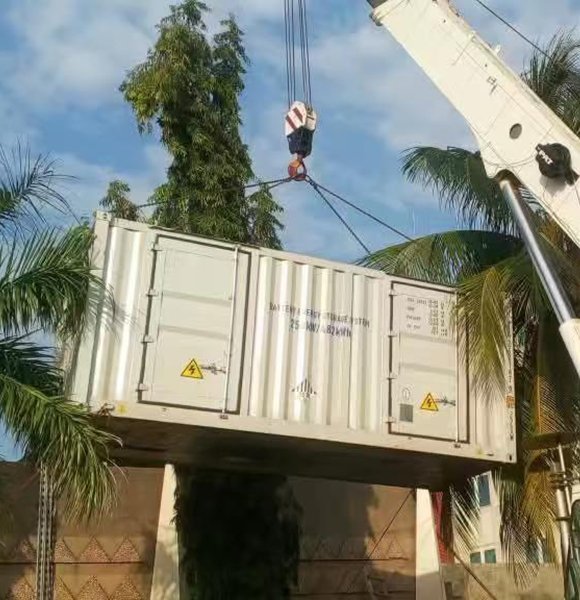
Related HMX Equipment Video
This equipment video is included because it matches the hardware or setup discussed here. It is supporting visual material, not third-party certification or proof of performance for a different project.
Next Step
The useful output of the study is not one battery size. It is a repeatable model with stated inputs, sensitivities and an acceptance test that the owner can audit.
Frequently Asked Questions
Does 215kWh mean 2.15 hours at 100kW?
It is the nominal ratio. Actual delivered duration depends on usable state of charge, conversion losses, auxiliary loads, temperature and the power profile.
Can one system serve backup and peak shaving?
Yes, if the EMS reserves energy for backup and the commercial model accounts for the smaller dispatchable window.
Is PVWatts enough for sizing?
No. It supports PV production estimates; battery sizing still needs interval load, outage and operating data.