
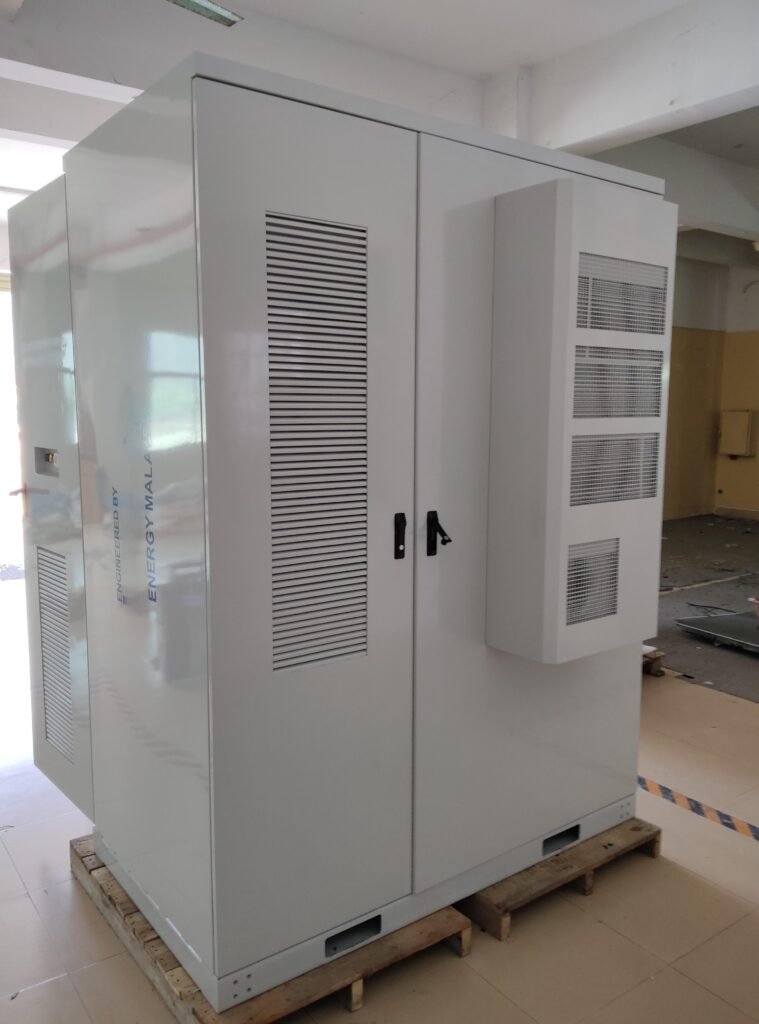
A battery is an energy destination only while it can accept charge. When the pack reaches its permitted limit, solar generation must have another destination or be reduced. For a PV-plus-storage buyer, that simple constraint should appear in the control specification before it becomes a commissioning surprise.
Solar curtailment with BESS is not just a question of adding more battery capacity. It concerns which device knows the present charge capability, which device can reduce PV output, how commands are delivered, and what happens when the available paths change. An export-limited grid connection and an islanded installation need different operating reviews.
List the permitted destinations for surplus power
Begin with the system’s actual topology. Identify site loads, battery charging, permitted export and any other approved energy destination. Do not assume that the grid always accepts surplus or that a generator can absorb it. The designer should distinguish an energy-management preference from a physical or contractual operating limit.
| Operating condition | Available destination to confirm | Action when it is unavailable |
|---|---|---|
| Load exceeds PV generation | Direct supply to connected loads | Use approved battery or grid support as applicable |
| PV exceeds load, battery accepts charge | Battery charging within its current limit | Use permitted export or curtailment |
| Battery reaches its upper operating limit | Site load and any permitted export | Reduce generation where surplus cannot be used |
| Island operation | Loads and supported battery charge path | Use the approved island generation-control method |
| Generator connected | Destinations consistent with generator protection and control | Coordinate PV and BESS response with the generator design |
This matrix is a proposed design review, not a fixed dispatch priority for every site. A tariff, interconnection agreement or backup requirement may lead to a different preference. Each destination must nevertheless be physically supported and permitted in the relevant operating state.
SOC is useful, but present charge capability matters more
A pack can restrict charging before an EMS’s nominal full-SOC threshold is reached. Temperature, cell conditions and protection states may reduce the available charge limit. The control chain should therefore use the relevant battery limits and device status, rather than assuming a percentage alone always describes available absorption power.
The BMS, PCS and EMS interface guide explains why protection and supervisory dispatch are separate roles. A command to charge is not permission to ignore a battery limit, and the EMS must have another response when that command cannot be executed.
Specify units, sign convention, update timing and data validity for the charge-capability signal. Identify whether the value refers to the battery DC side or an AC power boundary. An undefined signal can produce incorrect dispatch even when every component sends the bytes expected by its communication protocol.
Do not assume all PV inverters respond the same way
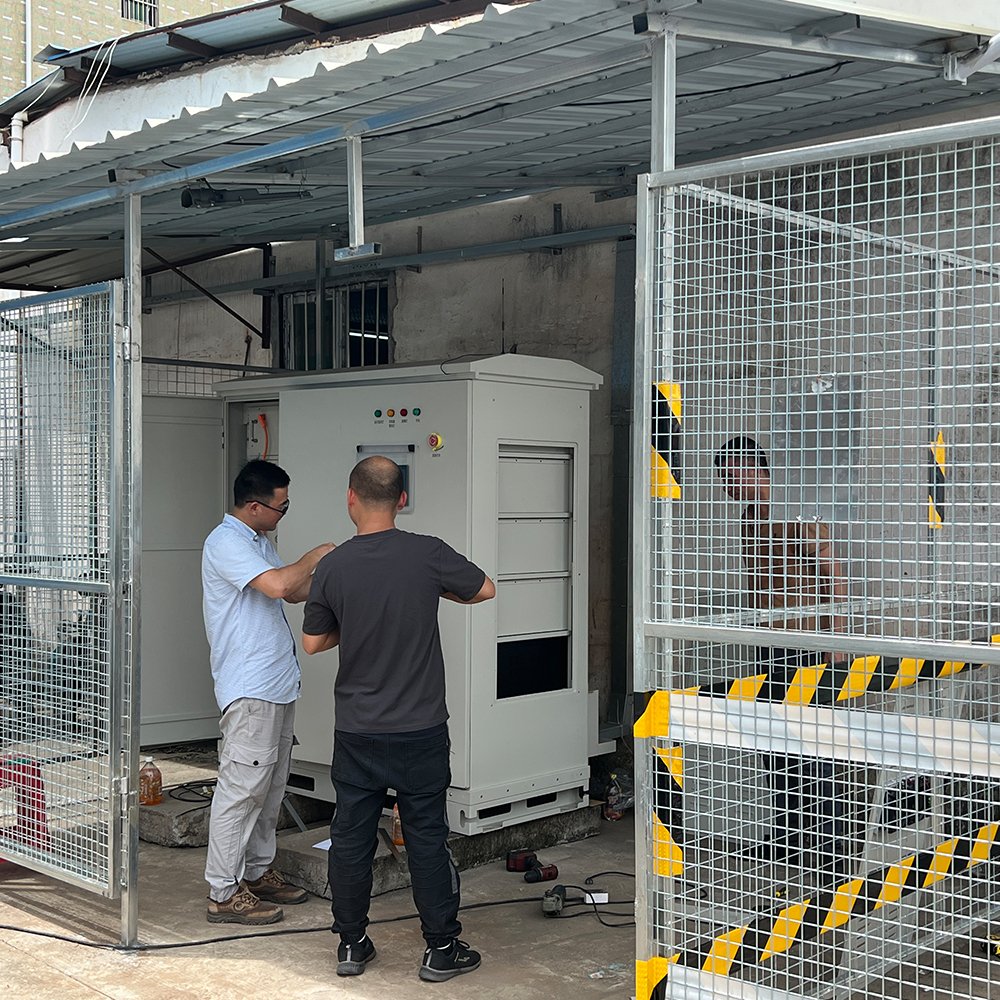
A mixed-brand system needs a documented way to reduce generation. It may use a supported communication command or a defined electrical control behaviour. The presence of a communications port does not establish that the relevant command is available, writable or implemented by the installed firmware.
SunSpec Modbus provides a standardised framework for DER data and control. The integrator still needs to verify the applicable model, device support, control authority and observed response for the proposed combination. Protocol branding is not a complete compatibility test.
SMA’s Sunny Boy Storage interface manual describes a product-specific frequency-shift method for managing AC-coupled PV surplus during backup operation. It illustrates why the PV inverter must respond to the selected method. Its settings and regional configuration should not be copied into unrelated equipment.
Document any differences between grid-connected and islanded control. A function that works with a utility reference may not establish stable operation in an island, and local grid requirements remain applicable to connected operation. The designer must approve the mode and settings appropriate to the project.
Commission full-battery conditions deliberately
A demonstration performed only with a partially discharged battery leaves the critical case untested. The acceptance plan should examine reduced charge capability and surplus PV, using a manufacturer-approved procedure. Where live reproduction is unsuitable, agree a controlled test, simulation or other credible evidence route.
| Test condition | Required observation | Evidence to preserve |
|---|---|---|
| Charge capability decreases | Generation and charging respond within the approved envelope | Battery limit, PV output and PCS power on aligned timestamps |
| Large permitted load reduction | Surplus is managed without relying on an unavailable destination | Load, export, control commands and device status |
| PV control feedback is missing | Defined fallback and alarm, not assumed command execution | Command, feedback quality and fallback action |
| Battery becomes unavailable | The site remains within its permitted operating state | Isolation state and generation response |
| Conditions return to normal | Controlled recovery without conflicting mode commands | Recovery authorisation and power trends |
NLR’s controlled grid-testing platform demonstrates that storage controls and conventional generation can be assessed under defined scenarios. For a purchase, ask which scenarios the offered integration evidence actually covers rather than accepting a broad “tested” statement.
Put curtailed energy in the model, not in a footnote
A production estimate that assumes every available unit of PV energy is consumed or stored can overstate the benefit of an export-constrained installation. Model the occasions when load is low, the battery cannot accept charge and export is restricted. Distinguish curtailed generation from conversion losses and from energy that was never produced because of resource conditions.
Use commercial battery sizing to connect usable capacity and dispatch to the site’s load data. More storage may change the curtailment pattern, but it does not remove the need for a working control method and configuration-specific limits.
When comparing commercial PV-storage options, request the full-battery operating sequence alongside the normal-mode diagram. The useful answer is not “the battery will take the surplus.” It is a documented explanation of what the system does when the battery cannot.